

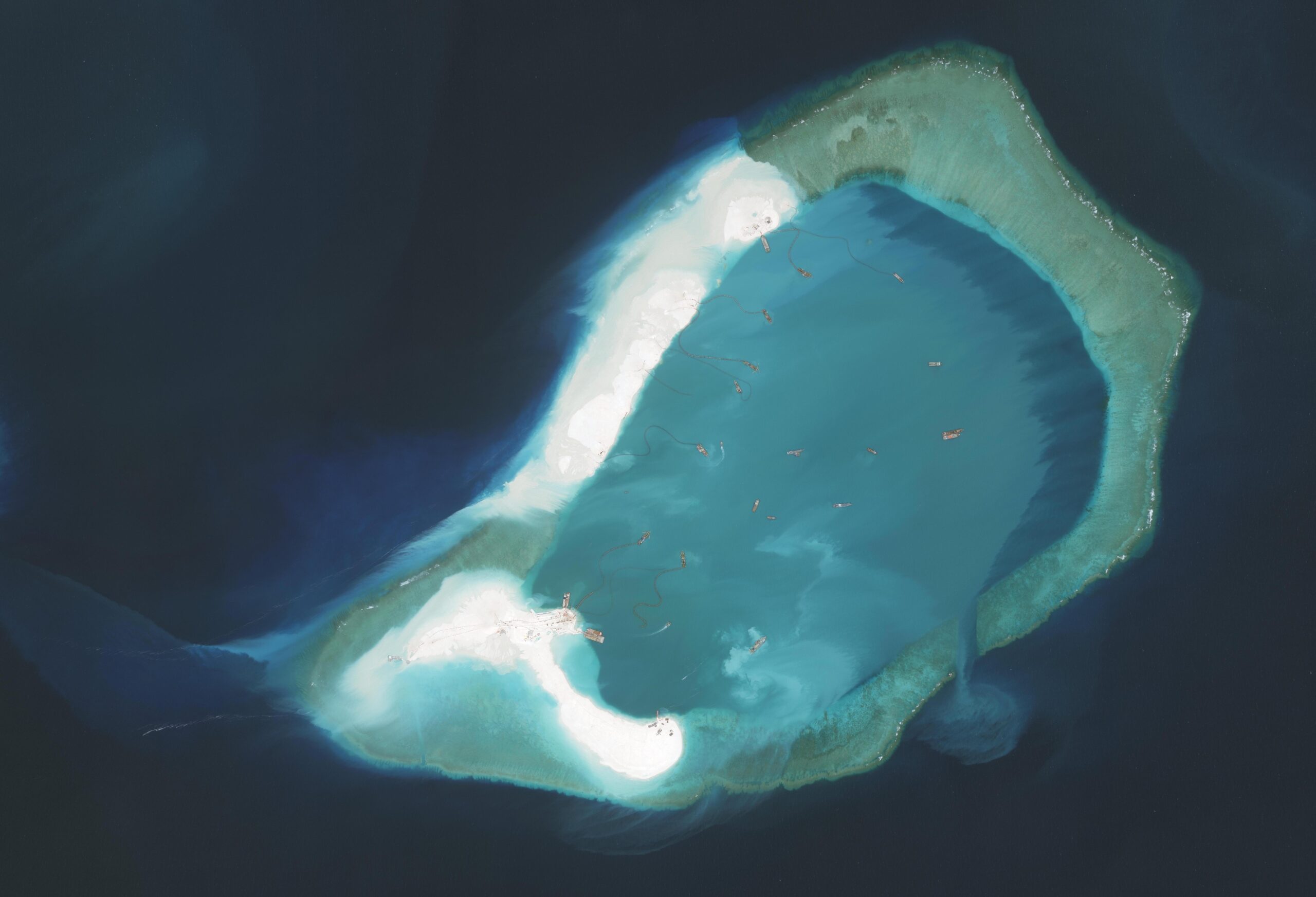
Since 2013, rivals in the South China Sea have obliterated nearly 28.3 square kilometers of coral reefs through island-building, with China being responsible for the lion’s share, 18.8 square km (4,648 acres) of relentless dredging and landfilling. The Asia Maritime Transparency Initiative (AMTI) at the Center for Strategic and International Studies (CSIS) analyzed commercial satellite imagery to expose this “irreparable damage” to marine habitats, showing total destruction rising by 3.2 square km from 25 square km at the end of 2023. Chinese giant clam harvesting has worsened the devastation, scarring another 66.1 square km (16,353 acres) and smothering reefs with sediment plumes stretching up to 20 km, disrupting currents, fish spawning grounds, and biodiversity hotspots that support 30% of the world’s coral species.
China’s project, launched in 2013 across seven reefs in the Spratly (Nansha) and Paracel (Xisha) archipelagos, dumped tons of sand to create over 12 square km of artificial land 17 times more than other claimants managed in 40 years. Processes like cutting coral seabed’s, pumping sediments, building dikes, compacting with machinery, and paving runways transformed fragile ecosystems into militarized bases. Since 2015, these outposts boast runways, hangars, ports, radars, missile platforms, and underground facilities, enabling China’s near permanent air and sea power projection. Beijing claims they aid rescue missions, fishing support, research, navigation, weather monitoring, and defense, but neighbours like Vietnam, the Philippines, Taiwan, Malaysia, Brunei, and even Japan decry it as territorial expansionism.
This directly challenges exclusive economic zones (EEZs) of multiple nations, flagrantly ignoring the 2016 Permanent Court of Arbitration ruling that invalidated China’s “nine-dash line” claims. Escalation includes military standoffs, U.S.-led freedom-of-navigation operations, and alliances strained by joint patrols from the U.S., EU, Japan, Australia, and India, who label it aggressive expansion prompting sanctions and ASEAN diplomatic isolation.
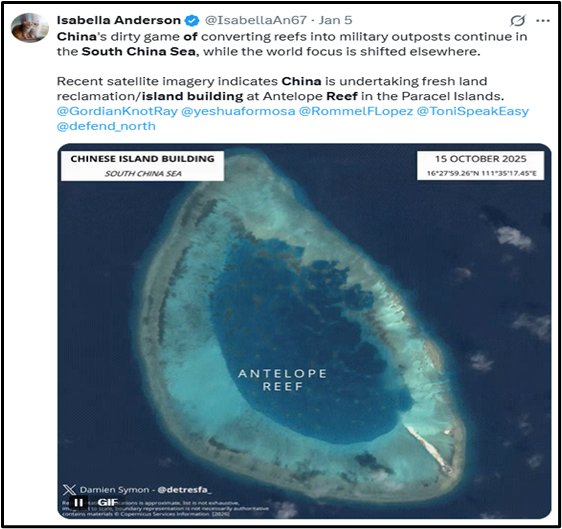
Vietnam’s smaller-scale replication dumping land since 2013 fuels a regional arms race, with neighbours bolstering outposts and military spending amid crowded waters teeming with coast guards, fishing boats, and warships, heightening miscalculation risks.
Environmentally, the toll is catastrophic and irreversible. These were among the planet’s healthiest, most biodiverse reefs, taking thousands of years to form and recover if ever. Loss eliminates fish food chains, coastal storm barriers and livelihoods for millions, triggering fishery collapses worth $2.5 billion annually, food insecurity for 200 million Southeast Asians and vulnerability to typhoons and sea-level rise. Sediment “clouds” from dredging poison distant ecosystems in neighbours’ waters, altering seabed structures, currents and sediment flows for centuries, exacerbating ocean acidification and spawning “dead zones” via global currents. Reefs sequester 20 million tons of CO2 yearly; their demise undermines climate goals, exposing Beijing’s hypocrisy despite claims blaming global warming.
Economically, construction disrupts fishing and oil/gas in contested EEZs, costing billions in revenue. Manila contemplates a second legal challenge over its West Philippine Sea, while China’s soft power erodes through boycotts, trade curbs, UN scrutiny and stalled Belt and Road projects. Humanitarian fallout displaces fisherfolk and indigenous groups, flouting human rights. Artificial islands grant no territorial seas under UNCLOS, setting a perilous precedent: power trumps law, environmental ruin justifies claims.
Militarization endangers a $3.4 trillion trade route 30% of global shipping risking blockades, accidents, or U.S. Philippines treaty conflicts that could engulf superpowers. Globally, NGOs, scientists, and over 100 nations via G7 statements condemn it, warning of eroded legal norms, supply chain chaos, spiked insurance, and conflict spirals. If unchecked, this model spreads to oceans and poles, turning commons into battlegrounds with permanent ecosystem scars and heightened war probability.










Leave a Reply