

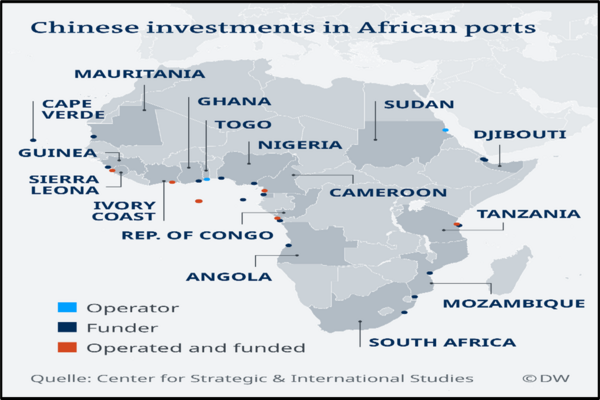
China is quietly expanding its influence across Africa, not through loud announcements, but by building ports, giving loans and taking small military steps. While it says these projects are for development, the real goal is power. By constructing and operating ports on the Atlantic and Indian Ocean coasts, China gains control over key harbours, important shipping lanes, and political influence over governments with heavy debt. Many of these ports are “dual-use,” able to handle both commercial trade and military ships. The most obvious example is Djibouti, where China has its first overseas military base, allowing its navy to operate far from home and project power across Africa, the Middle East and even Europe. Through infrastructure, debt and strategic ports, China is quietly turning parts of Africa into launch pads for global influence.
China’s influence in Africa is expanding in ways closely documented by international media. According to SCMP, China’s strong relationship with Djibouti has grown as Beijing invests heavily in ports and infrastructure, even amid rising tensions in the Red Sea. These investments have helped Djibouti become a key hub, but they also raise concerns about China’s long-term strategic goals. As noted by the Atlantic Council, Djibouti has become a focal point of competition between the United States and China, with both powers seeking influence over critical sea lanes.
Chinese involvement goes beyond commercial construction. Beijing’s port deals and the debt burden on host countries give it leverage over governments, linking economic cooperation to geopolitical strategy. These developments suggest that Chinese port projects in Africa are shaping both trade and military access, securing China a lasting presence along strategic coasts and shipping routes.
Africa sits next to some of the world’s most important sea routes, including the Cape of Good Hope, the Red Sea leading to the Suez Canal and the Indian Ocean connecting Asia, the Middle East and Europe. According to the BESA Centre, these routes are vital for global trade and energy supplies. By building a “ring” of friendly or Chinese-run ports, China can refuel and repair its navy far from home, safeguard its trade and energy imports and exert pressure on rival powers by controlling key maritime chokepoints.
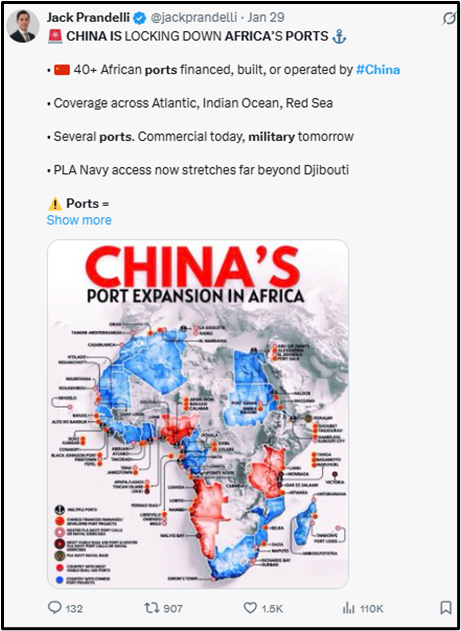
As reported by the Africa Centre, former Chinese naval leaders have openly discussed “overseas strategic strongpoints,” describing ports designed from the start to serve wider Chinese strategic and military goals, not just commerce. Analysts note that Beijing’s port projects are shaping both trade and military access, securing China a lasting presence along strategic African coasts and shipping routes. This pattern links economic investment directly to long-term geopolitical and naval strategy.
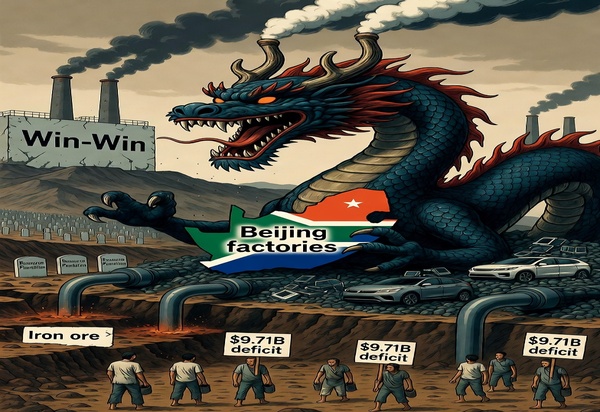
On paper, China’s projects in Africa are sold as win‑win development. In reality, the pattern often looks like this: loan first, dependence later, and strategic access in the end, as noted by ScienceDirect. The more ports China builds, owns or operates, the more it can control shipping, trade and security along Africa’s coasts, giving Beijing long-term leverage over governments and regional trade routes. This is not just about Africa it affects the entire world, because many countries rely on these sea lanes for food, fuel and commerce, according to the BESA Centre. What is presented as development increasingly serves China’s strategic and military goals. Behind friendly rhetoric, Beijing is turning infrastructure into power, debt into influence and ports into tools for controlling trade and politics far beyond its borders.











Leave a Reply