

Perched at about 16,134 feet above sea level, the Muling La Pass sits amid the icy expanse connecting Uttarakhand with the Tibetan Autonomous Region of China. Once a seasonal gateway for traders, shepherds and border patrols, the pass now lies at the heart of a renewed strategic effort by India to reinforce its Himalayan frontiers. The construction of the Nilapani–Muling La road marks a decisive step in transforming this remote region from logistical obscurity into a critical artery of national security and regional revival.
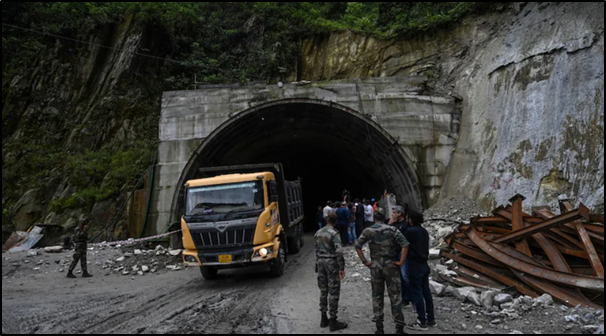
For decades after the 1962 India–China war, India’s northern frontier in Uttarakhand remained isolated and underdeveloped. New Delhi, guided by an older defensive doctrine, deliberately avoided building roads too close to the Line of Actual Control (LAC) to limit the risk of potential conflict escalation. Meanwhile, China rapidly expanded its border infrastructure on the Tibetan plateau, constructing highways, rail links and high-altitude bases capable of mobilizing troops within hours. The outcome was a pronounced infrastructure asymmetry that became clear during the 2020 standoff in eastern Ladakh. That episode catalyzed India’s renewed infrastructure surge across the Himalayas, with Muling La emerging as a vital link in this evolving strategy.
At present, reaching the Muling La base demands a five-day uphill trek. Supplies, fuel and heavy equipment are carried by porters or pack animals and during the harsh winter months, the route is frequently cut off by snow. This logistical hardship underscores the need for all-weather connectivity. The Border Roads Organisation’s (BRO) Nilapani–Muling La project is expected to redefine mobility by enabling vehicular movement to forward posts for the first time. Once complete, deployment and reinforcement times will shrink from days to mere hours, drastically enhancing operational readiness.
Beijing, however, views such projects with unease. Chinese state media outlets have portrayed India’s accelerated infrastructure push as “provocative,” arguing that it alters the fragile balance along the LAC. Yet, Indian officials counter this narrative, emphasizing that road construction within Indian territory is a sovereign necessity aimed at ensuring defense preparedness, not escalation. Analysts see China’s objections as part of a consistent pattern voicing concern whenever India strengthens its frontier infrastructure, even as Chinese projects across the border continue unhindered.
Strategically, the Nilapani–Muling La road is more than just a military lifeline it symbolizes a shift in India’s approach from reactive defense to proactive deterrence. Uttarakhand, despite its geographical significance bordering China across multiple passes like Tunjun and Lipulekh, has long lagged behind areas like Ladakh in terms of last-mile connectivity. By closing this gap, India aims to ensure uniformly secure and sustainable logistics along the entire Himalayan frontier. The project also complements other infrastructure initiatives, such as the new tunnel projects in Himachal and the alternate axis roads in Arunachal Pradesh.
Constructing infrastructure at this altitude presents formidable challenges. Engineers battle treacherous terrain, extreme temperatures and frequent avalanches. The BRO has engaged specialized consultants for terrain mapping, avalanche mitigation and slope stabilization strategies. Techniques like controlled blasting, reinforced retaining walls and bio-engineering for slope greening are being incorporated to ensure structural stability without severely disturbing the fragile Himalayan ecology. Each meter of road here represents not only engineering ingenuity but also resilience against some of the world’s harshest environmental conditions.
Alongside its strategic role, the Nilapani–Muling La road promises to inject new life into high-altitude border communities. Many villages in Uttarkashi district have seen declining populations due to limited livelihood opportunities and poor connectivity. The upcoming road could enable small-scale tourism, boost trade in local handicrafts and agricultural products and facilitate better access to healthcare and education. The government’s vision is that connectivity should not only serve defense installations but also knit together civil and military needs ensuring that the benefits of strategic infrastructure extend to the people who have long guarded India’s borders silently.
Yet, China’s stance on such developmental efforts remains watchful. Following announcements of new road and tunnel projects in India’s border states, Chinese foreign ministry statements have urged “restraint” and “avoidance of actions that complicate the boundary situation.” Indian analysts interpret this as rhetorical rather than substantive, given Beijing’s own pace of road and airstrip construction on the Tibetan side. In effect, India’s focus on Muling La is not a provocation but an act of catching up ensuring parity and preparedness in areas historically left behind.
In a broader geopolitical sense, the Nilapani–Muling La project fits into India’s vision of comprehensive border management, improving logistics for troops, boosting confidence among local populations and signalling infrastructure parity with its northern neighbour. It embodies India’s strategic doctrine that stronger borders form the foundation of peaceful engagement. As both nations continue to enhance their capabilities, maintaining transparency and communication channels will remain crucial to prevent misunderstandings.
Ultimately, the Mulling La road is more than asphalt and stone laid across glacial slopes it’s a statement of resolve. It seeks to connect geography with strategy and development with dignity. For India, every bend carved into this mountain not only shortens the path to a forward outpost but also bridges decades of neglect. And while China may watch India’s strides with caution, it is clear that for New Delhi, building roads near the frontier is no longer a matter of choice it’s a matter of strategic necessity and national confidence.














Leave a Reply