

In early February 2026, the world of open-source software was shaken when Don Ho, creator of Notepad++, revealed a chilling six-month cyber intrusion that hijacked the tool’s update system. From June to December 2025, attackers stealthily redirected software updates for select users, delivering a custom backdoor called “Chrysalis” instead of legitimate files. This wasn’t a random hack; it targeted government, telecom, aviation, critical infrastructure, and media entities—precisely the sectors where espionage yields maximum value. Multiple experts, including Rapid7, pointed fingers at Lotus Blossom, an Advanced Persistent Threat (APT) group—think elite state hackers operating like digital spies with unlimited resources—active since 2009 and repeatedly tied to Beijing’s strategic interests.
The breach unfolded with surgical precision on Notepad++’s shared hosting server, not the code itself. Attackers exploited weak update verification in the WinGup updater, a simple component that pings a server for new versions. By compromising the endpoint (getDownloadUrl.php), they intercepted requests and swapped URLs for a handful of victims, funneling them to malicious payloads while 99% of users saw nothing amiss. Hosting logs showed the intruders scoured specifically for notepad-plus-plus.org, suggesting prior reconnaissance of its “insufficient update verification controls.” Direct server access ended September 2, 2025, after kernel updates, but stolen internal credentials let them linger until December 2—long enough to pivot to tools like Cobalt Strike and Metasploit shells for “hands-on-keyboard” control.
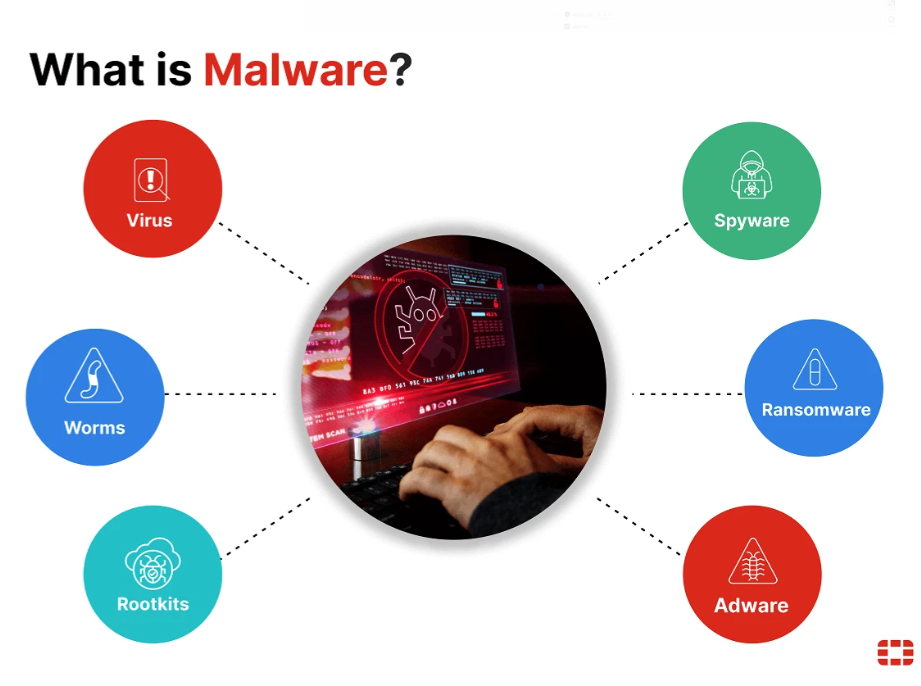
What makes this operation reek of statecraft is its restraint. Unlike ransomware gangs blasting millions, Lotus Blossom infected perhaps dozens, focusing on East/Southeast Asia and Latin America—regions where China’s economic and territorial ambitions clash with rivals. Rapid7’s forensics uncovered Chrysalis, a “feature-rich” implant with 16 commands for shells, file ops, and self-erasure, masked via DLL side-loading (tricking legit apps like Bitdefender to run malware) and custom API hashing to dodge antivirus. The group rotated infrastructure monthly—IPs in Malaysia/China, domains mimicking legit services like WiresGuard—showing resources only governments can muster. With over 100 million Notepad++ downloads historically, slipping into developer workflows was genius: who suspects a text editor?
This fits a pattern where certain powers weaponize the software supply chain, echoing Russia’s SolarWinds hit but with Beijing’s signature subtlety. Lotus Blossom, aka Billbug or Dragonfish, has struck telecoms and governments across continents since 2009, per MITRE ATT&CK—always espionage, never disruption. Critics note alignment with China’s 2021 Data Security Law and Military-Civil Fusion policy, blurring lines between state firms and hackers to dominate digital domains amid South China Sea tensions and Belt-and-Road surveillance needs. Beijing routinely denies involvement, calling accusations “smears,” yet the selective hits on “interests in East Asia” mirror state priorities.
Ho’s response was swift: migrate hosting, enforce certificate/signature checks in v8.8.9, and add XMLDSig for manifests in v8.9.2—basically, cryptographically locking the update door. Users should grab v8.9.1 manually. Forrester warns this exposes enterprise blind spots: free tools evade inventories, blending into “dev noise.” As AI agents proliferate, similar gaps could scale persistence at warp speed.
The Notepad++ saga whispers uncomfortable truths about global cyber norms. When ubiquitous tools become unwitting vectors for nation-state spying, it erodes trust in open-source foundations powering the world. Without accountability—perhaps multilateral attribution standards or supply-chain treaties—the shadows lengthen, and everyday updates turn into potential gateways for unseen wars. Developers worldwide now question: who’s watching the watchers?








Leave a Reply