

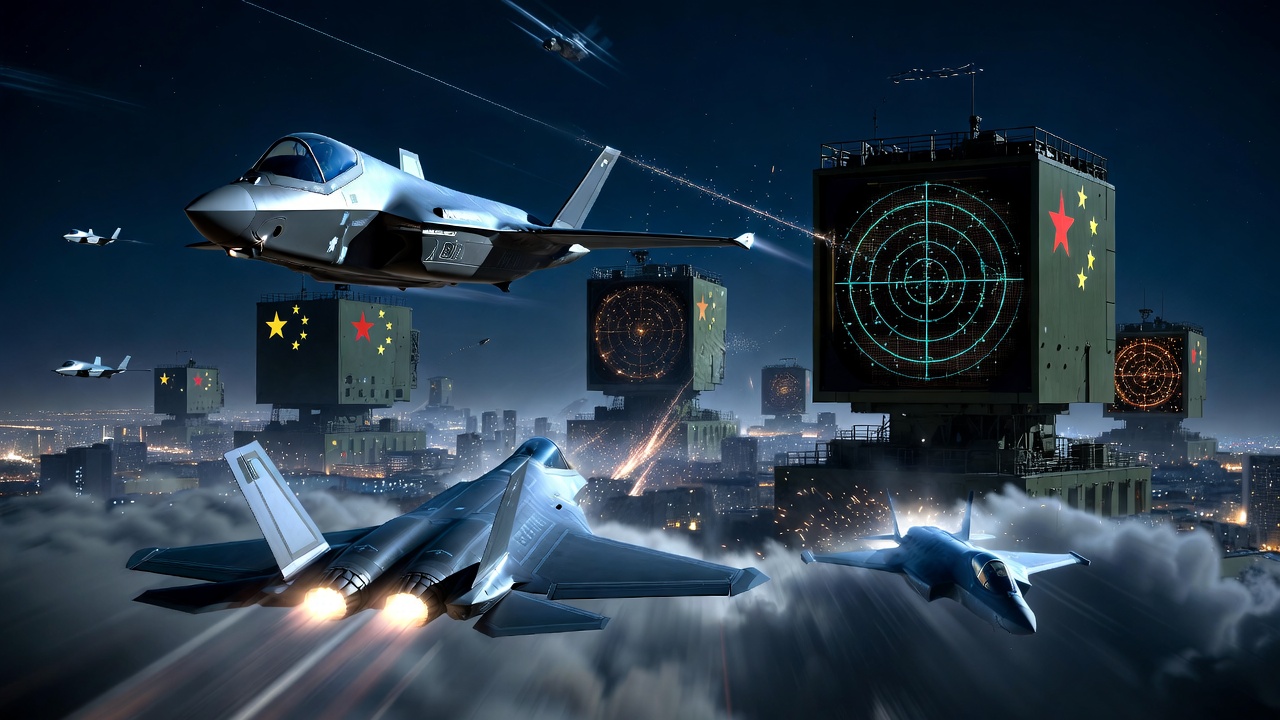
In a humiliating 30-minute blitz on 03 January 2026, U.S. forces dismantled Venezuela’s Chinese-built air defenses around Caracas, striking Fuerte Tiuna, La Carlota and other crown jewels without firing a single shot in return. Over 150 platforms F-22s, F-35s, B-1 bombers, MQ-9 drones swarmed in, blinded radars worth $5 billion, and vanished. Caracas’s Integrated Aerospace Defense Command (CODAI) lay paralyzed, its “stealth-killer” Chinese radars reduced to useless scrap.
Venezuela relied on China Electronics Technology Group radars like the JYL-1 three-dimensional surveillance and JY-27 metric-wave systems, marketed as “stealth hunters” capable of tracking F-35s. US forces degraded these sensors through intensive jamming and power outages, blinding early warning and isolating the network. This initial phase prevented effective use of Russian S-300V and Buk-M2 systems, with at least two Buk-M2s confirmed destroyed.
With radars offline and data links severed, US special operations achieved total air superiority in minutes. The 160th Special Operations Aviation Regiment (Night Stalkers) deployed MH-60M Black Hawks, MH-47G Chinooks, and MV-22 Ospreys for air-mobile insertions, supported by Delta Force (1st SFOD-D). Only one helicopter was hit but returned safely, while Venezuelan 9K338 systems saw limited use.
According to the Eurasian Times, Loss of air cover and command-control left Venezuelan ground units, armor, and fire support static amid electronic saturation. Units lacked real-time sensor integration, fires, and maneuver coordination. EA-18G Growlers from USS Gerald R. Ford overwhelmed defenses with jamming and spoofing.
Structural Weaknesses in Chinese Systems
Chinese export air defenses failed in Venezuela due to poor electronic warfare resistance, rigid centralized command structures, and opaque proprietary software that crippled adaptability. Downgraded versions supplied to clients like Venezuela had inferior processing power and encryption compared to PLA systems, amplifying vulnerabilities. Reliability faltered in humid conditions with corrosion and sensor drift, while heavy reliance on Chinese technicians for spares and updates created strategic dependencies, leaving networks decaying amid sanctions.
On 06 Jan 2026, Taiwan Vice Defense Minister Hsu Szu-chien cited the US raid on Caracas, which arrested Maduro and exposed Chinese JY-27A “anti-stealth” radars’ failure to detect F-22s/F-35s, as proof of US technological superiority. Poor maintenance, spare part shortages via civilian channels, and inadequate Chinese support left over 60% of Venezuela’s radars offline, per a Miami institute report. Analysts stress networked IADS and upkeep are vital; this humiliation for Xi undermines China’s arms export ambitions amid Taiwan tensions.
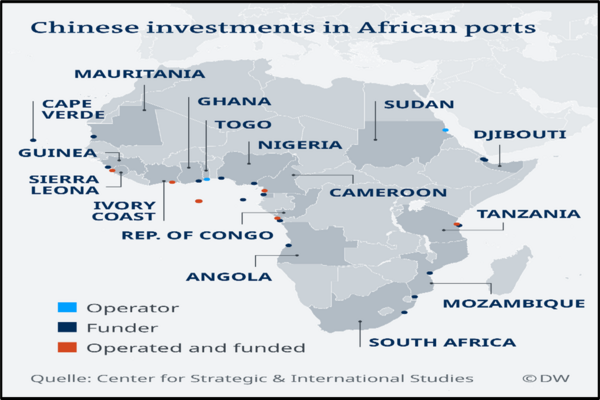
Operational letdowns of Chinese air defenses in Latin America and Africa expose recurring issues: corrosion in humid environments, sensor drift from poor sealing, and designs optimized for peacetime demos rather than sustained combat. Sanctions and political rifts sever support lifelines, as clients lack source code access for independent repairs, leading to network decay. The US Venezuela operation proved integrated multidomain ops blending EW, intel, stealth strikes, and SOF—overmatch isolated hardware, validating superiority in resilient C4I architectures over brittle exports.
For governments from Pakistan to Myanmar and across parts of Africa, the lesson from Caracas is stark. “Cost‑effective” Chinese air defences risk building illusion, not deterrence systems that look formidable on parade, bristle with radar dishes and missile tubes, and generate impressive talking points for domestic audiences, yet buckle when confronted by U.S.- or NATO‑level aerospace power. The Venezuelan example shows how quickly a supposedly dense, layered shield can collapse if its core technologies are untested, over‑marketed and structurally dependent on a foreign supplier.
In an era defined by stealth aircraft, long‑range precision strike, offensive cyber operations and dense electronic warfare, national survival cannot rest on unproven, politically convenient technology. States that choose Chinese systems as the backbone of their air defence may find, as Caracas did, that what they purchased was not a shield but a façade one that crumbles in its first real encounter with modern high‑intensity conflict.










Leave a Reply