

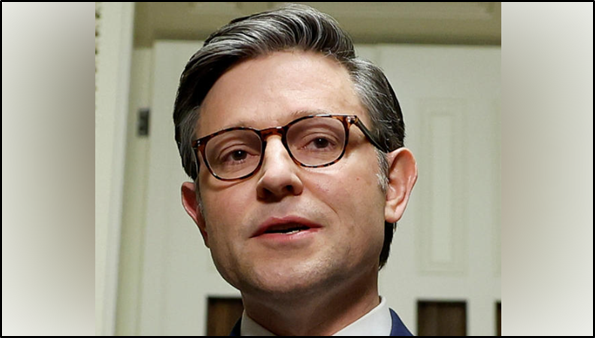
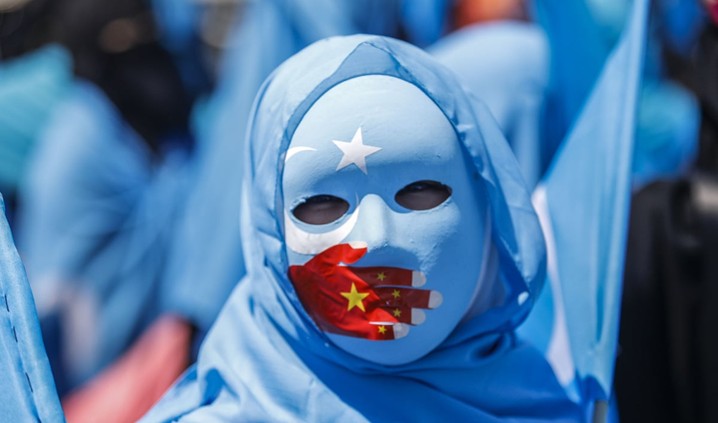
As Beijing deepens its brutal campaign to crush Uyghur identity, one family’s grief is about to confront China’s leaders from the heart of American power. At President Donald Trump’s State of the Union address, U.S. House Speaker Mike Johnson will spotlight the regime’s cruelty by hosting Ziba Murat the daughter of imprisoned Uyghur doctor Gulshan Abbas whose unjust detention has become a global symbol of China’s state-sponsored repression. Murat’s presence is not just a gesture of solidarity; it is a direct indictment of the Chinese Communist Party’s machinery of fear a system that vanishes innocent people, punishes families for speaking the truth, and wages an unrelenting war on an entire culture.
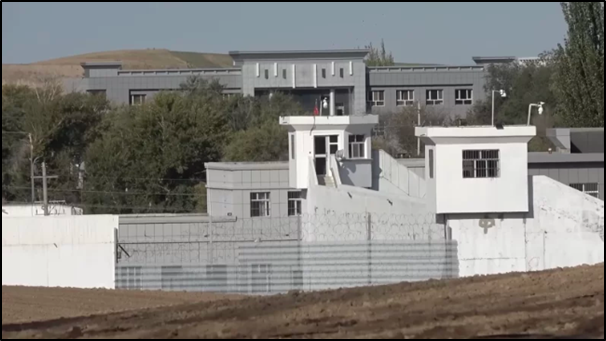
According to The Hill, Johnson’s invitation signals growing bipartisan concern in Washington over Beijing’s atrocities against the Uyghur population. Over a million Uyghurs and other Turkic Muslims have been detained in so-called “re-education camps” across Xinjiang since 2017, under the guise of counterterrorism and social stability. Reports by United Nations experts, human rights organizations, and survivors describe systematic abuses including forced sterilizations, torture, forced labor, and ideological indoctrination crimes widely regarded as elements of cultural genocide.
A family torn apart
For the Abbas family, the suffering is deeply personal. Murat has spent more than seven years fighting to learn her mother’s fate after Dr. Abbas disappeared in 2018. “We have gone years without a single phone call or letter,” she has said in past interviews, describing the anguish of not knowing whether her mother is healthy, mistreated, or even alive. Her only “crime” appears to be her relation to her sister, Rushan Abbas, a Uyghur-American activist who has exposed China’s repression of Uyghurs on international platforms.
Before her disappearance, Dr. Abbas lived a quiet life as a retired physician in Urumqi, Xinjiang, with no political activity and no history of activism. In September 2018, she was forcibly disappeared by authorities, and it was later revealed she had been secretly sentenced to 20 years in prison on vague “terrorism” charges a punishment her family and human rights advocates say is purely retaliatory. Her case reinforces a chilling reality: in Xi Jinping’s China, entire families can be targeted and destroyed simply because one member dares to speak the truth.
U.S. lawmakers push for accountability
In Washington, Dr. Abbas’s case has become a rallying point for lawmakers demanding a tougher stance on Beijing. Members of Congress have repeatedly highlighted her detention in hearings, statements, and advocacy campaigns focused on China’s human rights record. In October, Rep. John Moolenaar, chair of the House Select Committee on the Chinese Communist Party, joined Senator Dan Sullivan and Rep. Chris Smith in a joint letter urging President Trump to personally raise the case of Dr. Abbas and other detainees in his next meeting with Chinese leader Xi Jinping.
The lawmakers described the CCP’s campaign in Xinjiang as “one of the world’s most extensive human rights crises” and called for a response that puts human dignity above economic and strategic interests. Trump and Xi last met in South Korea, where trade dominated the agenda, but with Trump expected to visit China from March 31 to April 2 for further talks, pressure is building on the administration to directly confront Beijing over its treatment of Uyghurs and other ethnic minorities.
Global awareness and Western response
The growing visibility of victims like Dr. Abbas has intensified calls for international accountability. In recent years, several democratic nations including the United States, Canada, the Netherlands, the United Kingdom, Lithuania, Belgium, and the Czech Republic have formally declared that China’s policies in Xinjiang amount to genocide or crimes against humanity. Governments have imposed sanctions on senior Chinese officials, blacklisted Xinjiang security entities, and tightened import controls to keep products tainted by forced labor out of their markets. Major global brands are facing mounting scrutiny over supply chains linked to Uyghur forced labor, forcing them to choose between profit and principle.
By inviting Ziba Murat to the State of the Union, Speaker Johnson seeks to reinforce these efforts and remind the world that behind every statistic is a human life a mother, daughter, or brother silenced by a regime that fears truth. As Washington prepares for Trump’s address, Dr. Abbas’s empty seat will stand as a haunting symbol of those still disappeared in China’s vast detention system, and Murat’s presence will challenge leaders and citizens alike to recognize that silence is complicity and that moral courage must not stop at any border.









Leave a Reply