

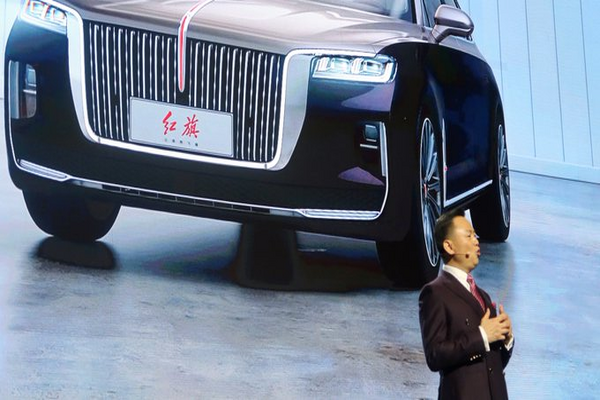
China’s latest anti-corruption move has struck at a politically sensitive intersection: state-owned industry, automobiles, labour institutions, and defence-linked manufacturing. Xu Liuping, a senior figure in China’s state sector, has been placed under investigation for “suspected serious violations of discipline and laws,” according to an official statement reported by Xinhua on May 23, 2026. Xu serves as secretary of the leading Party members group of the All-China Federation of Trade Unions, one of China’s most important mass organisations under Communist Party control.
The wording used in the announcement is significant. In China’s political system, “serious violations of discipline and law” is the standard phrase often used before corruption charges or disciplinary action are formally announced. Reuters reported that Xu was previously chairman of major state-owned automakers FAW Group and Changan Auto, and had also worked in the defence sector, giving him deep links across China’s industrial and military production ecosystem.
Xu’s profile makes this case more than a routine corruption investigation. He represents the type of state-sector technocrat who has helped drive China’s industrial rise: politically connected, experienced in strategic manufacturing, and trusted with key state-owned enterprises. FAW and Changan are not ordinary commercial firms; they are major pillars of China’s state-led automotive ambitions. His background in China South Industries Group Corporation also connects the case to a defence-industrial space central to Beijing’s military-modernisation agenda.
The investigation therefore sends a clear message to China’s SOEs: economic value, technical expertise, and institutional seniority do not guarantee protection. Under Xi Jinping, anti-corruption campaigns have repeatedly functioned not only as governance tools but also as mechanisms of political discipline. By targeting senior officials across finance, agriculture, state enterprises, and now figures with links to defence and automotive manufacturing, the Party reinforces the idea that loyalty to the central leadership remains more important than professional achievement.
The case also highlights the vulnerability of China’s state-capitalist model. SOEs are expected to serve multiple masters: commercial performance, technological self-reliance, national security, Party control, and political obedience. When senior executives fall under investigation, it exposes the tension inside this system. The Party wants world-class industrial champions, but it also demands absolute ideological discipline from those who run them.
Xu’s current position in the All-China Federation of Trade Unions adds another layer. The ACFTU is officially presented as a body that protects workers’ interests, but in practice it operates under the leadership of the Communist Party. China Daily reported that Xu, as vice-president of the ACFTU, was being investigated by China’s top anti-corruption watchdogs, with no further details released. This silence is typical of high-level disciplinary probes, where the accused often disappears from public life long before any transparent legal process is visible.
The timing is also important. China’s leadership has repeatedly called for stronger anti-corruption enforcement as it enters the 15th Five-Year Plan period. Earlier this year, Chinese Premier Li Qiang stressed clean governance and anti-corruption work as guarantees for achieving national development goals. This shows that anti-graft action is being closely tied to broader political and economic planning.
For outside observers, Xu Liuping’s case is a reminder that China’s industrial power is not separate from Party politics. The same executives who manage cars, weapons-linked production chains, and labour institutions remain subject to sudden political scrutiny. In Beijing’s system, a senior official can move from celebrated state-sector leader to disciplinary target overnight.
The broader message is unmistakable: Xi Jinping’s anti-corruption drive is no longer limited to removing corrupt individuals. It is a tool to discipline entire sectors, warn powerful networks, and ensure that China’s military-industrial and economic machinery remains firmly under Party command. In this system, even the architects of China’s industrial ambitions are safe only as long as they remain politically useful.





Leave a Reply