

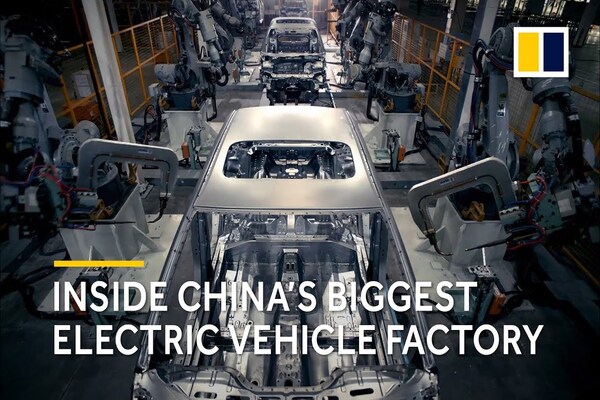
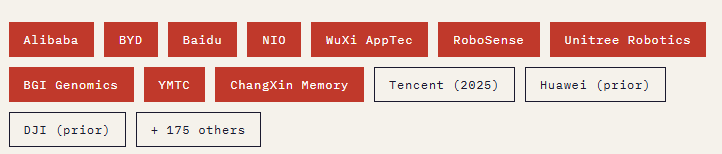
In a major escalation of America’s technology war with China, the US Pentagon has formally added three of China’s most famous companies — Alibaba, BYD, and Baidu — to its official list of “Chinese military companies.” The move, announced on June 9, 2026, signals that Washington no longer sees the boundary between Chinese commerce and China’s military as meaningful.
This isn’t a small update to a bureaucratic list. It is a declaration that China’s biggest e-commerce platform, its most dominant search engine, and the world’s largest electric vehicle maker are all, in the Pentagon’s view, part of China’s military machine — even if none of them makes weapons or uniforms.
The Pentagon’s blacklist of “Chinese military companies” is updated every year under a law known as Section 1260H of the National Defense Authorization Act. It was created in 2021. This year’s update is the most dramatic expansion yet: the list has grown from 134 companies in 2025 to 188 companies in 2026 — an increase of 40%.
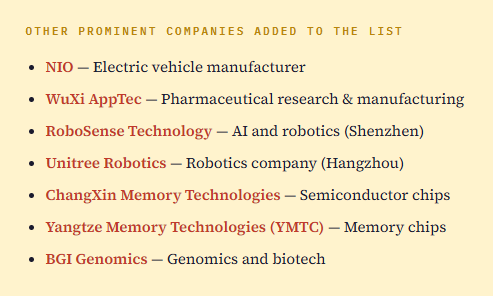
The list now targets sectors that go far beyond traditional defence industries. Alongside EV makers, AI companies, and e-commerce giants, it also sweeps in battery manufacturers, biotech firms, solar suppliers, robotics companies, and semiconductor manufacturers. New additions also include NIO (another Chinese EV maker), WuXi AppTec (a pharmaceutical firm), RoboSense Technology, and Unitree Robotics — both AI and robotics companies based in China.
What “Military-Civil Fusion” Means
To understand why civilian tech companies end up on a military blacklist, you need to understand China’s strategy called “military-civil fusion” (军民融合). This is Beijing’s official policy of blurring the line between civilian innovation and military capability. Under this strategy, data collected by a ride-sharing app, algorithms developed by a search engine, or battery technology perfected for an electric car can all be directed toward military use.
The Pentagon defines a “Chinese military company” as any entity that is owned or controlled by the Chinese military, or that contributes to China’s military-civil fusion strategy. Companies must also have some operations in the United States to be designated. It is this broad, forward-looking definition — not just “does this company make tanks?” — that now brings Alibaba, Baidu, and BYD into scope.

Why These Three Companies?
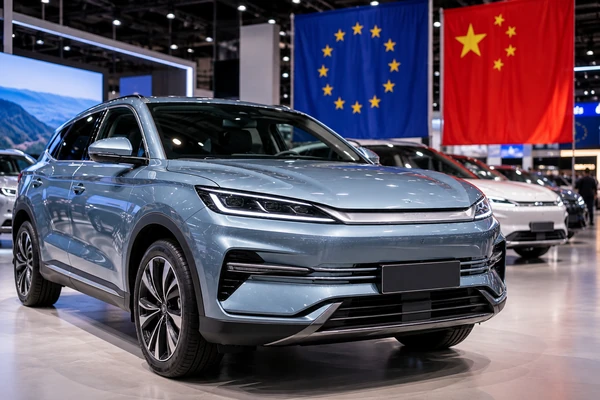
Alibaba is China’s largest e-commerce and cloud computing company — think Amazon and AWS combined. Its cloud computing arm stores vast amounts of data and runs AI systems across Asia and beyond. Baidu is China’s Google: it dominates internet search, but more importantly, it is a global leader in artificial intelligence, autonomous driving, and large language models. BYD is the world’s top-selling electric vehicle manufacturer, with massive battery production capabilities and a supply chain that spans the globe.
In each case, the Pentagon’s concern is not what these companies do today, but what they could be made to do by Beijing. Cloud infrastructure can power military logistics. AI systems can be repurposed for surveillance or weapons guidance. Battery and EV technology has direct applications in military vehicles and drones. The US government believes Beijing can compel any Chinese company to serve the state.
What Are the Consequences?
Being placed on the list carries real, if not immediately catastrophic, consequences. From June 30, 2026 — just three weeks away — all companies on the list and their subsidiaries will be barred from receiving US defense contracts. This is a direct financial hit for any company hoping to do business with the American military or government agencies tied to defence.
Beyond contracts, the designation creates a chilling effect. American investors, banks, and corporations tend to reduce or end business relationships with listed companies. Access to US capital markets becomes harder. It signals risk to any company in the world that partners with the designated firms. The label also damages corporate reputations globally, even without triggering automatic sanctions.
When Bloomberg first reported that these additions were being considered back in late 2025, Hong Kong stock markets reacted sharply: Alibaba’s shares fell 2.2%, while Baidu and BYD each dropped around 1%. The financial world understands the seriousness of the designation even if sanctions aren’t immediate.
China Pushes Back
China’s response was swift and angry. The Chinese embassy in Washington called the designations “discriminatory” and accused the US government of “overstretching” the concept of national security. An embassy spokesperson insisted that Chinese companies operating abroad strictly follow the laws of their host countries.
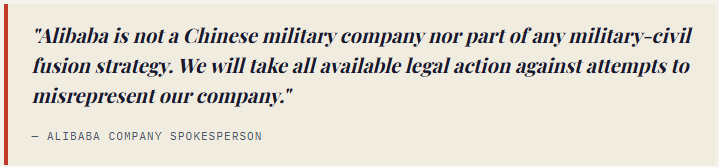
Alibaba said there was “no basis” for its inclusion and vowed legal action. BYD and Baidu did not immediately comment. The designation mirrors what happened to tech giant Tencent — owner of the popular messaging app WeChat — which was added to the list in 2025. Like Tencent, these companies now face the difficult task of arguing their innocence against a charge defined more by geopolitical suspicion than specific evidence of wrongdoing.
The Bigger Picture
This expansion of the Pentagon blacklist comes at a particularly sensitive moment. It was published less than a month after US President Donald Trump met Chinese President Xi Jinping in Beijing for a two-day summit aimed at reducing tensions after years of trade disputes and technological rivalry. The blacklist update — already previewed in a draft notice in February 2026 that was briefly withdrawn — appears to represent a Pentagon policy running on its own track, separate from diplomatic negotiations at the top.
Deputy Defense Secretary Stephen Feinberg personally signed off on the list, determining that all named entities qualify as Chinese military companies, provide commercial services or manufacturing, and operate in the United States.
The trend is clear: the US is no longer distinguishing between China’s commercial sector and its military. In Washington’s view, every major Chinese technology company is a potential instrument of state power. For Alibaba, BYD, and Baidu — companies with millions of customers worldwide and ambitions far beyond China’s borders — the blacklist is both a financial headache and a reputational crisis they will struggle to escape.
Companies on the Updated 2026 List





Leave a Reply