
China’s artificial intelligence race has entered a new and more sensitive phase. For years, Beijing has openly declared its ambition to become a global leader in advanced technology. It has invested heavily in AI labs, cloud computing, semiconductor research, military-civil technology projects, and home-grown platforms. But the latest reported move shows something deeper than ambition. It shows fear.
According to recent reporting, China has begun restricting overseas travel for top AI professionals working at major private technology firms, including Alibaba and DeepSeek. These restrictions reportedly apply to people involved in advanced and strategically important AI work. Before travelling abroad, they may now need approval from relevant government authorities. Reuters reported the development based on Bloomberg’s account, while noting that it could not independently verify the report.
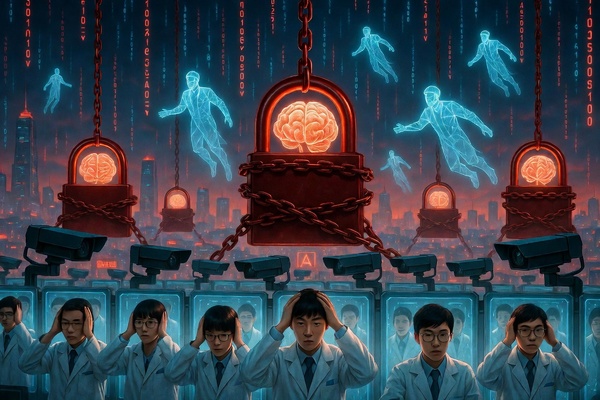
On the surface, this may look like a simple security measure. But in reality, it carries a much larger message. Beijing is no longer treating AI talent as ordinary private-sector manpower. It is treating elite AI researchers, founders, executives, and engineers almost like national strategic assets. In China’s view, these people are not just employees of companies. They are holders of knowledge that could shape the future balance of power between China and the United States.
This is a major shift. Traditionally, China’s strict travel controls were associated with Communist Party officials, sensitive state researchers, nuclear scientists, military-linked experts, and senior executives in state-owned enterprises. In many state institutions, handing over passports or seeking approval for foreign travel has long been part of the system. But extending similar controls to private AI professionals marks a new level of state involvement in the technology sector.
The message is clear: in today’s China, there is no longer a clean wall between private innovation and state security. If a private company is working on technology that Beijing sees as strategically important, then that company and its people can quickly become part of the national security system.
This development comes at a time when AI has become one of the most important fronts in the US-China rivalry. The competition is no longer only about apps, e-commerce, or consumer platforms. It is about who controls the next generation of intelligence systems, who builds the most powerful large language models, who secures advanced chips, and who dominates future military, industrial, and information systems.
China knows that AI is not just another commercial industry. It can influence warfare, surveillance, education, finance, propaganda, cyber operations, robotics, and scientific discovery. That is why Beijing increasingly sees AI as a national survival issue, not simply a business opportunity.
This also explains why the reported restrictions focus on top talent. In AI, talent is often more valuable than infrastructure. Powerful chips and data centres matter, but the people who design models, improve algorithms, optimise training, and solve technical bottlenecks are equally important. A single senior researcher can carry years of experience, model architecture knowledge, training methods, internal research practices, and strategic understanding of a company’s roadmap.
For Beijing, the fear is not only that these experts may permanently leave China. The fear is also that they may share information, join foreign competitors, attend sensitive conferences, or be approached by overseas companies and governments. Earlier reporting said Chinese authorities had already advised top AI researchers and entrepreneurs to avoid travelling to the United States over concerns that they could reveal confidential information or be detained amid wider US-China tensions.
The latest reported curbs therefore appear to be an escalation. Advice has moved closer to control. Reporting requirements have moved closer to permission requirements. Private-sector mobility has moved closer to state supervision.
This tells us two important things.
First, Beijing views the AI gap with the United States as a serious national security challenge. China has made major progress in AI, especially with companies like DeepSeek attracting global attention for powerful and cost-efficient models. Alibaba’s Qwen models have also become an important part of China’s AI ecosystem. At the same time, China still faces major constraints, especially in access to advanced semiconductors. US export controls on high-end Nvidia chips have pushed Chinese firms to look for alternatives, including domestic chips and overseas computing arrangements. Reuters has reported that Chinese tech giants have increasingly used overseas data centres to access advanced Nvidia chips, while DeepSeek has relied partly on stockpiled chips and cooperation with local chipmakers.
This creates a difficult situation for Beijing. China wants its AI firms to compete globally, but global competition requires global movement. Researchers need to attend conferences, meet partners, exchange ideas, recruit talent, and understand international trends. If China locks down its best minds too tightly, it may protect secrets in the short term but weaken innovation in the long term.
Second, the move shows how deeply the Chinese state now penetrates private technology. In the past, companies like Alibaba were often seen as symbols of China’s entrepreneurial rise. They represented speed, market competition, private ambition, and digital creativity. But under Xi Jinping, the party has tightened its grip on private business. Technology firms are expected not only to make profits, but also to serve national goals.
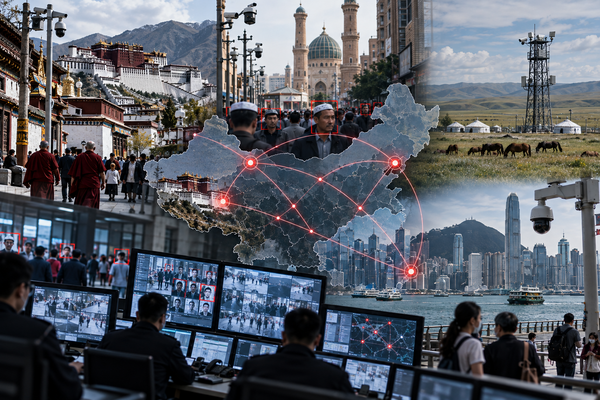
AI companies are especially sensitive because their work overlaps with censorship, surveillance, military research, data governance, and national competitiveness. That makes them impossible for Beijing to treat as purely private businesses. When the state sees AI researchers as “walking state secrets,” private freedom becomes secondary to political control.
But there is a major risk in this approach. Innovation does not grow well in an atmosphere of fear. The world’s strongest technology ecosystems are built on movement, collaboration, debate, experimentation, and talent circulation. Scientists and engineers improve by working with global peers. They need access to conferences, universities, open-source communities, venture networks, and international markets.
If Chinese AI experts feel they are being watched, restricted, or trapped, some may become less willing to take risks. Others may quietly look for ways to leave earlier in their careers before they become too important to move freely. Foreign firms may become more cautious about partnerships with Chinese AI companies. Global researchers may also hesitate to collaborate if they believe Chinese counterparts are under heavy political supervision.
This is the central contradiction in Beijing’s AI strategy. China wants world-class innovation, but it also wants political control. It wants private companies to move fast, but it also wants them to obey national security priorities. It wants global influence, but it fears global exposure. It wants to stop brain drain, but strict controls may make the country less attractive for the very talent it wants to keep.
The policy may also damage morale inside China’s tech sector. Top AI professionals are not ordinary workers. They are highly skilled, globally connected, and aware of their value. Many can compare working conditions across countries. If they feel the state does not trust them, they may see themselves less as innovators and more as assets under surveillance.
Supporters of the restrictions may argue that China is simply protecting sensitive knowledge in a hostile international environment. From Beijing’s perspective, the US has already restricted chip exports, increased scrutiny of Chinese technology firms, and tightened controls over strategic sectors. In that context, Chinese officials may believe they are responding defensively.
But even if the motivation is defensive, the method is revealing. Instead of relying only on incentives, better research funding, improved domestic opportunities, and stronger legal protection for intellectual property, Beijing appears ready to use administrative control over people’s movement. That reflects the deeper character of China’s governance model: when pressure rises, the instinct is not openness but restriction.
The bigger issue is that AI leadership cannot be achieved by confinement alone. AI grows through talent, compute, data, research culture, and global interaction. Restricting travel may reduce the risk of immediate leakage, but it cannot create original breakthroughs by itself. In fact, over-control may reduce the creative energy that China needs to close the gap with the United States.
The reported restrictions on Alibaba, DeepSeek, and other private AI professionals therefore mark more than a personnel policy. They show how seriously Beijing now sees the AI race. They show the growing fusion of technology, national security, and political control. They also show Beijing’s fear that the most valuable resource in the AI race is not only chips or data, but people.
China may be trying to prevent brain drain. But if the best minds begin to feel like prisoners of strategy, Beijing could create a new problem for itself. Talent can be controlled for a time, but true innovation needs trust, openness, and freedom to think beyond the state’s boundaries. That is where China’s AI ambition may face its hardest test.




Leave a Reply