

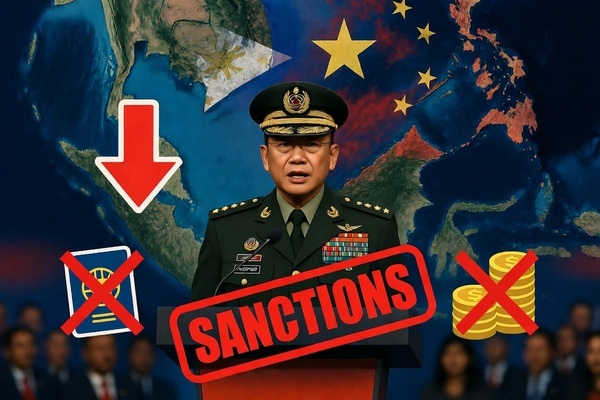
China officially sanctioned Philippine Defense Secretary Gilberto Teodoro Jr. on June 11, 2026, along with his spouse and child, in a sharp diplomatic escalation that has drawn widespread international attention.
The penalties are comprehensive. Teodoro and his immediate family are banned from entering mainland China, Hong Kong, and Macau. They are also fully frozen out of any financial dealings or cooperation with Chinese entities. Beijing stated that the measures were taken in defense of China’s national security interests.
The move represents one of the most pointed acts of diplomatic retaliation Beijing has directed at a Philippine official in recent years, and comes amid an already volatile relationship between the two nations over competing claims in the South China Sea.
What Triggered the Sanctions: Teodoro’s Shangri-La Dialogue Speech
The sanctions are a direct response to remarks made by Teodoro at the Shangri-La Dialogue, Asia’s premier annual defense and security forum held in Singapore. Speaking before an international audience of defense ministers, military chiefs, and security officials, Teodoro described China as a severe threat to regional stability.
The defense secretary pledged that the Philippines would stand firm against what he characterized as Beijing’s aggressive and bullying behavior in the South China Sea. The speech was notable for its directness — Teodoro named China explicitly rather than using the diplomatic language that many regional officials prefer when discussing Beijing’s maritime conduct.
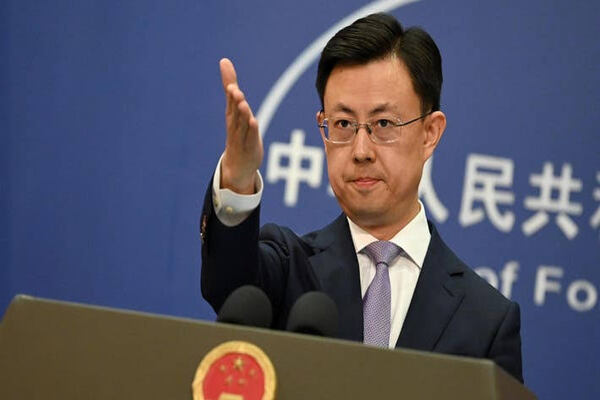
China’s foreign ministry responded swiftly, accusing Teodoro of making irresponsible remarks that undermined regional peace and framing the sanctions as a proportionate defense of Chinese sovereignty.
Teodoro Dismisses Sanctions as Symbolic
Despite the severity of the measures announced by Beijing, Teodoro has been dismissive of their practical impact. The defense secretary pointed out publicly that he holds no assets in China and has no desire to visit the country. By his own account, the sanctions are entirely symbolic — punishing him for something he was not going to do and freezing assets he does not have.
The response has drawn attention for its candor. Rather than expressing diplomatic concern or issuing a formal protest, Teodoro essentially rendered the sanctions irrelevant with a single observation — that Beijing’s most dramatic act of retaliation has no real-world effect on him.
South China Sea Tensions: The Broader Context
The sanctions do not exist in isolation. They are the latest development in a sustained and increasingly dangerous confrontation between Chinese and Philippine forces in the South China Sea.
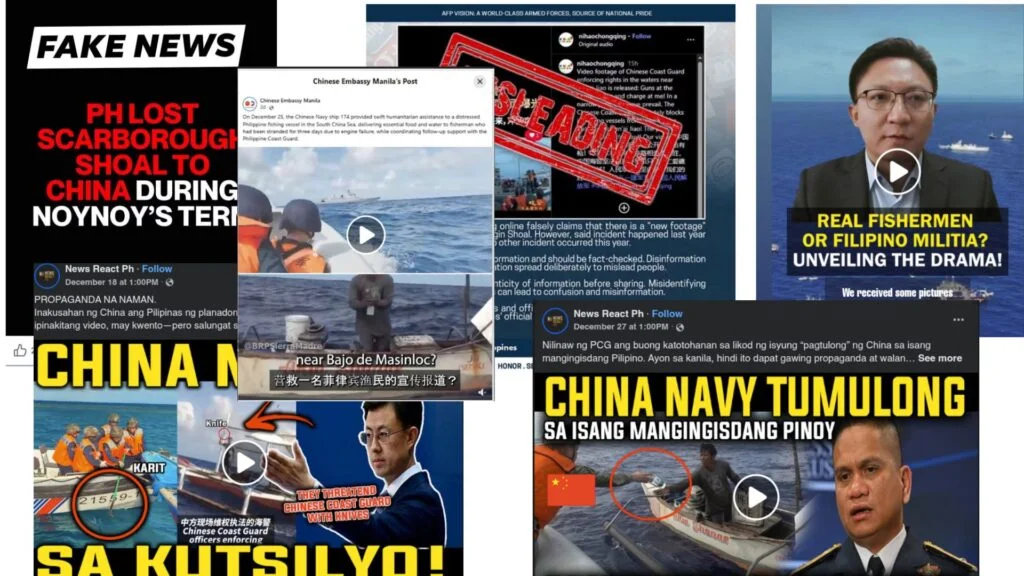
Over a series of months, the two nations have been engaged in repeated maritime vessel incidents — confrontations at sea involving water cannons, physical blocking maneuvers, and the harassment of Philippine supply missions to disputed territories. The incidents have been documented and publicized by Manila, drawing condemnation from the Philippines’ defense partners, including the United States.
Central to the legal dispute is the 2016 ruling by the Permanent Court of Arbitration at The Hague, which found that China’s expansive territorial claims in the South China Sea — encapsulated in the so-called “nine-dash line” — have no basis under international law. The tribunal ruled comprehensively in favor of the Philippines, affirming its rights over waters Beijing claims as its own.
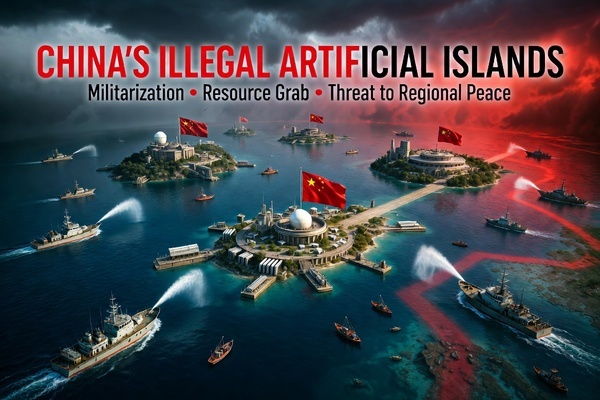
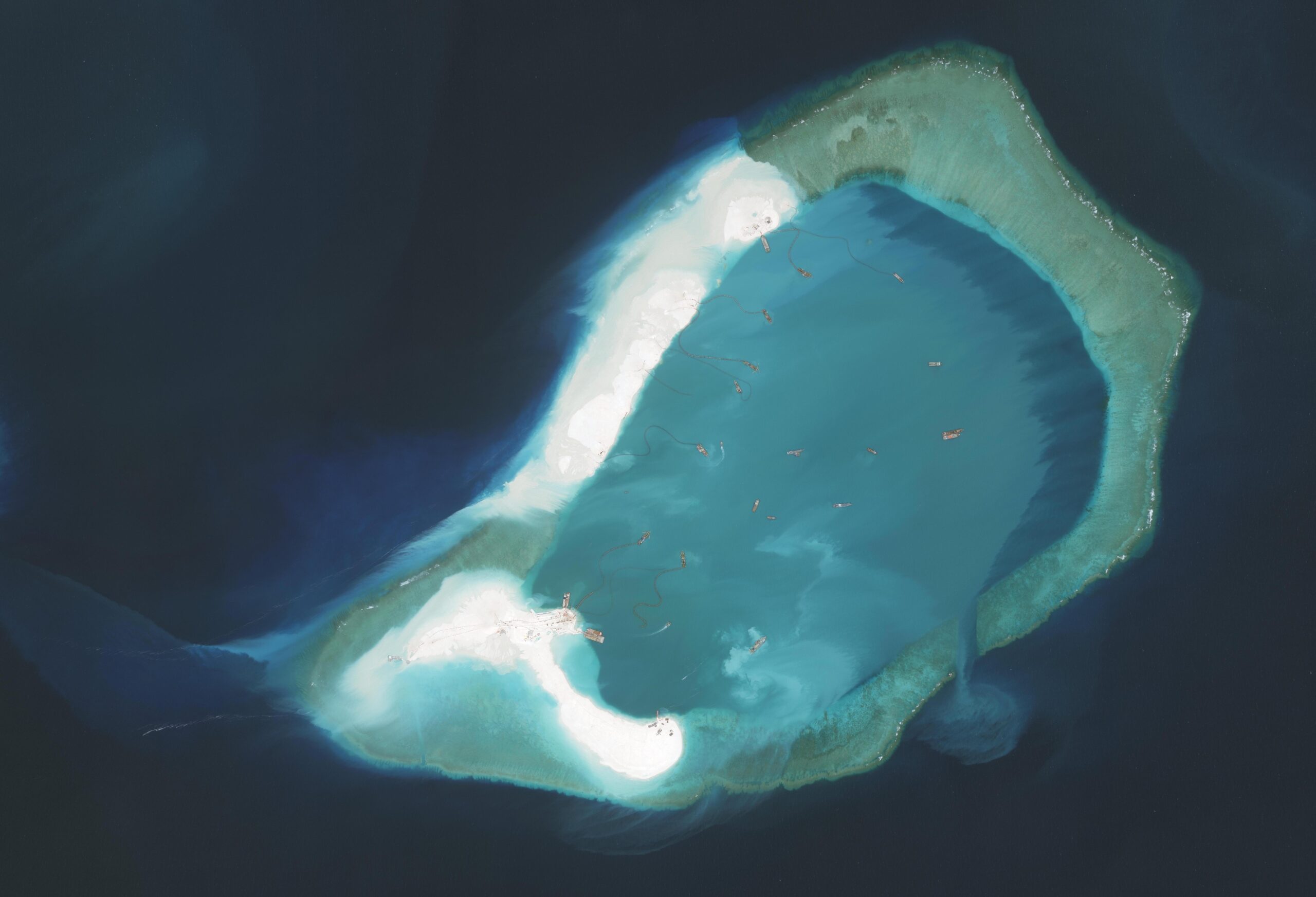
China has never accepted the ruling. Beijing declared it “null and void” and has continued to act as if it does not exist, maintaining its military presence on disputed features, constructing artificial islands, and challenging Philippine vessels in waters the arbitration tribunal recognized as Philippine territory.
Family Sanctions Draw Additional Scrutiny
One element of the Chinese sanctions that has prompted particular comment is the decision to include Teodoro’s spouse and child in the penalties.
Extending travel bans and financial restrictions to family members who hold no official role and have taken no position on matters of policy is seen by analysts as a deliberate signal — designed to increase the personal cost of publicly confronting Beijing and to warn other officials that defiance may carry consequences beyond their own careers.
Teodoro has not publicly addressed the inclusion of his family in the sanctions in detail. The Philippine government has not indicated any change in policy in response to the measures.
Regional Implications
The Teodoro sanctions are being closely watched across Southeast Asia, where a number of governments maintain delicate balancing acts between economic ties with China and security concerns about Beijing’s behavior in shared waters.
By sanctioning a sitting defense minister over a speech at an international forum, Beijing has signaled that it is willing to use punitive diplomatic tools against officials who publicly characterize Chinese maritime conduct as threatening or aggressive. The message to other regional defense establishments is clear: public criticism of China’s South China Sea behavior carries a price.
Whether that price is one regional governments are willing to pay — particularly as Teodoro himself appears unbothered — remains to be seen. The Shangri-La Dialogue has historically been a venue where frank discussion of regional security challenges takes place, and several participants have already commented publicly on the Chinese response.
Key Facts at a Glance
- Date of sanctions: June 11, 2026
- Sanctioned individuals: Gilberto Teodoro Jr. (Philippine Defense Secretary), his spouse, and his child
- Penalties: Entry ban from China, Hong Kong, and Macau; freeze on financial dealings with Chinese entities
- Trigger: Teodoro’s speech at the Shangri-La Dialogue describing China as a threat to regional stability
- Teodoro’s response: Stated he has no Chinese assets and no intention of visiting China
- Background: Ongoing South China Sea maritime confrontations; China’s rejection of the 2016 Hague arbitral ruling
What Happens Next
The Philippines has not signaled any softening of its position in response to the sanctions. Manila’s defense partnership with Washington remains active, and the Philippine government has continued to document and publicize Chinese maritime incidents.
The 2016 Hague ruling continues to sit at the center of the legal dispute — a binding international decision that Beijing refuses to recognize and that Manila continues to cite as the legal foundation for its territorial claims.
With maritime confrontations showing no sign of easing and both sides hardening their public positions, the announcement of sanctions against Teodoro and his family may prove to be a significant escalation marker in what is becoming one of Asia’s most consequential ongoing territorial disputes.





Leave a Reply