
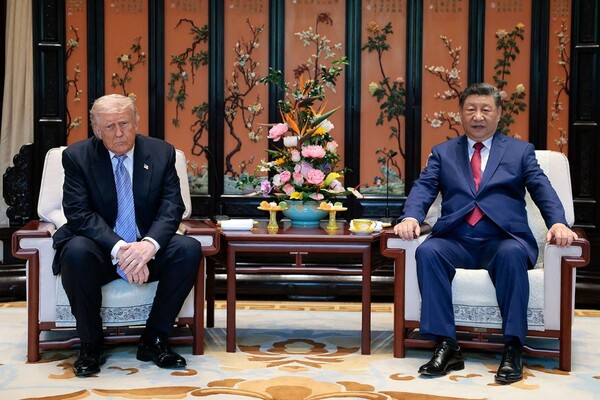
The world is at a crossroads. The United States wants a “G2”, a world co-led by Washington and Beijing. China, however, has its own vision: a “G1,” where it gradually becomes the main global power, while promoting a multipolar world with many players.
How G2 Came About
The idea of a G2 emerged in 2005, when economist C. Fred Bergsten suggested that the U.S. and China coordinate to prevent global economic chaos. Zbigniew Brzezinski later promoted it after the 2008 financial crisis. But China rejected the concept in 2009, fearing it would be trapped in U.S.-led rules. Over the next decade, tensions and trade wars made the idea even less appealing.
In 2025, Donald Trump revived the G2 term before his meetings with Xi Jinping. The world watched closely, debating whether a U.S.-China duopoly could actually guide global affairs.
What the U.S. Wants
Trump’s G2 vision is transactional. He hopes the U.S. and China will:
- Use trade to gain advantages on tariffs, agriculture, and rare earths
- Secure Chinese cooperation on Iran and Middle East conflicts
- Show strong leadership through personal diplomacy
- Implicitly recognize China as a peer competitor
- Bypass slow multilateral institutions
Yet the May 2026 Beijing summit revealed the limits of this approach. Promises like 500 Boeing jets were scaled down to 200, and agreements on Taiwan, Iran, or broader trade frameworks remained unresolved.
China’s Approach: Rejecting G2, Building G1
China’s leaders reject G2, emphasizing equal sovereignty and global multipolarity. Foreign Minister Wang Yi stated in March 2026 that “world history has always been written by many countries together.” China wants to lead without being locked into bilateral obligations, especially on issues like Iran or Western-defined norms.
Instead, China’s strategy focuses on:
- Expanding influence in the Global South
- Leading BRICS, SCO, and Belt and Road Initiative projects
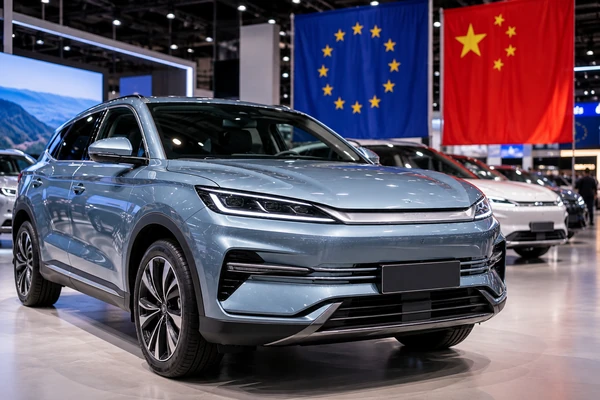
- Promoting Chinese technology, finance, and governance standards
- Crafting a multipolar world that gradually becomes China-centric
This approach, dubbed “G1,” positions China as a steady, reliable alternative to U.S.-led systems.
The Global Power Picture
Despite China’s rise, the U.S. still has major advantages:
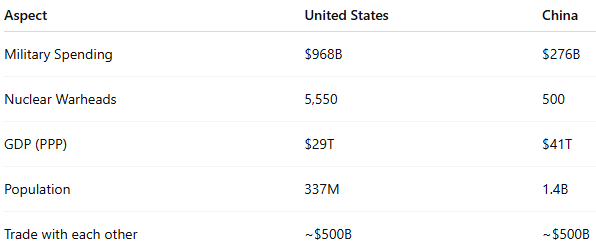
China excels in population, manufacturing, and global influence among developing nations, while the U.S. maintains dominance in military technology, finance, and alliances.
How the World Reacts
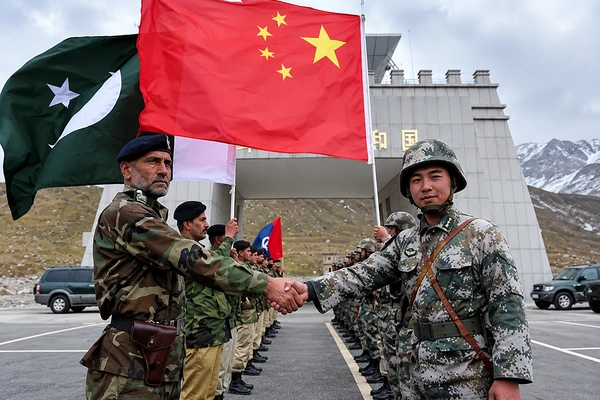
Allies are cautious. Europe, Japan, and Southeast Asian countries fear being sidelined in a U.S.-China duopoly. India insists on multipolarity to protect emerging powers. Russia aligns with China, reinforcing the multipolar narrative. ASEAN nations are carefully balancing relations between the two superpowers.
Who’s Winning the Narrative?
China appears to be ahead in shaping global perceptions. By promoting multipolarity and supporting developing nations, it looks like the defender of sovereignty and stability. Meanwhile, U.S. efforts under Trump, focused on deals and optics, often reinforced China’s image as a reliable power.
What This Means for the Future
Neither a clean G2 nor a fully realized G1 is imminent. The U.S. remains strong militarily and financially, while China faces domestic challenges like youth unemployment and a property slowdown. But the rivalry is shaping trade, technology, military posture, and global influence in ways that matter for everyone — from Delhi to Jakarta to Nairobi.
The most sustainable path may be true multipolarity, where multiple powers, including India, the EU, and African nations, have real influence. Avoiding the extremes of G2 or G1 will be key for global stability.





Leave a Reply