

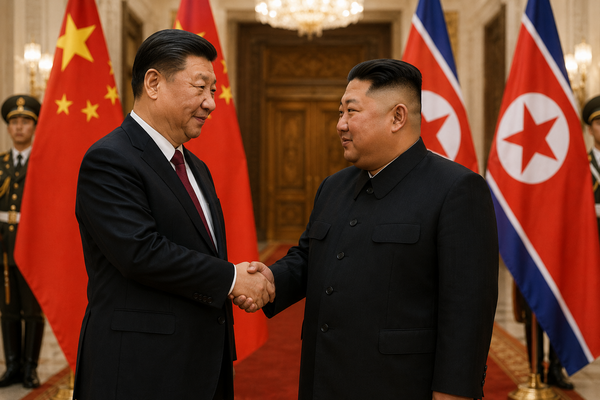
Chinese Communist Party leader Xi Jinping’s planned state visit to North Korea from June 8 to June 9 marks one of the most significant diplomatic moves in Northeast Asia this year. At the invitation of North Korean leader Kim Jong Un, Xi is set to travel to Pyongyang for a two-day visit, his first trip to North Korea in nearly seven years. The visit is being closely watched because it comes at a time when China, North Korea, Russia, South Korea, Japan, and the United States are all recalibrating their positions in a rapidly shifting regional security environment.
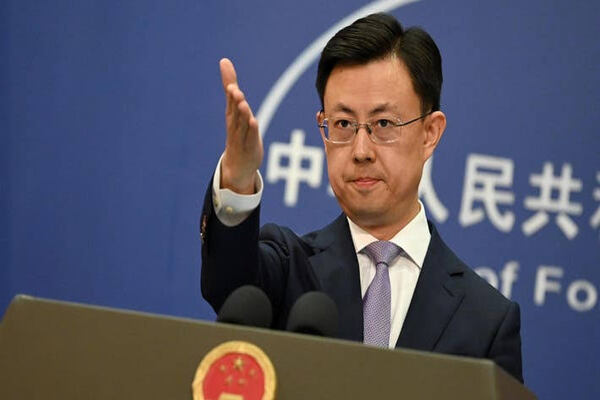
The announcement was made on June 5 by the International Department of the Chinese Communist Party. North Korea’s state-run Korean Central News Agency also confirmed the visit, underscoring that both sides want the trip to be seen as politically important. Chinese Foreign Ministry spokesperson Mao Ning said Xi and Kim would discuss bilateral relations and “issues of mutual concern,” a phrase that likely covers security, trade, sanctions, regional diplomacy, and the Korean Peninsula’s nuclear question.
Xi’s visit is rare not only because of the destination but also because of his recent travel pattern. In recent years, the Chinese leader has reduced his foreign visits and has avoided some major international summits that he once attended more regularly. His last reported foreign trip was in October 2025, when he met U.S. President Donald Trump in South Korea and reached a tentative trade understanding. Against this background, choosing Pyongyang as his first foreign destination of 2026 sends a clear political signal: China wants to regain initiative over North Korea policy before Washington, Moscow, or Seoul can shape the next phase of diplomacy.
For Beijing, North Korea remains both a strategic buffer and a diplomatic challenge. The two countries share a border of roughly 1,400 kilometres, and China has historically treated North Korea as a security shield separating Chinese territory from U.S.-allied South Korea, where American troops are stationed. China is also North Korea’s largest economic partner, with a large share of Pyongyang’s trade traditionally moving through Chinese border cities such as Dandong. However, the relationship has not always been smooth. North Korea’s repeated nuclear and missile tests have created embarrassment for Beijing, while Pyongyang has often resisted being treated as a dependent junior partner.
This visit comes as North Korea has grown more confident because of its closer ties with Russia. Since Moscow’s war in Ukraine, North Korea has become a more valuable partner for Russia, reportedly supplying weapons and military support while seeking food, fuel, technology, and diplomatic backing in return. This has created a new triangle in which Kim Jong Un can balance China and Russia against each other. For Xi, that is not an ideal situation. Beijing does not want Pyongyang to drift too far into Moscow’s orbit, especially if Russia gains stronger influence over North Korea’s military and economic decisions.
Kim Jong Un, for his part, will likely use the visit to show that North Korea is not isolated. A high-profile meeting with Xi allows Kim to project legitimacy at home and strength abroad. It also reinforces the message that despite sanctions, diplomatic pressure, and military exercises by the United States and its allies, Pyongyang still has powerful backing. North Korean state media will likely present Xi’s arrival as proof of the “unbreakable friendship” between the two socialist neighbours.
The nuclear issue will remain central, even if it is not openly emphasized. North Korea has repeatedly declared itself a nuclear weapons state and has shown little interest in returning to old-style denuclearization talks. In recent years, Kim has called for a major expansion of his nuclear arsenal and has accelerated missile development, including solid-fuel ballistic missiles, submarine-related systems, and weapons designed to threaten South Korea, Japan, Guam, and potentially the U.S. mainland. China publicly supports peace and stability on the Korean Peninsula, but it is unlikely to press Kim too hard on denuclearization during this visit. Beijing’s priority is not to force a nuclear concession but to prevent instability, war, or uncontrolled escalation near its border.
The timing also has a U.S. angle. Experts believe Xi may be trying to increase his leverage before any possible second summit with President Trump. During Trump’s first term, he met Kim Jong Un three times: Singapore in 2018, Hanoi in 2019, and at the Demilitarized Zone in 2019. Those meetings produced dramatic images but failed to deliver a lasting nuclear agreement. If Trump again seeks direct diplomacy with Kim, Xi will want China positioned as an indispensable player rather than a sidelined observer. By meeting Kim first, Xi can shape the diplomatic environment and remind Washington that no Korean Peninsula settlement can succeed without Beijing’s role.
The visit also matters for South Korea and Japan. Seoul will be watching for any sign that China might encourage North Korea to reduce tensions or resume dialogue. However, Pyongyang has shown little interest in engagement with South Korea in recent years and has adopted a more hostile posture toward inter-Korean relations. Japan, meanwhile, is concerned about North Korean missiles and China’s growing regional military power. For Tokyo, any deeper China–North Korea coordination adds to the security pressure already coming from the East China Sea, Taiwan Strait, and wider Indo-Pacific.
Economically, Xi and Kim may discuss trade revival, food assistance, tourism, transport links, and infrastructure cooperation. North Korea’s economy remains weak under sanctions and years of isolation. China may offer limited economic support that strengthens ties without openly violating international restrictions. Tourism could be one area of renewed cooperation, especially as North Korea has tried to develop selected tourism zones and showcase internal construction projects. For Kim, Chinese economic support remains essential. For Xi, controlled assistance is a way to keep Pyongyang dependent on Beijing.
The broader message of the visit is that China is moving to secure its influence in a region where power alignments are changing quickly. North Korea is no longer merely China’s isolated neighbour; it is also a nuclear-armed state with growing links to Russia and a history of direct engagement with the United States. Xi’s trip to Pyongyang is therefore not just ceremonial. It is a calculated move to preserve China’s leverage, manage Kim Jong Un’s ambitions, counter U.S. influence, and prevent Russia from becoming North Korea’s dominant external patron.
Xi Jinping’s visit is a reminder that the Korean Peninsula remains one of Asia’s most sensitive geopolitical flashpoints. Behind the official language of friendship and cooperation lies a complex contest over influence, nuclear weapons, sanctions, and future negotiations. For Beijing, the trip is about control and leverage. For Pyongyang, it is about recognition and survival. For Washington and its allies, it is a signal that any future North Korea diplomacy will have to account for China’s hand at the table.











Leave a Reply