

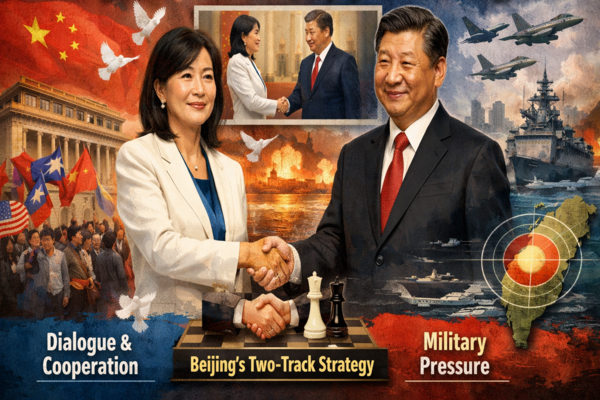
Cheng Li-wun’s April 7–12 trip to China is being described as a “journey for peace,” but its real importance reaches far beyond symbolism. As chairwoman of Taiwan’s opposition Kuomintang (KMT), she is the first KMT leader in roughly ten years to make such a visit, and reports suggest she could meet Xi Jinping. On the surface, the message appears straightforward: dialogue is preferable to conflict. But in today’s cross-strait environment, a visit like this cannot be seen as a routine gesture of goodwill. It comes at a moment when Beijing is both increasing military pressure on Taiwan and trying to influence the island’s domestic political direction.
For that reason, the trip matters not simply because of what Cheng says in Beijing, but because of how Beijing can use her presence. China has consistently preferred engagement with Taiwanese figures who accept some version of the “one China” principle, including the KMT’s older approach built around the so-called 1992 Consensus. Under former KMT president Ma Ying-jeou, cross-strait relations were noticeably warmer, producing trade agreements and culminating in the Ma-Xi meeting in 2015. In contrast, Beijing has treated the Democratic Progressive Party (DPP) as a separatist force and has taken a much tougher line under Tsai Ing-wen and now Lai Ching-te.
Viewed from that angle, Cheng’s visit fits comfortably into Beijing’s favored political narrative. China wants to project the idea that tension across the strait is not unavoidable, that “peace” remains possible, and that such peace can be achieved through dialogue with leaders willing to engage on terms acceptable to Beijing. Even though Cheng holds no authority to negotiate on behalf of Taiwan’s government, the visit can still produce something China values: images, headlines, and political messaging. Beijing does not need a binding agreement to benefit. It only needs to create the impression that Taiwan’s internal divisions can be influenced, managed, and perhaps widened.
Seen more broadly, the trip reflects a larger Chinese strategy aimed not only at eventual unification, but at gradually controlling the range of choices available to Taiwan right now. Beijing’s position has long combined its stated commitment to “reunification” with promotion of “one country, two systems,” while still refusing to rule out the use of force. This creates a two-track approach: conciliatory language for political effect, coercive pressure for strategic gain. China is not choosing between dialogue and intimidation. It is using both at once. Dialogue offers legitimacy and helps deepen divisions. Pressure generates anxiety and a sense of urgency. Together, these tools are meant to shrink Taiwan’s political space and weaken its ability to resist.
This is what gives Cheng’s trip its deeper meaning. Beijing’s Taiwan policy is not purely military. It is also political, psychological, economic, and informational. China’s broader strategy depends on multiple forms of pressure, not force alone. Economic coercion, political messaging, and influence operations all work to shape Taiwan’s calculations before any invasion scenario ever emerges. In that context, a KMT “peace mission” serves a useful purpose for Beijing by reinforcing the idea that stability comes through accommodation rather than deterrence.
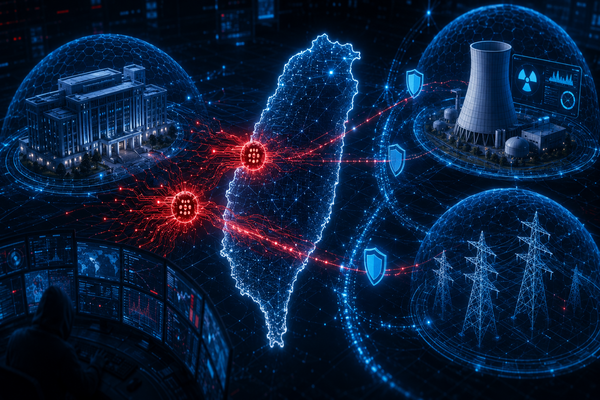
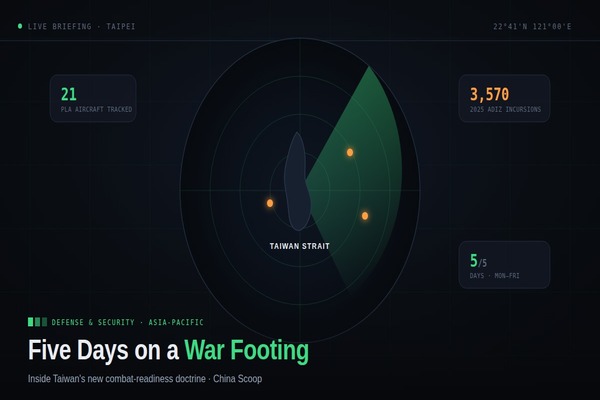
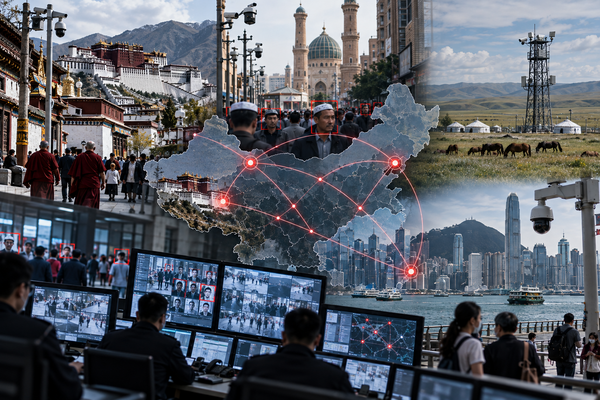
Recent Chinese behavior makes this interpretation even stronger. Beijing has stepped up military activity around Taiwan while Taipei has warned of growing hybrid threats, including cyberattacks, disinformation campaigns, deepfakes, and efforts to target Taiwan’s semiconductor expertise and skilled workforce. These are not separate developments. They form part of the same pattern: military pressure to raise the cost of resistance, economic and technological pressure to undermine resilience, and political messaging to persuade segments of Taiwanese society that accommodation is the only practical path. In that setting, an opposition leader’s visit to China becomes more than diplomacy. It becomes part of a wider struggle over perception and influence.
None of this necessarily means Cheng herself should be portrayed as acting with bad intentions. Her stated view is that the world cannot afford a Taiwan crisis and that communication can help reduce the danger of war. That concern is genuine. A war over Taiwan would have devastating consequences for the region and beyond. Many people in Taiwan do want calm, economic stability, and reduced tensions. But the danger lies in mistaking the language of peace for the reality of peace. A high-profile meeting in Beijing may lower the temperature for a few days. It does not alter the basic imbalance: China claims Taiwan as its territory, rejects Taiwan’s separate political identity, applies military pressure, and seeks eventual political absorption.
That is why Beijing stands to gain from this visit even if no formal outcome emerges. If Cheng comes back with positive images, vague assurances, and talk of renewed communication, China can present itself as calm and constructive while keeping the coercive side of its strategy fully intact. If the visit sharpens debate within Taiwan over defense spending, deterrence, and national identity, Beijing benefits again. China gains when Taiwan’s domestic discussion moves away from Beijing’s coercion and toward uncertainty within Taiwan itself.
In the end, Cheng Li-wun’s visit to China should not be understood only as a peace initiative, nor simply condemned as betrayal. Its significance is more complex than either label suggests. It reveals how Beijing now approaches Taiwan: not through one dramatic act alone, but through a layered strategy that combines outreach with pressure, diplomacy with intimidation, and engagement with long-term coercion. China’s objective is not only to gain Taiwan in the future. It is to shape Taiwan’s options in the present — to influence what its leaders can say, what its parties can debate, and what its people come to believe is possible. That is why this trip matters so much. It is more than a visit. It is a test of whether the language of “peace” protects Taiwan’s security, or becomes a tool through which Beijing gradually weakens it.





Leave a Reply