

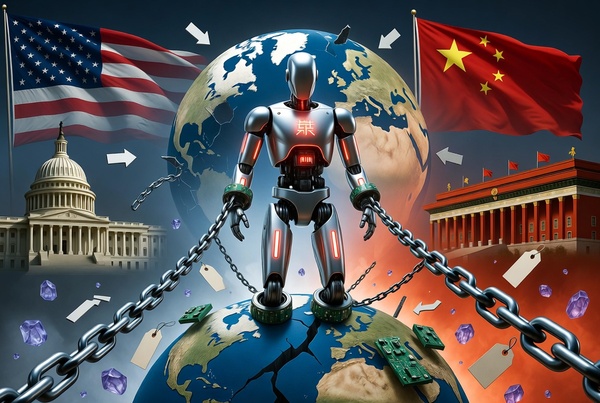
Beijing’s control of humanoid robots and rare earths puts factories, innovation and customers worldwide at risk
The United States this week took a sharp step against foreign-made humanoid robots. The Federal Communications Commission added advanced robotic devices, including humanoid and four-legged machines, to its restricted list. Officials said these robots create unacceptable national security risks. They can collect data that foreign actors might use to watch people, steal information or even take remote control of the machines.
The ban covers new imports only. Models already approved can still enter the country. Power inverters used in data centers and solar systems faced the same restriction. Chinese companies make about 85 percent of the world’s humanoid robots. They ship thousands of units at prices often under $5,000. The U.S. move therefore hits Chinese producers hardest, even though the official statement named no single country.
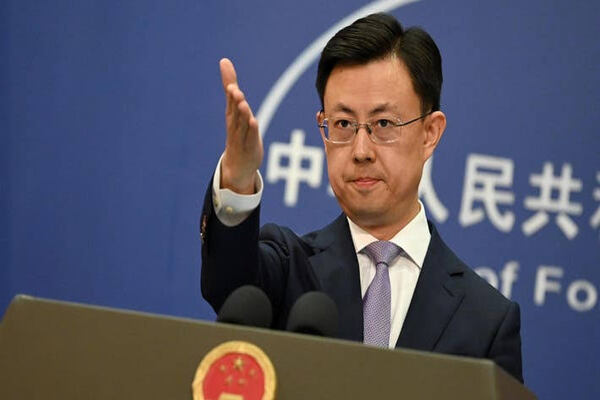
China’s commerce ministry reacted with anger on Thursday. It called the ban discriminatory and said the action “severely damages” China-U.S. economic and trade relations. The ministry claimed the step also disrupts the stability of global industrial and supply chains. Officials urged Washington to withdraw the measure at once.
If the United States refuses, China promised to take resolute countermeasures to protect its interests. The exact form of those countermeasures remains unclear, yet past patterns point to possible limits on rare earth exports or tighter rules for American firms operating in China. This dispute reveals a deeper weakness in the global robot industry.
China now dominates both finished humanoid robots and many of the parts that make them work. Chinese factories produce most of the sensors, joints, actuators, and motors that other companies need.Industry experts say it has become nearly impossible to build a competitive humanoid robot without Chinese-made components.
Companies in the United States, Japan, Europe, and elsewhere depend on this supply chain. When one nation controls so much of the production, any sudden political decision can freeze progress everywhere. Rare earth metals form another critical weak point. Humanoid robots use dozens of small electric motors.
Those motors require high-performance magnets made from rare earth elements such as neodymium and dysprosium. China mines most of the world’s rare earths and processes nearly all of them into usable materials. In earlier trade disputes, Beijing already restricted some of these exports. Those limits delayed Tesla’s Optimus robot plans and raised costs for other makers.
Fresh restrictions as retaliation would hit every company that builds advanced robots, not only American ones. Factories in Germany, South Korea, and Japan would face the same shortages and price spikes. State support has accelerated China’s rise. Large government subsidies and national industrial plans poured money into robotics research and factory expansion.
Chinese firms could scale production faster and sell at lower prices than competitors who lacked the same backing. At the same time, security researchers have reported problems in some Chinese robots. Certain models have sent data to servers in China or contained software flaws that allowed remote access.
These findings fuel the security concerns that drove the U.S. ban. The harm reaches far beyond American borders.European and Japanese robot makers lose access to affordable Chinese parts and face unfair price competition. Start-ups in other countries struggle to enter a market already flooded with low-cost Chinese machines.
Developing nations that hoped to buy cheap robots for factories or elder care now confront higher costs and uncertain supply. Global innovation slows when companies spend more time searching for alternative parts than improving designs. Customers everywhere pay more and wait longer for reliable machines.
Retaliation would make the damage worse. Limits on rare earths or components would raise prices across the board. Joint research projects between Chinese and foreign firms could collapse. Investors would grow cautious about the whole sector. The result would be slower progress toward robots that could help with manufacturing, logistics, and care for aging populations.
Journalists who follow technology and trade offer practical suggestions.Governments should accelerate programs to develop alternative sources of rare earths and critical robot parts.
Public and private investment can support domestic production of sensors, motors, and magnets so no single country holds the key. Industry groups and trade bodies can create shared standards for security and data protection that apply to all makers.
Open dialogue between major economies can replace sudden bans and threats with clear rules that keep markets competitive.Companies themselves can redesign products to use more interchangeable components from multiple regions. These steps will take time and money.
Yet they reduce the risk that political tension in one capital freezes an industry that serves the whole planet. Humanoid robots promise real benefits for factories, hospitals, and homes. That promise stays fragile while the supply chain and the market remain so heavily concentrated in one place. A more balanced global industry would protect progress for everyone.















Leave a Reply