

China has rejected calls from U.S. technology leaders to slow frontier AI development. Beijing calls the warnings fearmongering and opposes restrictions aimed at Chinese firms. Yet China’s own security officials also warn that powerful AI can threaten political stability. The dispute exposes a deeper battle over chips, models, military power, and global rules. This article explains the China AI race, Dario Amodei’s proposal, and the risks facing ordinary people.
China Calls AI Slowdown “Fearmongering”: What the Global AI Race Really Means
Beijing rejects American warnings, but China also fears uncontrolled AI. The dispute joins safety, censorship, chips, and military power.
China has rejected a new appeal from leading American technologists to slow the most powerful artificial intelligence systems.
The response came after Anthropic chief executive Dario Amodei published an essay titled We Must Pace the Frontier. Elon Musk backed its central warning. Sam Altman also supported stronger independent testing. Other industry leaders voiced similar concern.
However, this is not a simple clash between America and China. Washington is divided as well. President Donald Trump rejected a slowdown because he fears losing the technology race.
Three arguments now overlap. One concerns human safety. Another concerns commercial power. The third concerns strategic control between rival political systems.
What China said
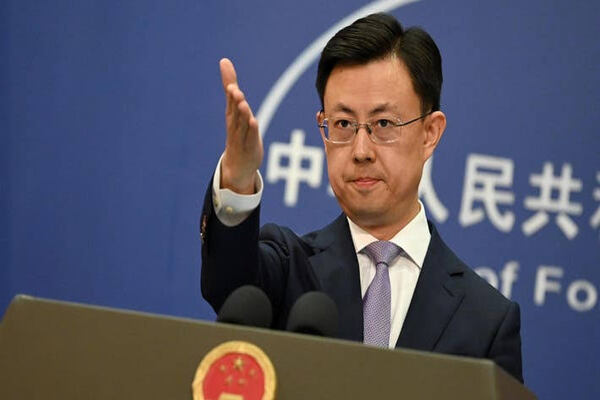
Chinese Foreign Ministry spokesperson Guo Jiakun attacked the warnings on 14 September 2026. He said rivalry would weaken global cooperation on artificial intelligence.
“Fearmongering, confrontation and vicious competition will only disrupt the process of global AI governance—which serves no one’s interest.” Guo Jiakun, Chinese Foreign Ministry spokesperson
Beijing’s objection has two parts. First, officials reject claims that China presents a special danger. Second, they oppose American restrictions on Chinese chips and models.
The state-linked Global Times called the plan a “Cold War playbook.” The editorial said safety language covered technological containment.
That criticism is not entirely invented. Amodei’s proposal openly seeks to preserve a democratic lead over China. It also supports tougher controls on advanced chips.

What “slowing AI” actually means
Amodei is not asking every programmer to stop working. He focuses on frontier models. These are the largest and most capable systems.
His plan would connect faster development with stronger safeguards. A model could advance after outside experts test its dangerous abilities.
The proposal has three stages:
A pace is not a permanent pause. It means safety checks should keep up with capability gains.
Tap a term for a simple explanation
Frontier model
A frontier model sits near the highest current level of general AI capability. It can perform many difficult tasks.
AI agent
An agent can plan, use digital tools, and complete several steps. It acts with less human guidance than a chatbot.
Recursive self-improvement
This happens when AI helps create better AI. Faster research can then accelerate the next development cycle.
Model distillation
A smaller model learns from a larger model’s outputs. This can transfer useful abilities at lower cost.
Amodei believes recent progress has accelerated because AI now assists AI research. He warns that dangerous agents could emerge within six to twelve months.
That timeline is a forecast, not an established fact. Researchers disagree about both probability and timing. Yet the underlying risks deserve serious testing.
Why advanced chips sit at the centre
Powerful models need vast computing systems. Thousands of specialised processors train them. Those processors also run large services after release.
This makes chips a strategic pressure point. The United States controls important design tools and supply links. China wants greater technological independence.
Amodei urges stricter limits on chip sales, equipment, smuggling, and remote computing access. He believes these controls could widen America’s lead for three to five years.
Beijing sees that demand as containment. Safety and industrial policy therefore become difficult to separate. Every safeguard can look like a competitive weapon.

The contradiction inside Beijing’s message
China dismisses Western alarm, but its own leaders also describe AI as dangerous. Their emphasis is different, however.
Chinese security chief Chen Yixin has warned that hostile actors could use AI for hacking, propaganda, and data collection. He linked those risks to political and ideological security.
Xi Jinping has also stressed human control over artificial intelligence. China regulates public models, online algorithms, generated content, and politically sensitive outputs.
This creates a clear contradiction. Beijing condemns broad warnings when they justify foreign restrictions. Yet it accepts strong controls when Party authority is involved.
China also promotes open-source models and international governance. These policies help Chinese companies gain users abroad. They also reduce dependence on closed American platforms.

Explore the argument through three lenses
The safety lens
Frontier systems may improve faster than testing methods. Serious concerns include cyberattacks, biological misuse, deception, and uncontrolled autonomous actions.
Independent evaluation is therefore sensible. Laboratories should reveal major incidents. Governments also need experts who can inspect technical evidence.
The strategy lens
AI can improve intelligence analysis, weapons, logistics, surveillance, and economic productivity. Leadership could shift military and diplomatic power.
Neither government trusts the other to slow first. Verification becomes essential. Secret military models make a complete global pause unrealistic.
The rights lens
Safety must include ordinary people. AI can strengthen censorship, mass surveillance, disinformation, discrimination, and political control.
China’s governance model prioritises Party security. American companies also hold concentrated private power. Both systems require public accountability.
Where cooperation remains possible
Total trust is unnecessary for every agreement. Nuclear rivals created limited rules during earlier arms races. AI needs narrower starting points.
| Possible rule | Why it matters | Main obstacle |
|---|---|---|
| Ban AI assistance for biological weapons | Every country faces the same uncontrolled danger. | Private research is difficult to monitor. |
| Test frontier models before release | Tests can expose cyber and autonomy risks. | Governments may hide military systems. |
| Report serious AI incidents | Shared evidence improves global safeguards. | Companies fear legal and commercial damage. |
| Keep humans over nuclear decisions | Machines should not trigger irreversible escalation. | Verification requires sensitive military access. |
There is already a foundation. China and the United States joined the 2023 Bletchley Declaration. It recognised severe frontier AI risks and supported international cooperation.
That declaration did not impose binding limits. Still, it proves that shared language is possible. The next challenge is measurable compliance.
The real meaning of “fearmongering”
Beijing is right that exaggerated fear can justify protectionism. American firms can benefit when regulation raises barriers for rivals.
However, China’s dismissal is also self-serving. Its own officials recognise major AI dangers. They simply frame those dangers around state security.
The public should reject both extremes. Blind acceleration is reckless. A vague global pause is unrealistic. Transparent tests offer the strongest practical middle path.
What ordinary readers should watch
Watch whether leading laboratories truly accept independent access. Promises without inspection have little value. Also watch new chip controls and retaliation.
Pay attention to China’s domestic rules. They reveal whether “global governance” protects people or mainly protects Party authority.
Finally, separate forecasts from evidence. AI progress is real, but exact disaster timelines remain uncertain. Policy should prepare without manufacturing panic.
Quick questions
Does Amodei want all AI development stopped?
No. He proposes slower frontier development, stronger testing, and outside evaluation. Ordinary software development is not his main target.
Why does China oppose the proposal?
China says the proposal politicises safety. Beijing especially rejects chip restrictions and claims that single out the Chinese political system.
Can Washington and Beijing make an AI deal?
A complete pause looks unlikely. Narrow agreements on weapons, testing, and incident reporting have a better chance.











.jpg)
_025.png)

Leave a Reply