

A California real-estate agent appeared to live an ordinary professional life. Federal investigators now accuse Wanying “Heather” Zhang, 34, of carrying out a very different assignment for Chinese government officials. According to an FBI criminal complaint, Zhang met a Chinese official in a private room in Changsha in June 2025 and later agreed to handle a surveillance task. Months later, prosecutors say she traveled with an associate to Seattle, rented a black SUV and watched the family of a senior Taiwanese official. Law-enforcement sources identified the target as Lai Ting-yu, the son of Taiwan President Lai Ching-te. Investigators say Zhang photographed and filmed the family, collected vehicle information and sent material to Chinese contacts. The alleged operation remained hidden for more than a year. Then, on 4 October 2026, FBI agents arrested Zhang at Los Angeles International Airport shortly before she planned to fly to Shanghai.
From Realtor to Alleged Spy
Federal investigators say an Irvine real-estate agent accepted an assignment linked to Chinese officials, traveled to Seattle, secretly watched the family of Taiwan’s president and tried to keep the photographs away from ordinary messaging apps.
On the surface, Wanying “Heather” Zhang lived the life of a Southern California property professional. The 34-year-old Irvine resident held a California real-estate licence and worked in one of America’s busiest housing markets.
Federal investigators now describe a very different side of her life. According to an FBI criminal complaint filed on 3 October, Zhang allegedly worked at the direction of people she understood to be officials of the People’s Republic of China.
The assignment, prosecutors say, eventually took her hundreds of miles north to Washington state — not to sell property, but to watch the family of a senior Taiwanese political figure.
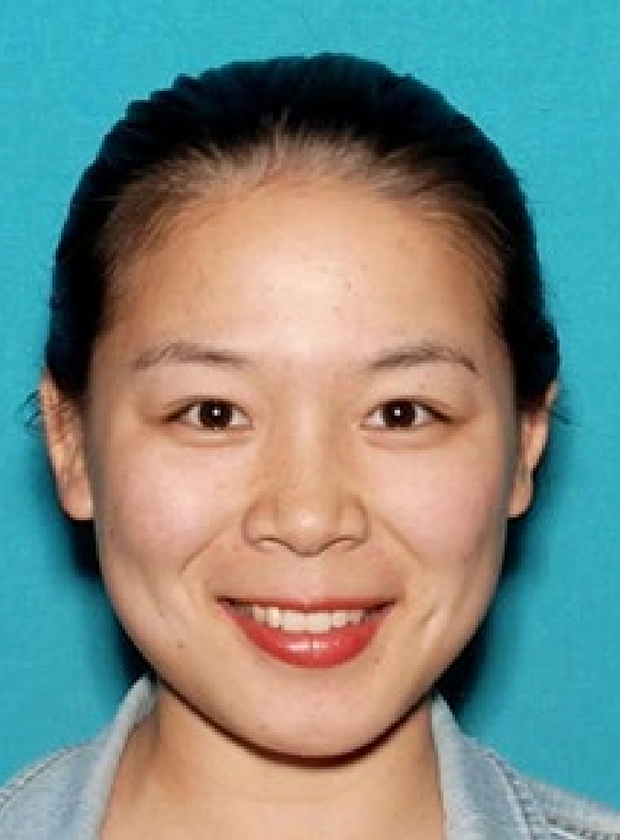
A 34-year-old California real-estate agent also known as Heather.
U.S. law-enforcement sources identified the target as a son of Taiwan President Lai Ching-te.
Prosecutors accuse Zhang of acting for a foreign government without registering with U.S. authorities.
The ordinary life investigators say hid another role
Zhang’s public profession did not look unusual. She worked as a realtor in Irvine, California. CBS reported that her real-estate profile listed numerous sales and listings across Southern California.
But the FBI says her communications tell another story. Investigators obtained messages that they say connected her with at least two people she appeared to recognize as Chinese government officials.
The investigation eventually led FBI counterintelligence agents to reconstruct events stretching back to the first half of 2025.
A private room in Changsha
The most important moment may have happened thousands of miles from California.
According to the FBI affidavit, a former classmate introduced Zhang to one of the alleged Chinese government contacts in June 2025. Investigators noted that Zhang had attended Beijing’s University of International Relations, an institution the FBI affidavit described as having close links to China’s Ministry of State Security.
During a trip to China that month, Zhang allegedly booked a private room in Changsha and met the official there.
Afterward, according to the complaint, she sent a short message indicating that she could handle the task.
The significance of the exchange only became clear later, when investigators compared those communications with her movements in the United States.

The plan begins to move
By late August 2025, the complaint says Zhang was discussing a trip north.
On 26 August, she allegedly informed her contact that she expected to travel to Seattle the following week. The response from the contact, according to the filing, thanked her for her work.
Six days later, investigators say Zhang and an unidentified male associate flew from Las Vegas to Seattle.
September 1: the surveillance trip
The pair arrived in Seattle on 1 September 2025 and rented a black Nissan Rogue, according to the federal complaint.
From there, investigators say they traveled to the area where their target lived.
The article deliberately does not identify the exact residence. What matters to the case is what prosecutors say happened outside it.
A neighbour’s security camera allegedly captured Zhang and her associate inside the vehicle. According to the affidavit, when members of the family appeared, the pair suddenly became alert and seemed to raise phones toward them.
Investigators say one person photographed the family while Zhang lowered herself in the seat, apparently trying to avoid being noticed.

The messages prosecutors say exposed the operation
According to the complaint, Zhang began communicating with a Chinese government contact while the surveillance was taking place.
She allegedly confirmed that she had seen the target, stated that she was recording video and transmitted vehicle information.
Investigators say they recovered relevant communications through a search warrant involving Zhang’s iCloud account.
The electronic evidence became especially important because it could be compared with travel records, the rental vehicle and footage from the neighbourhood.
1. The Changsha meeting
2. Messages before the Seattle trip
3. Flight and rental-car records
4. Neighbourhood security footage
5. The photo-transfer instruction
6. The iCloud search
Why would Beijing want photographs of a president’s family?
This is where the case moves beyond an ordinary surveillance allegation.
FBI Special Agent Kevin Holt wrote in the complaint that information about the locations, homes and vehicles of close relatives of a senior Taiwanese official could have intelligence value for Beijing.
The agent suggested such information could potentially provide leverage over Taiwan’s president during a future crisis or conflict.
That is more precise than saying investigators proved that China planned to “blackmail” President Lai. The complaint describes the material as potentially useful leverage; it does not publicly establish a specific future coercion plan.
Then the investigation went quiet — for more than a year
The alleged Seattle operation took place in September 2025. Zhang was not arrested then.
The federal complaint came more than a year later, on 3 October 2026. By that point, FBI counterintelligence investigators had assembled communications, travel records and other evidence described in the filing.
The next development came quickly.
October 4: the airport arrest
On Sunday, 4 October 2026, Zhang went to Los Angeles International Airport for a planned flight to Shanghai.
She did not leave the United States.
FBI agents arrested her at LAX before the flight departed. Federal authorities charged her with acting as an unregistered agent of the People’s Republic of China.
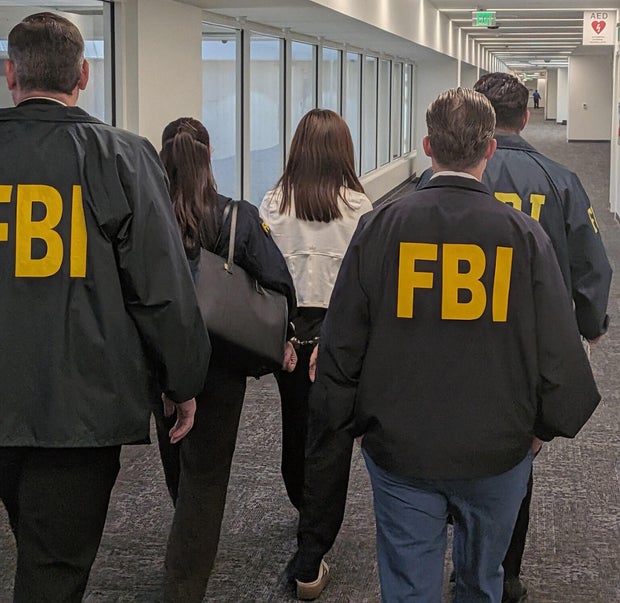
First Assistant U.S. Attorney Bill Essayli said federal authorities believe Zhang carried out the Seattle surveillance at the direction of Chinese officials and used covert methods to avoid detection.
She was due to make her first appearance in federal court in Los Angeles on 5 October.
Taiwan calls it transnational repression
Taiwan’s Presidential Office responded strongly after news of the case became public.
A presidential spokesperson described the alleged activity as a form of transnational repression and thanked U.S. authorities for protecting Taiwanese citizens.
The Chinese Embassy in Washington had not immediately responded to Reuters’ request for comment when the news agency published its report.
Why this case is bigger than one surveillance trip
A counterintelligence case
U.S. authorities increasingly describe Chinese intelligence activity in America as extending beyond traditional government secrets. Previous cases have involved dissidents, activists, political figures and people with family connections to politically sensitive targets.
A Taiwan security case
Beijing claims Taiwan as part of China, while Taiwan operates its own democratic government. Information about the relatives of Taiwan’s president therefore carries significance far beyond the private lives of the people involved.
The alleged operation described in the complaint was remarkably low-tech. There was no dramatic computer intrusion or secret laboratory.
The government says it involved a meeting, ordinary travel, a rented vehicle, mobile phones and personal observation.
That may be the most important detail in the entire case. Modern intelligence work does not always look like a spy movie. Sometimes the person federal investigators accuse of carrying out the mission can appear to be leading an entirely ordinary life.
The unanswered questions
The criminal case has only begun, and several important questions remain. Federal authorities have not publicly identified Zhang’s alleged associate. They have also not publicly named the Chinese officials mentioned in the complaint.
It remains unclear what defence Zhang will offer, whether prosecutors will file additional charges, and what further evidence will emerge during court proceedings.
For now, the most dramatic moment is also the simplest: more than a year after the alleged surveillance trip, Zhang arrived at LAX expecting to board a flight to Shanghai.
Federal agents were waiting.





Leave a Reply