

For a moment, it looked like China and the European Union had stepped away from another trade confrontation. After months of tension over Chinese cars, Commerce Minister Wang Wentao and EU Trade Commissioner Maroš Šefčovič reached an understanding in Beijing over hybrid vehicle imports. The EU plans to limit Chinese hybrid imports to around 350,000 vehicles a year. While Beijing says the arrangement still allows Chinese companies room to grow. The compromise appeared to offer both sides something. Europe gained protection for its auto industry, while China avoided a harsher tariff escalation. But the calm did not last long.
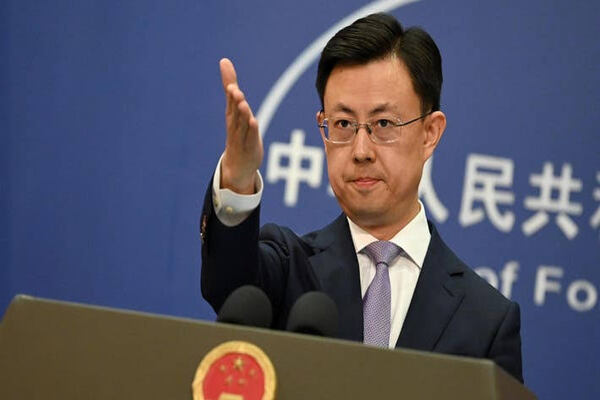
Soon after, a very different message emerged from Yuyuantantian, a social-media account affiliated with Chinese state broadcaster CCTV. The account warned that Beijing has several tools available if the EU continues introducing measures that China considers discriminatory. The message was not a formal announcement of retaliation, but it offered a glimpse of Beijing’s thinking: the car agreement may have solved one dispute, but China does not want Brussels to treat the compromise as permission to impose restrictions across other sectors. Europe, meanwhile, is preparing new trade-defence measures aimed at reducing its dependence on China and protecting industries from subsidized imports. The real question is no longer whether there will be competition. It is whether China and Europe can stop that competition from becoming a wider trade war.

The loophole that changed the trade fight
Europe’s original confrontation with China’s auto industry focused on battery-electric vehicles. Brussels concluded that Chinese EV manufacturers benefited from subsidies that distorted competition and imposed additional duties.
Chinese automakers adapted.
Plug-in hybrids offered an alternative. They combined batteries with internal-combustion engines but did not initially face the same additional trade barriers.
Exports accelerated.
According to China’s Commerce Ministry, EU imports of Chinese hybrid vehicles climbed from 107,000 units in 2024 to 302,000 in 2025. By 2026, European officials feared the number could rise dramatically again.
How the trade pressure shifted
Brussels imposes additional duties after investigating subsidies for battery-electric vehicles.
Chinese automakers increase plug-in hybrid exports, which initially sit outside the same tariff structure.
Brussels and Beijing negotiate limits intended to slow future import growth without triggering another tariff war.
One agreement. Two completely different stories.
The most interesting part of the agreement is that Beijing and Brussels can both present it as a victory.
China compares the new arrangement with the 302,000 hybrid vehicles imported in 2025. Beijing says the quota will rise from that base and must not discriminate specifically against Chinese companies.
EU officials compare the agreement with a scenario in which Chinese hybrid exports could have approached 800,000 vehicles. From that perspective, the safeguard sharply reduces future market penetration.
Then came Beijing’s warning
Before the agreement was finalized, a warning appeared through Yuyuantantian, a social-media account affiliated with China Central Television.
The account discussed several tools Beijing could use if European trade measures were judged discriminatory or harmful to Chinese companies.
Yuyuantantian is affiliated with China’s state broadcaster and is frequently watched for indications of Beijing’s policy thinking. Formal Chinese trade measures would still require action by government authorities.
Anti-discrimination investigation
Such an investigation could provide a legal basis for further Chinese countermeasures if authorities conclude that Chinese commercial interests face discriminatory treatment.
Foreign-subsidy investigation
This would mirror, in part, European arguments that Chinese state support distorts markets.
Supply-chain security review
Such reviews can become particularly significant in sectors involving technology, critical materials and advanced manufacturing.
World Trade Organization action
The car agreement is only the visible part of the dispute
Cars attract attention because consumers can see them.
The wider trade confrontation reaches much further.
Europe fears rapidly growing Chinese brands could take market share from manufacturers such as Volkswagen, Renault and Stellantis.
Brussels says Chinese state support can distort competition. Beijing says European countermeasures amount to protectionism.
Europe remains dependent on China for important parts of the rare-earth and permanent-magnet supply chain.
Both China and Europe want better access for their own companies while accusing the other side of creating barriers.

The rare-earth problem Europe cannot ignore
Europe wants to reduce its dependence on China.
But reducing dependence is not the same as eliminating it.
Rare earths and permanent magnets illustrate the problem. These materials play important roles in electric vehicles, renewable energy, electronics and defence systems.
During the October trade talks, China agreed to continue facilitating certain rare-earth and permanent-magnet export licence applications for European customers through a so-called green channel.
The EU, meanwhile, agreed to continue working with member states on specific Chinese concerns involving dual-use export licences.
That exchange shows why an uncontrolled trade conflict would be costly for both sides.
Chinese carmakers have another strategy: become European
An import quota can restrict vehicles shipped from China.
It cannot necessarily restrict a Chinese-brand car built inside Europe.
That creates perhaps the biggest weakness in Europe’s defensive strategy. Companies such as BYD, Geely, SAIC and Chery are developing or exploring production capacity inside Europe.
If more Chinese cars are assembled in European factories, the conflict could shift from imports to investment, local-content rules and ownership.
Europe may therefore discover that tariffs do not remove Chinese competition.
They change its geography.
How quickly did the relationship change?
Europe imposes additional duties on Chinese electric vehicles after its subsidy investigation.
Chinese hybrid exports to Europe grow rapidly as automakers adapt to the EV tariff environment.
Yuyuantantian highlights trade tools Beijing could use if European restrictions become more aggressive.
China and the EU hold two days of trade and investment talks covering vehicles, rare earths, export controls and market access.
The EU prepares a safeguard around 350,000 Chinese hybrid imports annually, while China emphasizes non-discrimination and continued export growth.
The European Commission plans to unveil additional trade-defence initiatives addressing dependence on China and structural trade imbalances.
The next confrontation may not involve cars at all
This is what makes the agreement important.
China and Europe have demonstrated that they can negotiate their way out of one trade confrontation.
But the underlying causes remain.
Europe believes Chinese industrial policy is producing enormous export capacity that can overwhelm European manufacturers.
China believes Europe’s expanding trade-defence system risks becoming a political mechanism for keeping competitive Chinese products out of the market.
Both interpretations lead toward further confrontation unless the two sides can create rules they both consider legitimate.
Source Base
Read source
Read source
Read source
Read source
The hybrid-car agreement therefore looks less like the end of a trade dispute and more like a temporary ceasefire. Brussels secured breathing room for European automakers, while Beijing preserved continued access for Chinese hybrid exports and insisted that any restrictions remain non-discriminatory. Yet Europe is already preparing broader trade-defence initiatives for December, including measures intended to reduce dependence on single foreign suppliers. Chinese state-linked commentary has made clear that Beijing is watching those moves closely and believes it has legal and economic tools of its own.
The real contest is therefore bigger than cars. Europe is trying to protect its industrial base without cutting itself off from Chinese technology, investment and critical materials. China wants European market access while resisting rules it believes target Chinese companies unfairly. The two economies remain deeply connected, which makes a complete trade rupture costly for both. The car deal proves compromise is still possible. The warning that followed proves how fragile that compromise remains. The next China-EU trade battle may already be taking shape before the ink on the latest agreement has dried.










Leave a Reply