

Here is a revised version with shorter sentences and much less passive voice, while keeping the same meaning and factual caution:
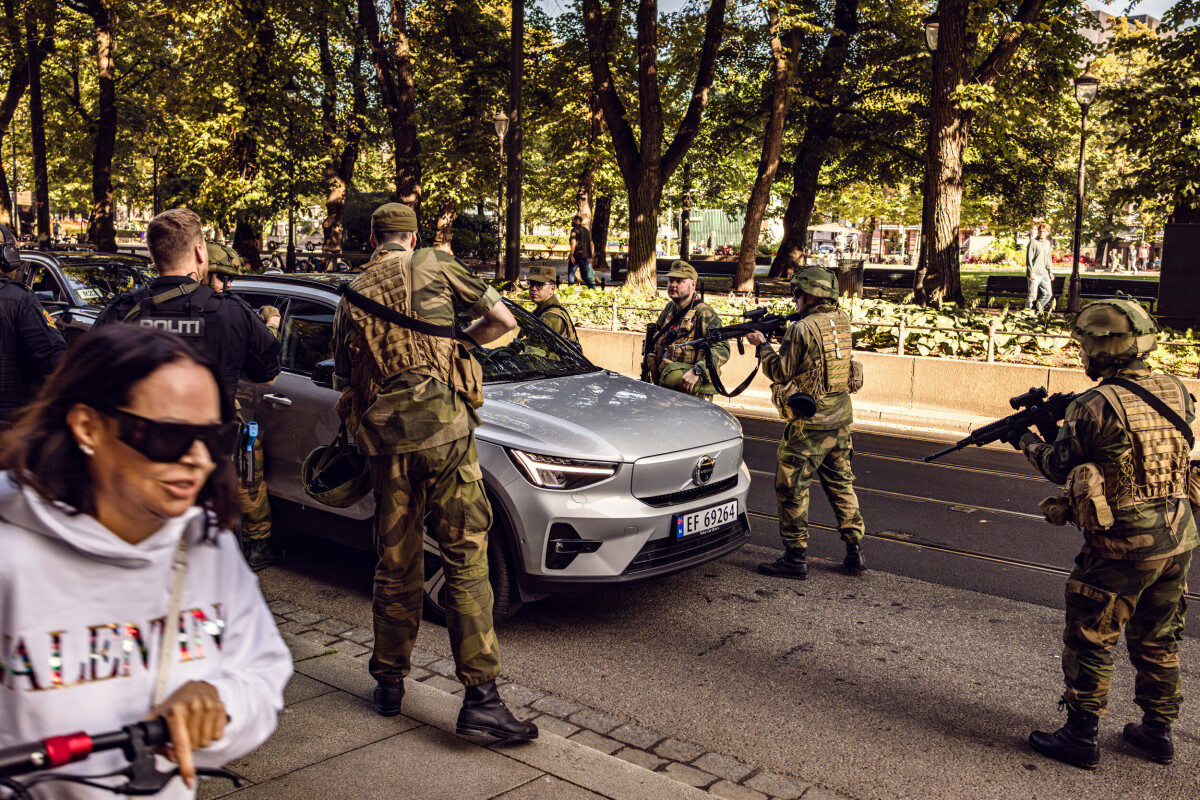
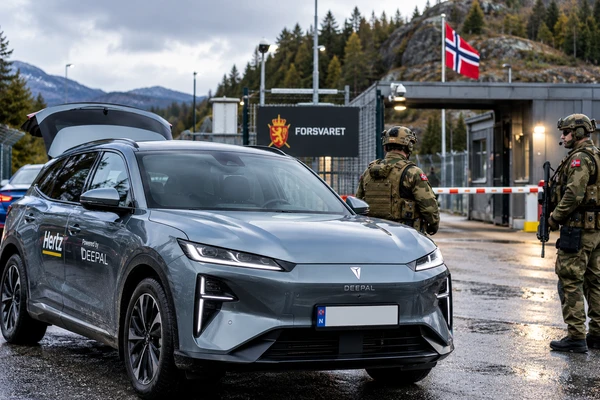
A routine military exercise in Norway revealed an unexpected security problem: the cars were recording it. During Exercise Hovedstad in September 2026, Norwegian Home Guard soldiers found video stored inside rental vehicles. The footage showed troops entering and leaving the cars. It also revealed their routes, passengers and time spent at different locations.
More seriously, the cameras captured security codes for military gates and doors. At least two vehicles were Chinese-made Deepal cars from Changan Automobile. Soldiers later deleted the footage from the vehicles. However, Norwegian authorities have not confirmed whether copies existed elsewhere.
The case has raised a wider national-security question. How much sensitive information can a modern connected car collect without its users noticing?
Investigators have not found public evidence that China received the recordings. No available evidence shows that the cars sent the videos to Chinese authorities, a Chinese server or the manufacturer. This distinction matters.
Yet the incident exposes a broader vulnerability. Modern cars use cameras, GPS, microphones, wireless connections and numerous sensors. These systems can collect detailed information about locations, movements and behaviour.
Norway’s National Security Authority has already warned about security risks linked to modern vehicles. The country’s threat assessments also highlight foreign intelligence activity and hybrid threats.
The concern therefore extends beyond one Chinese brand. When a connected vehicle enters a sensitive military environment, its ordinary technology can collect information with potential intelligence value.
No publicly available evidence currently establishes that the footage was transmitted to Chinese authorities, accessed by the manufacturer or uploaded to a Chinese-controlled server. The unresolved question is itself the security problem: the military did not know where the data might ultimately reside.

The soldiers discovered the surveillance by accident
The incident did not begin with a cyberattack warning or an intelligence alert.
Soldiers simply noticed that video footage was stored inside the rental vehicles they were using.
Lieutenant Fredrik Blanck, who participated in the exercise, told Norwegian media that the recordings revealed who entered and left the cars, where the vehicles travelled, whom they collected and how long they remained at different locations.
The cameras had also captured something far more sensitive: codes used by soldiers when opening military gates and doors.
The recordings were deleted after the exercise. What remained unresolved was whether deleting them from the vehicle meant the information had disappeared everywhere.
What a Connected Car Can Reconstruct
Who entered the vehicle, who left it and who approached sensitive facilities.
Where military personnel travelled and which locations they visited.
How long personnel remained at locations and potentially how routines repeat.
Cameras can capture credentials entered at gates, doors and other secured points.
The modern car is no longer just a car
For decades, military vehicle security focused on mechanical questions. Could the vehicle operate reliably? Could it carry personnel? Could it move through difficult terrain?
Connected vehicles create a different category of concern.
Modern cars can contain external cameras, internal cameras, GPS navigation, Bluetooth connections, cellular modems, microphones, driver-assistance sensors and cloud-connected software.
Each feature exists for a legitimate reason. Together, however, they create a detailed digital picture of where the vehicle travels and what happens around it.
Did the cars record Norwegian soldiers?
Did the recordings contain military gate codes?
Were Chinese-made cars involved?
Was the footage sent to China?
Reporting says it remained unclear whether the data was stored only inside the vehicles or elsewhere. There is currently no public evidence proving that Chinese authorities obtained the footage.
Why were the cars still used?
The rental contract adds another layer
The Norwegian Armed Forces do not rely only on military-owned vehicles. They also rent civilian cars for exercises, routine activities and operational tasks.
Norway’s military logistics organization signed nationwide rental-car framework agreements in 2024 covering the period through May 2028. The combined maximum value was reported at NOK 350 million.
One supplier is First Rent A Car Norway AS, which operates Hertz Norway. Its ownership chain runs through Volvo Cars. Zhejiang Geely Holding Group is Volvo Cars’ majority shareholder.
That corporate connection should not be confused with the manufacturer of the Deepal vehicles.
Deepal belongs to Changan Automobile, another Chinese automotive group.
Volvo Cars has rejected the suggestion that its Chinese ownership automatically creates a security risk and has said data cannot simply be shared with Geely without a legal basis.
The security issue is bigger than ownership
Civilian rental vehicles with automatic recording systems were used during military activity. Their normal commercial features created an unexpected information-security problem.
Public reporting does not establish that Beijing ordered the recording, that the manufacturer accessed the material or that the data was transmitted to China.
Why the footage could matter to an intelligence service
Military intelligence is often associated with classified documents, satellite imagery and secret communications.
But mundane information can also become useful when collected over time.
Repeated location data could reveal routes between military facilities or identify frequently used logistics corridors.
Video can reveal who regularly travels together, who enters restricted areas and when particular personnel appear.
Cameras positioned near checkpoints could capture physical access procedures, gate layouts or credentials.
Location and timestamp data can become more valuable when analysts combine repeated journeys into behavioural patterns.
Norway had already warned about smart vehicles
The incident did not emerge in a policy vacuum.
Norway’s National Security Authority has previously warned that modern vehicles and other connected consumer technologies create new attack and vulnerability surfaces.
Its Risiko 2025 assessment highlighted modern vehicles alongside mobile phones and artificial intelligence as technologies that introduce new security vulnerabilities.
Norway’s Police Security Service has also warned that foreign states continue intelligence activity against Norwegian interests.
That does not prove the Deepal recordings formed part of such activity. It does explain why security authorities are increasingly uncomfortable with uncontrolled connected devices near sensitive installations.
Procurement rules increasingly need to examine cameras, cloud services, telematics, remote access, software updates and data retention with the same seriousness once reserved for computers and communication equipment.
Other NATO countries are asking similar questions
Norway is not alone in reviewing the security implications of connected vehicles.
Polish authorities have introduced restrictions on Chinese-made vehicles at military and other sensitive locations.
The logic is precautionary rather than proof that every such vehicle is conducting espionage.
A connected car combines mobility, sensors, communications and location data in one platform.
For a military base, intelligence headquarters or other sensitive site, that combination creates a risk that did not exist when a car was little more than an engine, steering wheel and radio.
The most uncomfortable question
The Norwegian soldiers eventually noticed that the vehicles were storing video.
That raises a more difficult question: what happens when nobody notices?
Commercial smart devices increasingly collect information automatically. Users often accept these systems because the data collection is invisible or buried behind normal features.
In civilian life, that may be primarily a privacy issue.
Inside a military exercise, the same behaviour can become an operational security issue.
Source Base
Chinese Cars in Norway Stored Military Exercise Footage and Access Codes.
Read source
Norwegian military reporting on rental vehicles recording personnel, routes and security codes during Exercise Hovedstad.
Read source
Norwegian reporting confirming Deepal vehicles and the stored military footage.
Read source
Risiko 2025 assessment on vulnerabilities introduced by modern vehicles and connected technologies.
Read source
The incident in Norway shows how the definition of sensitive technology is changing. A military may carefully protect its radios, laptops and classified networks while allowing a civilian rental car filled with cameras, GPS receivers and network connections to move through the same environment. None of those systems needs to be deliberately designed for espionage to create intelligence value. A camera that records a parking manoeuvre can also record a gate code. A navigation history designed to help a driver can also reveal repeated military routes. A connected-car feature designed for convenience can therefore become a security vulnerability when the vehicle crosses into a sensitive operational space. Norway’s own security authorities have warned that modern vehicles create exactly this type of new vulnerability surface.
The most important unanswered question is still where the recordings ultimately went. Public reporting confirms that the files were found and later deleted from the cars, but it does not establish that they were transmitted to China or accessed by Chinese intelligence. That uncertainty should not be replaced with speculation. It should instead shape the security lesson. Militaries increasingly need to evaluate connected cars the same way they evaluate smartphones, cameras and networked computers: by asking what they collect, where the information is stored, who can access it and whether remote connections can move it elsewhere. The Norway case did not prove that a Chinese car conducted an espionage mission. It proved something more basic and potentially more important: a modern car can quietly collect information that a military never intended to give away.











Leave a Reply