

Six years after Wuhan entered one of the most dramatic lockdowns of the COVID-19 pandemic, Chinese cinemas are preparing to return audiences to those 76 days. Angel in White – Chinese title Bai Yi Ni Xing Zhe (白衣逆行者) – will open across mainland China on 6 November 2026. Directed by Herman Yau and starring Andy Lau and Yang Zishan, the film follows doctors, patients and ordinary residents caught inside the outbreak of early 2020. Its promotional campaign presents the story as one of courage, sacrifice and people supporting one another during a national emergency. The official trailer invokes “76 days” and “10 million people” facing a life-and-death crisis. Yet the announcement has produced something the film’s marketing could not completely control: audiences have begun arguing not simply about the movie, but about who gets to define the memory of China’s pandemic years.
The controversy is partly about timing. Production wrapped in December 2020, after little more than a month of filming, but the movie remained unreleased for almost six years. During that gap, China’s pandemic experience changed dramatically. The heroic emergency response of Wuhan in early 2020 was followed by years of mass testing, quarantine centres, health codes and increasingly strict zero-COVID controls. A quarantine bus crash in Guizhou killed 27 people in September 2022. Two months later, a deadly apartment fire in Urumqi helped ignite demonstrations against COVID restrictions, with blank sheets of paper becoming symbols of dissent. As a result, many people now approach a film about “white-clad heroes” through memories that extend far beyond the first Wuhan lockdown. That collision between the story the movie wants to tell and the history audiences carry into the cinema is what makes Angel in White politically and culturally significant before anyone has even seen the finished film.
The movie remembers 76 days. China remembers six years.
Angel in White returns audiences to Wuhan’s first COVID lockdown. But the film is arriving in a country whose memories of the pandemic no longer begin and end in 2020.
A film made for one moment is arriving in another.
When cameras rolled in 2020, China’s pandemic story centred on Wuhan, hospitals and an unknown virus. By 2026, the same protective clothing could evoke entirely different memories.
The film begins with an emergency.
An unknown infectious disease spreads through Wuhan. Hospitals face extraordinary pressure.
Medical workers become some of the most visible symbols of the national response.
Angel in White returns directly to this first chapter.
Ordinary people move toward danger.
Its trailer emphasises hospital wards, patients, family separation and frontline medical care.
This is the memory the movie asks audiences to recover: sacrifice, solidarity and survival.
The same white suit stopped meaning only “doctor.”
Testing staff, quarantine personnel and enforcement workers became increasingly visible during later zero-COVID controls.
For many people, the visual symbol accumulated a second meaning.
Medical sacrifice and state control could now exist inside the same memory.
The movie can choose its story. The audience chooses its memories.
Some viewers remember exhausted doctors.
Others also remember constant testing, quarantine, Li Wenliang, the Guizhou bus crash or the protests of late 2022.
That collision is the real story surrounding the film before its release.
“A film can select 76 days. An audience remembers everything that came after.” ChinaScoop analysis
Slide between two ways of remembering the same pandemic.
The disagreement surrounding the film is not necessarily between people who respect medical workers and people who do not. It is often a disagreement about what belongs inside the historical frame.
One pandemic. Two memories.
Drag the slider to move between the film’s promotional memory and the broader memory carried by critics.
Courage under pressure
Doctors enter overwhelmed hospitals. Families face uncertainty. Ordinary people protect one another.
The story treats the Wuhan emergency as a period of sacrifice, solidarity and survival.
What happened after Wuhan?
Mass testing, health-code controls, quarantine centres and prolonged restrictions later became central parts of China’s pandemic experience.
Some viewers therefore question whether a heroic 76-day narrative can stand apart from what followed.
The movie waited. History did not.
Doctors begin discussing a SARS-like illness. Li Wenliang later becomes one of the most recognised figures associated with the early outbreak.
Transportation links close as the city confronts a rapidly escalating public-health emergency.
His death produces widespread mourning and online discussion about transparency and speech.
The reopening becomes one of the defining images of China’s first pandemic phase.
The movie is created while Wuhan’s first emergency remains the dominant frame for pandemic memory.
Testing, quarantine, travel controls and health-code systems reshape the public experience of the pandemic.
Twenty-seven people die while being transported under COVID quarantine arrangements, generating widespread anger online.
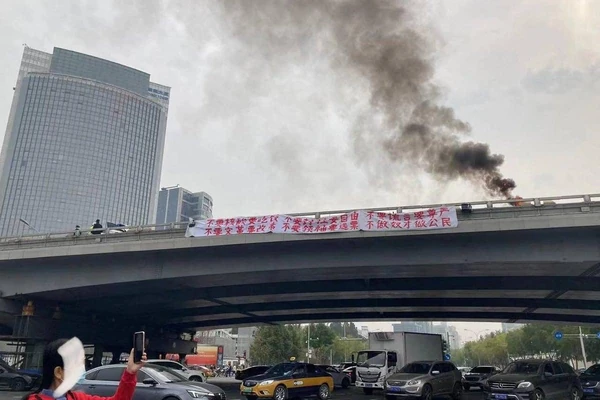
Demonstrations spread across several Chinese cities and campuses amid anger over COVID restrictions, censorship and political control.
A film conceived during the Wuhan emergency suddenly re-enters public discussion nearly six years later.
Only after release can audiences judge how much complexity the complete movie actually allows.
Why release a pandemic film six years later?
A story conceived as immediate tribute has arrived after China’s pandemic experience expanded into years of lockdowns, testing and political controversy.
The delay transformed a contemporary drama into a film about contested history.
Are people criticising doctors?
Respect for frontline medical workers can coexist with criticism of pandemic policy.
This distinction is essential. Heroism by individuals does not automatically validate every institution or policy operating around them.
Is the film propaganda?
Promotional material clearly uses a heroic, emotionally affirmative frame.
Researchers should wait to see whether the complete film allows institutional mistakes, uncertainty, criticism and moral ambiguity into its story.
Has Li Wenliang been deliberately erased?
Li’s absence from promotional material naturally raises questions because his story became central to public memory of Wuhan.
But the full film must be viewed before concluding that filmmakers deliberately excluded him.
Why does the title itself matter?
In early 2020 that image strongly evoked doctors and nurses.
Later zero-COVID experiences complicated the public symbolism of white protective clothing.
Promotional material centres on Wuhan’s first outbreak, doctors, patients, families and mutual support.
Supporters may see remembrance and tribute. Critics may see selective historical memory.
Until November 6, viewers cannot know how much uncertainty, criticism or institutional failure survives in the final cut.
Do not ask only whether Angel in White is propaganda.
A more useful approach is to examine how the movie manufactures historical memory: who speaks, who acts, who disappears, which failures receive explanation, and which events remain outside the frame.
The strongest criticism of Angel in White may therefore have little to do with Andy Lau, Herman Yau or even the quality of the movie itself. The problem is that the film arrives after public memory has fragmented. One audience remembers doctors rushing into overwhelmed hospitals. Another remembers QR health codes, repeated testing and forced quarantine. Some remember Li Wenliang and the anger surrounding his death. Others remember the Guizhou bus crash or the blank sheets raised during the demonstrations of November 2022. None of those memories automatically cancels the sacrifices made by Wuhan’s medical workers. But together they make it much harder to present “the pandemic” as a single, emotionally uncomplicated national story.
That is why 6 November may become more than an ordinary release date. Audiences will finally discover whether Angel in White is simply a delayed tribute to people who worked through Wuhan’s first emergency, a carefully controlled reconstruction of the crisis, or something more nuanced than either supporters or critics currently expect. Until then, the fairest judgment is also the most interesting one: the film has already exposed a battle over memory before audiences have seen its final frame. China’s 2020 emergency produced genuine heroism, fear, confusion and suffering. The years that followed added coercion, political controversy and protest to that memory. A movie made in 2020 now has to survive all of what happened after the cameras stopped rolling.





Leave a Reply