

Ankara and Beijing call each other strategic partners. On X, however, Chinese diplomats, state media, Turkish nationalists and Uyghur activists increasingly inhabit competing information worlds.
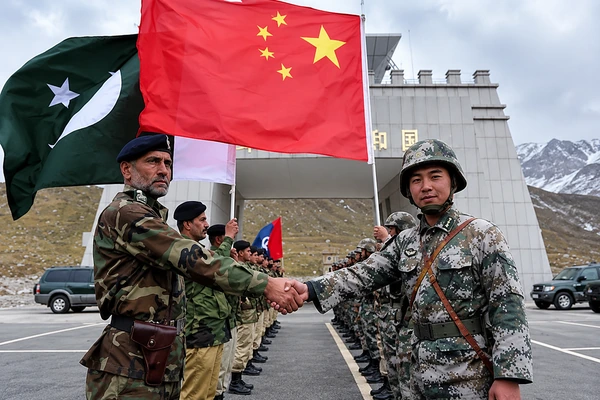
Offline, Türkiye and China increasingly speak the language of partnership. The two countries mark 55 years of diplomatic relations in 2026, and Ankara officially describes the relationship as “Strategic Cooperation.” Their economic ties have expanded dramatically. Türkiye recorded about $52.9 billion in bilateral trade with China in 2025, although imports from China vastly exceeded Turkish exports. On 15 October 2026, Turkish Foreign Minister Hakan Fidan met Chinese Foreign Minister Wang Yi in Baku. Beijing’s official account said both sides wanted deeper cooperation in trade, investment and regional affairs. China also praised Türkiye for taking Beijing’s security concerns seriously. Seen only through summit photographs and official communiqués, this looks like a relationship moving closer, not toward confrontation.
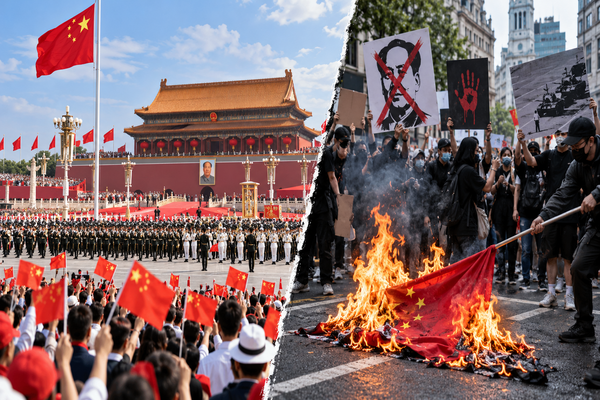
Open X, however, and another relationship appears. The Chinese Embassy in Ankara regularly promotes positive stories about Xinjiang, including economic development, agriculture, tourism and Uyghur culture. Uyghur activists and Turkish supporters answer with allegations of detention, religious repression, family separation and transnational pressure. Reporters Without Borders argued in August 2026 that China’s expanding Turkish-language media presence was making it harder for Uyghur voices to compete, pointing to outlets including CGTN Türk and Xinhua Türkiye alongside embassy-linked social-media messaging. The confrontation is not simply China versus the Turkish state. It is a fragmented information struggle involving diplomats, state media, diaspora activists, opposition politicians, nationalists, journalists and ordinary users. That is why the phrase “new Cold War on X” should be understood as a battle over narrative power not as evidence that Ankara and Beijing have become geopolitical enemies.
Trade, investment, tourism, the Middle Corridor and diplomatic engagement continue to expand.
Xinjiang versus East Turkistan. Development versus repression. Sovereignty versus human rights.
Ankara and Beijing continue to cooperate diplomatically. The confrontation examined here involves a wider ecosystem: Chinese diplomats, state media, Uyghur activists, Turkish politicians, journalists, nationalist communities and ordinary users on X.
The ministers shake hands. The information ecosystems collide.
Türkiye–China relations now operate on two levels. Formal diplomacy emphasises strategic cooperation. Social media repeatedly exposes unresolved conflicts over Xinjiang, Uyghur identity, sovereignty and political influence.
Beijing promotes trade, investment, Belt and Road–Middle Corridor coordination, tourism and strategic dialogue.
Beijing treats Xinjiang as an inseparable part of China. Many Uyghur activists use East Turkistan as a political, cultural and historical identity.
Embassy and state-linked outlets communicate directly with Turkish audiences instead of relying only on English or Chinese-language media.
Uyghur activists answer development narratives with stories about imprisoned relatives, missing family members and restrictions on rights.
Quote-posts, screenshots, hashtags and algorithms move statements rapidly from activists to diplomats, journalists and political parties.
The language remains cooperative.
On 15 October 2026, Wang Yi met Hakan Fidan in Baku during the CICA summit.
China’s official account emphasised deeper strategic cooperation, investment and coordination between the Belt and Road Initiative and Türkiye’s Middle Corridor.
Fidan reaffirmed the One-China principle and welcomed greater Chinese investment.
The dispute begins before the first argument.
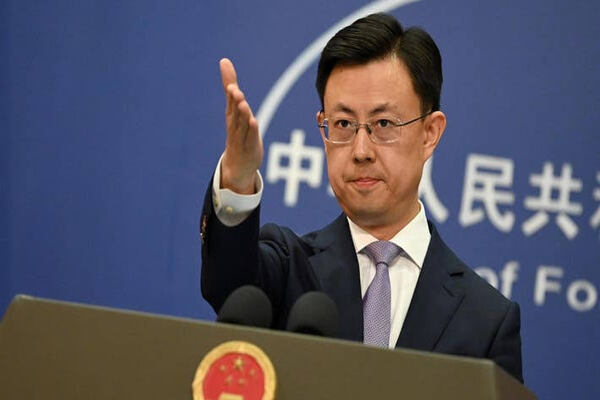
Chinese officials use “Xinjiang Uyghur Autonomous Region.”
Many Uyghur activists and Turkish supporters use “East Turkistan.”
One vocabulary begins with Chinese sovereignty. The other begins with Uyghur identity, repression and political rights.
Beijing does not answer every allegation directly.
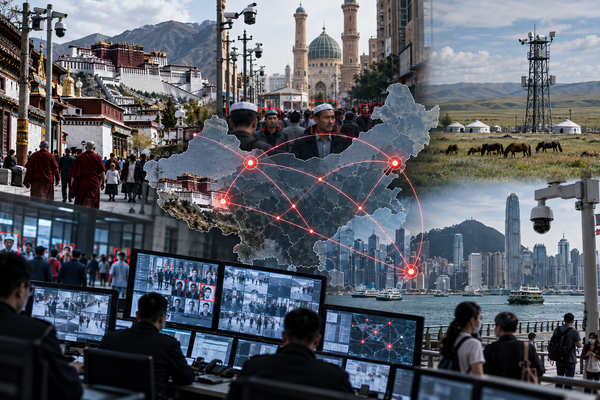
Chinese public diplomacy frequently promotes Xinjiang through agriculture, tourism, infrastructure, food and cultural imagery.
That approach creates an alternative visual narrative: prosperity, normality and development.
The strategic objective does not require convincing every critic. It keeps Beijing’s version permanently visible beside competing accounts.
One individual story can challenge a thousand statistics.
Uyghur campaigns frequently centre on individual people: detainees, separated families and activists unable to return or travel freely.
These stories operate differently from state messaging. They are personal, emotional and easy to reproduce.
A post can move from X to a foreign ministry.
The April 2021 confrontation provides the clearest example.
After China’s embassy directly addressed Turkish political figures on Twitter, Ankara summoned the Chinese ambassador.
A social-media dispute had crossed into formal diplomacy.
“The most important Türkiye–China confrontation may not be happening across a negotiating table. It may be happening inside competing versions of reality displayed on the same phone screen.” ChinaScoop analysis
When X becomes evidence.
Not every angry post matters strategically. These examples do because they connect social-media narratives with real diplomatic or political consequences.
The original 6 April 2021 tweet is independently preserved in research by the Carnegie Endowment.
Meral Akşener and Ankara Mayor Mansur Yavaş had posted messages concerning Uyghurs and the historical Barın events.
China’s embassy tagged both politicians and said Beijing reserved the right to respond to challenges involving sovereignty and territorial integrity.
Türkiye summoned China’s ambassador the same day. Few examples demonstrate more clearly how social media can move directly into bilateral diplomacy.
Isa’s February 2026 X post is preserved by several contemporary Turkish and human-rights publications.
İstanbul’u sadece uzaktan seyretmeme izin veriliyor.
Bu bir güvenlik meselesi değil, açık bir siyasi cezadır (sebeb: Çin baskısı).
Post text independently preserved by Stockholm Center for Freedom and Turkish news outlet Karar.
Isa said Türkiye again prevented him from entering the country while he was transiting Istanbul Airport.
He described the restriction as political punishment and attributed it to Chinese pressure.
That final claim remains Isa’s allegation. Public evidence does not independently establish that Beijing ordered the Turkish authorities’ decision.
The contemporary strategy is often less confrontational: present daily life, agriculture, tourism and development.
The communication strategy presents Xinjiang primarily through economic development and ordinary daily life.
This is deliberately labelled as a sourced reconstruction, not a fabricated screenshot.
Beijing can counter human-rights criticism without answering each allegation individually.
Images of cotton harvesting, tourism, markets and cultural life establish another interpretive frame: Xinjiang as prosperous, stable and ordinary.
Researchers should therefore analyse what Chinese accounts choose to show as carefully as what they choose to deny.
Partnership on paper. Confrontation in the feed.
Neither is fake. They simply represent different layers of the same bilateral relationship.
55 years of diplomatic relations.
Strategic Cooperation since 2010.
$52.9 billion in bilateral trade in 2025.
Belt and Road–Middle Corridor coordination.
Chinese investment and tourism.
Security and law-enforcement dialogue.
Xinjiang versus East Turkistan.
Counterterrorism versus repression.
Development imagery versus personal testimony.
State-media resources versus diaspora networks.
One-China commitments versus pan-Turkic solidarity.
Public diplomacy versus accusations of propaganda.
How one X post becomes an international political event
An embassy, activist, journalist or politician publishes a statement involving Xinjiang, sovereignty or human rights.
Nationalist, pan-Turkic, pro-China and human-rights communities interpret the post through existing political beliefs.
Screenshots and replies move the statement beyond its original followers and often strip away surrounding context.
News outlets report it. Politicians respond. In exceptional cases, ministries and ambassadors become involved.
Is Beijing running an information operation against Türkiye?
What can be documented is an expanding Chinese Turkish-language public-diplomacy and media presence.
Researchers should distinguish public diplomacy, state propaganda, coordinated influence activity and covert manipulation.
Those categories overlap at times, but they are not automatically the same thing.
Why is the Uyghur issue unusually powerful in Türkiye?
The issue therefore sits at the intersection of foreign policy, human rights, religion, Turkish nationalism and pan-Turkic identity.
Beijing approaches the same subject primarily through sovereignty, separatism and national security.
Why does Beijing emphasise cotton, tourism and development?
Critics focus on detention, surveillance, forced-labour allegations, religious restrictions and cultural assimilation.
Beijing answers with mechanised agriculture, poverty reduction, tourism, markets and cultural events.
The message is not merely “the allegations are false.”
It is: “this is what normal life in Xinjiang looks like.”
Is Türkiye silent about Uyghurs because it needs China?
Türkiye continues to acknowledge Uyghur concerns while simultaneously deepening economic and strategic engagement with Beijing.
Ankara also adheres to the One-China principle.
Activists argue that economic interests increasingly constrain Turkish criticism. Establishing direct causation in individual policy decisions, however, requires evidence.
Does every pro-China account represent Beijing?
Official embassy accounts and state-media organisations can clearly be attributed.
Anonymous users, Turkish commentators, commercial accounts and ordinary political supporters require separate analysis.
Agreement with Beijing’s position is not proof of state coordination.
Does a viral screenshot prove public opinion?
X rewards emotionally intense material.
A highly visible post may represent a politically active minority rather than society as a whole.
Researchers should examine engagement, account networks, quote-post behaviour and cross-platform reproduction before drawing conclusions.
X did not create the fault line. It made it faster and more visible.
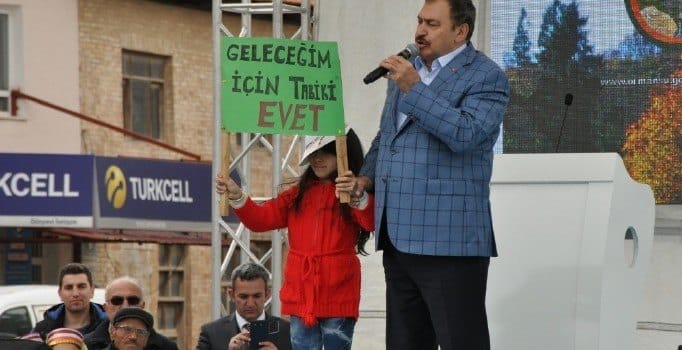
Demonstrations over China’s policies toward Uyghurs highlight the emotional power of the issue inside Türkiye.
The embassy tags Meral Akşener and Mansur Yavaş after their Uyghur-related posts and warns that Beijing reserves the right to respond.
The incident demonstrates that a Twitter post can become a bilateral diplomatic issue within hours.
Türkiye continues direct engagement with Beijing in the region at the centre of the bilateral controversy.
He says Türkiye has once again prevented him from entering the country and attributes the restriction to Chinese pressure.
Embassy and Chinese state-linked media content increasingly communicates directly with Turkish audiences.
Even while narrative confrontation continues online, both foreign ministers discuss stronger strategic, economic and political cooperation.
A loud timeline is not proof of a coordinated campaign.
X collapses diplomats, journalists, activists, anonymous users and political supporters into one feed. Researchers can easily mistake simultaneous activity for central coordination.
Türkiye may be a preview of China’s next information contests.
The important lesson is not that every country will experience the same dispute. It is that economic interdependence and information confrontation can now deepen simultaneously.
Uyghur activism connects China’s internal policies directly to Turkish public opinion and political debate.
Chinese messaging increasingly reaches audiences directly in Turkish and other local languages.
Türkiye’s $46.3 billion 2025 trade deficit with China illustrates how economic dependence can coexist with political disagreement.
Governments, activists, algorithms and platform rules all influence which narrative receives attention.
Keeping one explanation continuously visible can itself shape what audiences view as plausible.
Türkiye can deepen cooperation with Beijing while powerful domestic constituencies continue challenging Chinese policy.
It may look like an embassy post beside an activist testimony, a trade agreement beside a protest hashtag, and two incompatible interpretations of the same place competing for attention inside one social-media feed.
Research & Source Base
The most revealing feature of this confrontation is that neither side needs to win the entire argument. Beijing does not need every Turkish user to accept its account of Xinjiang. Maintaining a constant stream of content about prosperity, mechanised agriculture, tourism and cultural life ensures that its interpretation remains visible beside allegations of repression. Uyghur activists operate differently. Their strongest material often comes through individual stories: a missing relative, an entry restriction, a prison sentence or a photograph from a protest. X places those two forms of communication beside one another- a well-resourced institutional narrative and a decentralised network built heavily around testimony. RSF argues that the imbalance in resources is increasingly important in Türkiye, where Chinese state-linked media and public-diplomacy channels have expanded their Turkish-language reach.
That is why Türkiye matters far beyond Türkiye. It offers a case study in what relations with China may look like for many middle powers: deepening commerce at the government level, greater Chinese investment and media engagement, but continued domestic resistance around identity, sovereignty and human rights. Ankara can meet Beijing in Baku one week while Turkish users argue fiercely over East Turkistan on X the next. Those developments are not necessarily contradictory. They show that twenty-first-century foreign relations no longer take place only between foreign ministries. They also unfold between embassies and activists, state broadcasters and diaspora journalists, algorithms and court orders, screenshots and hashtags. The new contest for influence may therefore be less about forcing another country to choose a geopolitical camp and more about deciding which version of reality appears first and most often on its citizens’ screens.






Leave a Reply