

Japan’s Defense Chief Casts Doubt on China’s Military Math
Shinjiro Koizumi questions whether Beijing’s official defense figures are “genuinely grounded in fact” — and pledges that Tokyo’s own spending will stay open to scrutiny.
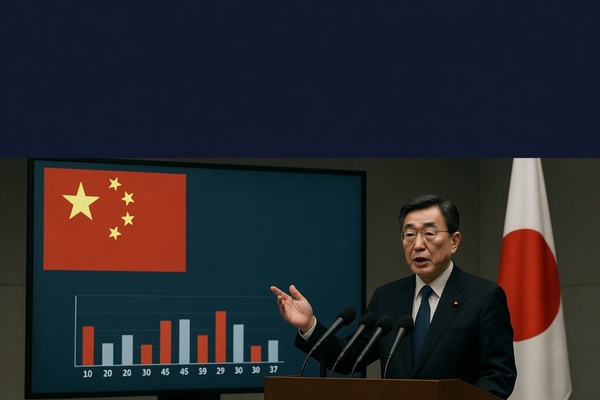
Japan’s Defense Minister Shinjiro Koizumi has thrown a pointed challenge at Beijing, openly questioning whether China’s published military spending figures reflect the true scale of its armament. In remarks that sharpen an already tense rivalry across the East China Sea, Koizumi suggested that the numbers China presents to the world may not be “genuinely grounded in fact, backed by evidence, and highly transparent.”
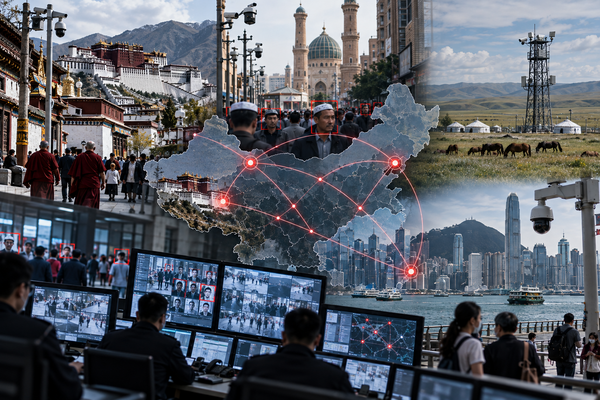
The comment is more than a rhetorical jab. It strikes at one of the most persistent suspicions in Indo-Pacific security circles: that China’s official defense budget — already the world’s second largest — understates the real resources flowing into the People’s Liberation Army. By framing the issue around transparency rather than raw size, Koizumi reframed the contest as one of credibility, not just capability.
“Scrutiny and deliberation”
Koizumi drew a sharp line between how the two democracies and one-party states account for their armies. “Our budgets undergo scrutiny and deliberation in parliament,” he said, holding up Japan’s legislative process as the standard China has yet to meet. The implication was unmistakable: openness is not a weakness but a measure of legitimacy.
He went further, accusing Beijing of an opaque buildup. China, he warned, “continues to increase its defense spending at a high level and is rapidly expanding its military capabilities across a wide range of areas without sufficient transparency.” It was a direct inversion of China’s own narrative, which has lately painted Japan as drifting toward a “new militarism.”
A new kind of arms race
Beyond the war of words, Koizumi used the moment to outline where Japan intends to compete. The future of conflict, he argued, is being rewritten by artificial intelligence, cyber warfare, and unmanned systems — and Tokyo means to keep pace transparently rather than in the shadows. Japan, he said, would invest openly in the drones and algorithms that increasingly define modern deterrence.
That ambition has a name and a deadline. Under a coastal-defense initiative dubbed “SHIELD,” Japan plans to spend roughly ¥100 billion (about $640 million) to field “massive” unmanned air, surface, and underwater drones for surveillance and defense, with deployment targeted for March 2028. The program signals a shift from platforms toward networks — a recognition that the next confrontation may be decided by sensors and software as much as by ships and jets.
The timing is hardly accidental. Japan’s Cabinet recently approved a record defense budget explicitly framed around deterring China, marking one of the most significant rearmament pushes since the postwar era. Koizumi’s transparency argument gives that spending a moral framing: Japan, the message goes, is building in the open, while its rival builds behind a curtain.
Why it matters
For Beijing, the accusation is awkward precisely because it is hard to disprove. Independent analysts have long estimated that China’s true military outlays — once research, paramilitary forces, and procurement are counted — exceed the headline figure. By spotlighting that gap, Koizumi shifts the burden of proof onto China to demonstrate the candor it claims.
For Tokyo, the stakes are equally high. Casting itself as the transparent actor lets Japan rebut the “militarism” label while justifying its own historic buildup to a cautious public. It is a careful piece of statecraft: rearm, but do so visibly, and let the contrast with Beijing do the persuading.
Whether China responds with figures or with fury, Koizumi has reframed a familiar dispute. The question is no longer simply how much each side spends — but whether anyone can trust the ledger at all.








Leave a Reply