

Five Days on a War Footing: Inside Taiwan’s New Readiness Doctrine
Starting Monday, Taiwan trades its scripted military pageantry for something closer to the real thing — a five-day “Immediate Combat Readiness Exercise” built around the scenario planners once considered unspeakable: a routine PLA drill that turns, without warning, into an invasion.
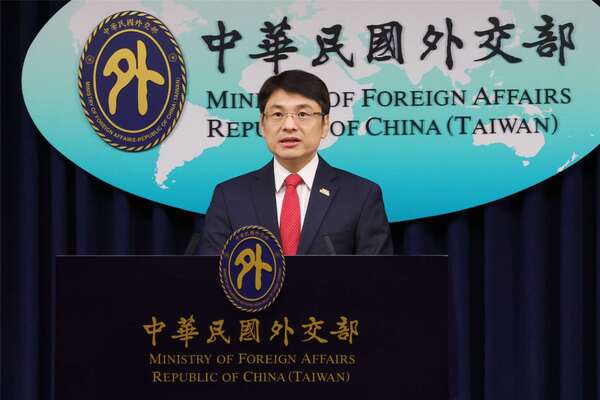
Taiwan’s Ministry of National Defense confirmed on Sunday that the armed forces will run a five-day “Immediate Combat Readiness Exercise” from Monday through Friday this week — not the showcase firepower demonstrations the public usually watches from the bleachers, but a quieter test of whether Taiwan’s command structure can shift from peacetime to wartime fast enough to matter.
The drill is deliberately unglamorous. There are no missile launches scheduled, no fighter flypasts for the cameras. Instead, the ministry says the exercise will use “actual troops, on actual terrain, in real time, using actual equipment, and through actual implementation” — military shorthand for testing logistics, communications, and command chains under realistic friction rather than a rehearsed script.
Same-day context: The announcement landed on the same Sunday Taiwan’s defense ministry reported a fresh Chinese “combat readiness patrol” near the island — a coincidence of timing that has become almost routine in 2026.
The ministry frames the drill as part of a broader, multi-year modernization plan rather than a one-off response to any single provocation. Officials describe it as the first formal step in a sequence that runs through the summer: this week’s readiness rehearsal, followed by unit-level joint training later in the season, and culminating in the high-profile Han Kuang war games expected in August. Each stage is designed to test a different layer of the same question — not whether Taiwan’s military can fire its weapons accurately, but whether its command structure can recognize a real attack quickly enough to use them at all.
What actually happens between Monday and Friday
Unlike Taiwan’s marquee Han Kuang war games each August, this drill is a readiness-deployment rehearsal — it tests the handoff from normal duty to combat posture, not battlefield maneuvers themselves.
The pressure this drill is responding to
From scripted theater to “what if it’s real”
For years, Taiwan’s most visible exercises — fireworks-bright, telegraphed weeks in advance — were criticized by analysts as closer to political theater than combat preparation. That’s the habit this week’s drill is explicitly built to break.
Defense officials say some recent drills are now based on a scenario once treated as almost too sensitive to plan around out loud: China abruptly converting one of its routine encirclement exercises into an actual strike, collapsing the warning time Taiwan’s military would have to respond from days to hours.
“The main objective is to train units at all levels to become familiar with combat practices and the battlefield environment during the readiness deployment phase.” — Taiwan Ministry of National Defense, statement, June 21, 2026
It’s a doctrinal shift the ministry has been building toward since February, when it overhauled its annual training calendar — eventually extending Han Kuang itself to ten days and nine nights and scrapping the predictable “designated opposing force” scripts that let both sides know the ending in advance.
Analysts who track the cross-strait military balance describe this as Taiwan trying to close what they call a “decision gap” — the lag between detecting unusual Chinese activity and actually authorizing a defensive response. Because Beijing now conducts so many large-scale drills of its own near Taiwan, the island’s military faces a genuine signal-detection problem: distinguishing routine coercive pressure from the early hours of an actual assault. The more often China flies dozens of aircraft toward Taiwan’s air defense identification zone without consequence, analysts warn, the higher the threshold becomes before Taipei’s military or the public treats the next set of sorties as something more serious — a dynamic some have called a slow normalization of risk.
Two militaries, two very different bets
Taiwan cannot match China ship-for-ship or jet-for-jet — so its 2026 doctrine leans hard into asymmetric, distributed firepower instead of mirroring Beijing’s conventional buildup.
Figures from SIPRI, IISS, the Pentagon’s China Military Power report, and Taiwan’s Ministry of National Defense; China’s actual outlays are widely assessed by analysts to exceed its declared figure.
The tools behind the doctrine
This week’s drill follows closely on the heels of a different kind of signal. Earlier in June, Taiwan fired its new U.S.-made HIMARS rocket system — the same platform that has reshaped Ukraine’s war against Russia — into the Taiwan Strait during a live-fire exercise in Taichung simulating an enemy invasion.
That live-fire moment matters beyond optics. Taiwan is racing to field 66 new-build F-16V Block 70 fighters, has begun receiving M1A2T Abrams tanks, and is wrapping up mass production of indigenous Hsiung Feng II/III anti-ship missiles — all part of an “Overall Defense Concept” built around large numbers of small, mobile, hard-to-target systems rather than matching China platform-for-platform.
The bigger test, though, is institutional rather than mechanical: can a peacetime military culture actually compress its own reaction time? That’s what this week is for. The marquee Han Kuang exercises, expected in August, will show whether the lessons stuck.
None of this happens in a political vacuum. Taiwan’s push to fund this modernization has run into a genuine domestic fight: President Lai Ching-te’s proposed special defense budget was trimmed sharply by opposition lawmakers in the legislature before passing earlier this year, even as Washington has pressed Taipei to lift defense spending toward 3% of GDP. For now, the five-day drill beginning Monday is a comparatively low-cost, high-frequency way to keep testing readiness while that larger budget debate continues — a rehearsal that costs little beyond fuel and personnel hours, but one the ministry insists will matter far more than any single missile launch if the scenario it is built around ever stops being hypothetical.




Leave a Reply