

The Price of Compromise: Surveillance, Secrecy and the Struggle of China’s Catholics
When Pope Francis defended the Holy See’s provisional agreement with China he described diplomacy as “the art of the possible.” The Vatican believes that maintaining dialogue with Beijing is the best way to preserve the unity of the Catholic Church in China and avoid a permanent split between Catholics loyal to Rome and those recognized by the Chinese government.
However, many Chinese Catholics, religious freedom advocates and human rights organizations argue that the agreement has failed to improve conditions on the ground. Instead they believe it has coincided with tighter government control over religious life and fewer freedoms for believers.
The agreement, first signed in 2018 and renewed several times focuses on the appointment of Catholic bishops. According to the Vatican, the Pope retains the final authority to approve bishops, ensuring that the Church remains united despite working with the Chinese government. Yet the agreement remains confidential and its full text has never been released.
This secrecy has become one of the strongest criticisms of the deal. Without knowing its exact terms, Chinese clergy and ordinary Catholics cannot distinguish between policies approved by the Vatican and new demands imposed by the Chinese Communist Party (CCP). This uncertainty has created confusion and anxiety among many faithful.
Human rights advocate Reggie Littlejohn, president of Women’s Rights Without Frontiers, argues that the secrecy surrounding the agreement has weakened rather than protected Chinese Catholics. She says that because the terms remain hidden, the agreement has been used to pressure believers who remain loyal to Rome. Many local priests and Catholics are left wondering whether they should obey new government regulations or resist them, creating divisions within Catholic communities.
Supporters of the agreement point to the appointment of several bishops accepted by both Rome and Beijing as evidence that diplomatic engagement is working. They argue that these appointments reduce conflict and help strengthen the institutional Church. Critics, however, say this success has come at a significant cost.
According to Nina Shea, director of the Centre for Religious Freedom at the Hudson Institute while several bishops have been appointed under the agreement, at least as many Vatican-recognized bishops have reportedly been detained, placed under house arrest or disappeared. These cases have raised doubts about whether the agreement has truly improved the situation for Catholic leaders.
The experience of Bishop Paul Lei Shiyin further illustrates these concerns. Once excommunicated for accepting episcopal appointment without papal approval he was later recognized after the Vatican-China agreement.
Subsequently, he appeared at celebrations honouring the founding of the Chinese Communist Party, encouraging participants to “listen to the word of the Party, feel the grace of the Party, and follow the Party.” Critics argue that such incidents show how church leaders are increasingly expected to promote political ideology alongside their religious responsibilities, blurring the line between faith and state authority.
Beyond church leadership, the agreement has not prevented increasing restrictions on ordinary Catholics. One of the most controversial measures is the prohibition on religious participation by minors.
In many parts of China, children under the age of 18 are not allowed to attend religious instruction or participate in organized church activities. Parents and clergy fear that these restrictions make it difficult to pass the Catholic faith to future generations.
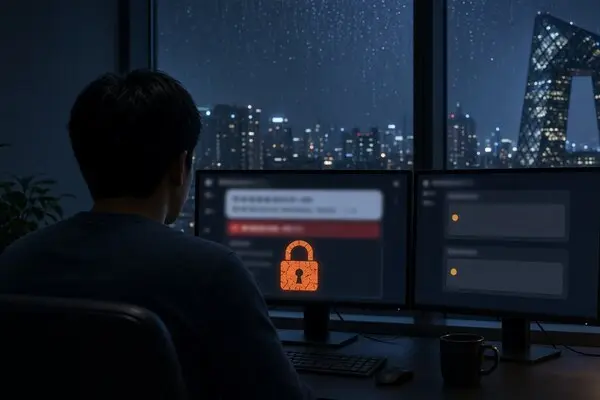
Technology has also become an important tool for regulating religious life. Online Bible applications and Christian materials have been removed or heavily censored, while digital religious content is subject to strict government control.
Since March 2022, churches wishing to livestream Masses, sermons or other religious activities must obtain official licenses from provincial authorities. Unauthorized online religious activities can be shut down, limiting the Church’s ability to communicate with believers through digital platforms.
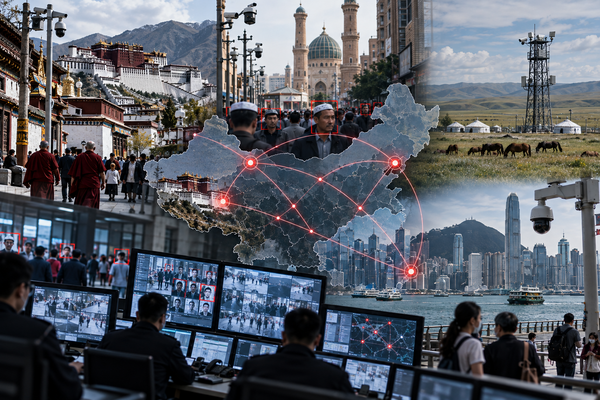
Government surveillance has expanded alongside these regulations. Reports indicate that many churches are equipped with facial recognition cameras and monitoring systems that record attendance and track worshippers.
While Chinese authorities present these measures as part of broader public security efforts, critics argue that they discourage religious participation and create an atmosphere of constant surveillance. Many believers now worship knowing that their presence may be permanently recorded by the state.
Perhaps the greatest impact has been on China’s underground Catholic Church. For decades, underground Catholics remained loyal to the Pope while refusing to join the state-approved Chinese Catholic Patriotic Association. Following the 2018 agreement, many underground priests have been encouraged or pressured to register with government authorities.
In some cases, registration requires clergy to sign declarations supporting the Communist Party and to conduct ministry only within officially recognized churches. Religious freedom advocates argue that these requirements weaken the independence of the underground Church and undermine communities that maintained their loyalty to Rome despite decades of pressure.
These developments form part of the Chinese government’s broader policy of “Sinicization,” which seeks to align religious practice with socialist values and national priorities. Chinese officials describe the policy as adapting religion to Chinese culture and promoting social harmony. Critics, however, argue that it places political loyalty above religious conviction and limits the Church’s ability to function independently.
International concern grew after the arrest of Hong Kong’s Cardinal Joseph Zen, a retired bishop and one of the Vatican-China agreement’s strongest critics. His arrest drew widespread condemnation from governments, religious leaders, and human rights organizations.
The European Parliament called on the Vatican to use its diplomatic influence to defend Cardinal Zen and protect religious freedom in China. His case has become a symbol of the wider debate over whether diplomatic engagement can effectively defend fundamental human rights.
The Vatican continues to maintain that dialogue remains the most practical path forward. Church officials argue that ending communication with Beijing could leave Chinese Catholics in an even more vulnerable position. Critics disagree, believing that despite years of engagement, restrictions on religious freedom have continued to expand.
The debate ultimately raises a difficult question: does diplomatic engagement protect Chinese Catholics, or does it unintentionally strengthen government control over religious life? While the Vatican views the agreement as a necessary compromise to preserve Church unity, many human rights advocates believe the moral cost has been too great.
For millions of Chinese Catholics, the reality is measured not by diplomatic statements but by daily life under surveillance, censorship, government oversight and continuing uncertainty about the future of their faith.






Leave a Reply