

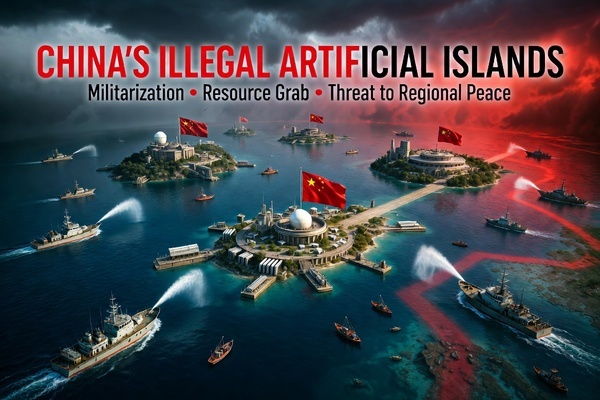
China’s construction of artificial islands in the South China Sea has become one of the most contentious geopolitical issues in recent decades. These man‑made islands, along with associated airstrips and military facilities, sit amid overlapping territorial claims involving China and several Southeast Asian nations. What began as a land‑reclamation effort has evolved into a broader strategy that intertwines resource access, military projection, and national prestige. Understanding China’s motivations, the responses of regional actors, and the implications for global security is essential for anyone seeking insight into Indo‑Pacific geopolitics.
Why the South China Sea Matters
The South China Sea is not just another body of water. It is a vital maritime zone through which roughly one‑third of global shipping passes each year, carrying trillions of dollars in trade. These waters are rich in fisheries that provide food and livelihoods for millions and are believed to hold significant reserves of oil and natural gas beneath the seabed.
Because of its economic and strategic value, multiple countries have claims in the region. These include Brunei, Indonesia, Malaysia, the Philippines, Vietnam, Taiwan, and China. While some disputes are longstanding and complex, China’s actions have drawn particular attention due to the scale and pace of its activities.
China’s Artificial Islands: What They Are and How They Were Built
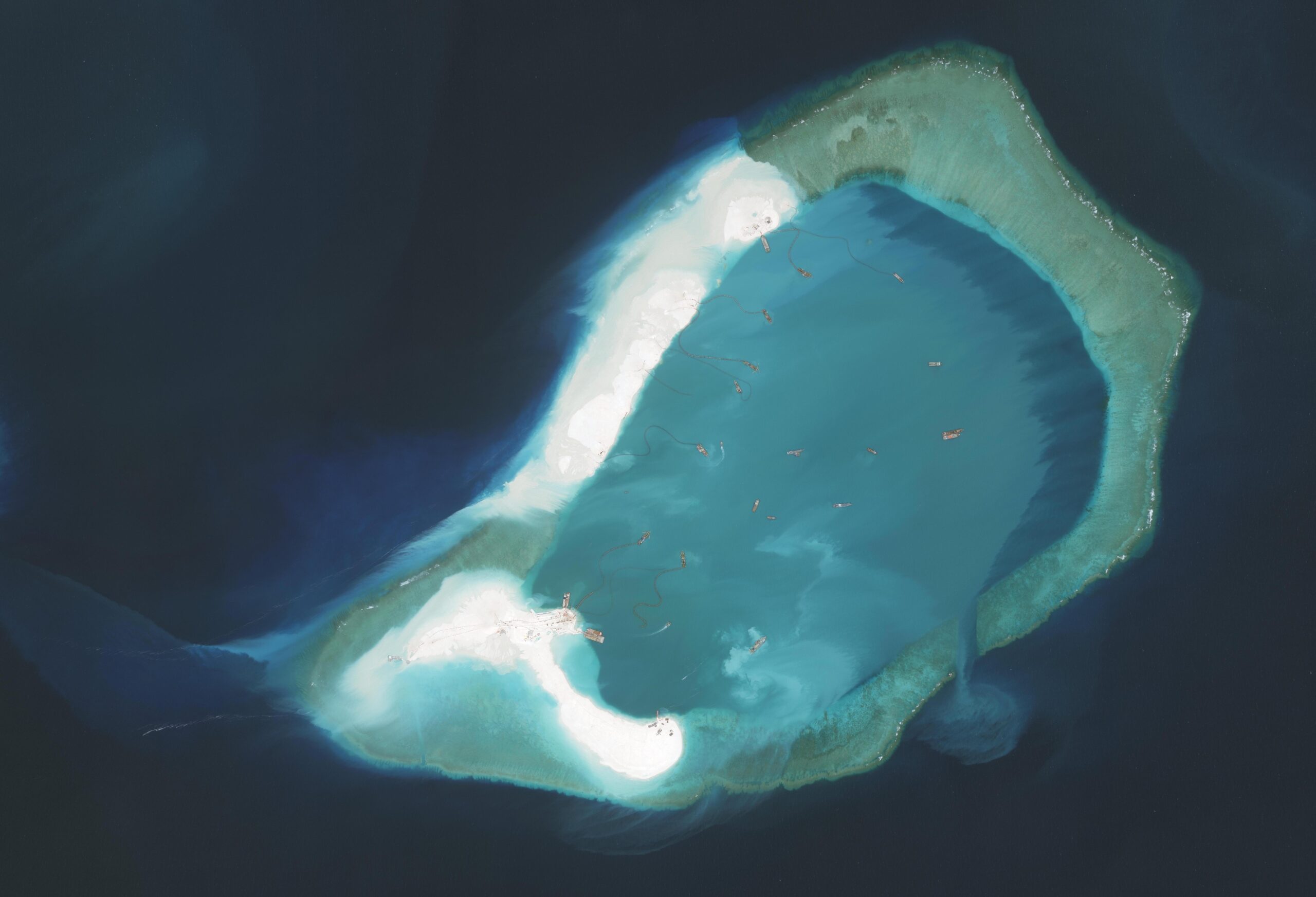
Starting around 2014, China began extensive land reclamation in the South China Sea. Using dredgers to scoop up sand and sediment from the seafloor, Beijing transformed submerged reefs and rocks into larger land masses capable of supporting permanent structures.
These artificial features have been developed into significant installations that include military outposts, runways capable of handling aircraft, ports, and support facilities. They are not naturally occurring islands but engineered platforms meant to extend China’s operational reach in the region.
According to recent reporting, China has built airstrips and installations on many of these islands and is now pushing for further build‑up. Chinese officials describe these features as strategic frontiers and essential elements for accessing deep‑sea resources.
Strategic and Military Importance
The artificial islands serve multiple strategic purposes:
- Projection of Power: By placing military assets on these islands, China can extend the range of its air force and navy deeper into the South China Sea and beyond. This enhances its surveillance, deterrence, and rapid deployment capabilities.
- Control of Sea Lanes: The islands are positioned near crucial shipping corridors. Greater presence here strengthens China’s ability to influence maritime traffic and enforce its claims.
- Surveillance & Intelligence: China has also fortified these features with radar, communications, and other electronic systems that strengthen its ability to monitor regional activity.
- Resource Access: The islands can serve as bases for exploring and exploiting marine resources, including fisheries and undersea hydrocarbons.
Collectively, this infrastructure helps China operate across the first island chain — the series of land and sea features stretching from Japan down through the Philippines — which many strategists view as a natural defense line.
Regional Reactions and Tensions
China’s artificial islands have not gone unchallenged. Countries that also claim parts of the South China Sea see these acts as encroachments on their sovereign rights. Vietnam, the Philippines, and Malaysia have all expressed opposition and taken steps to assert their own claims.
The Philippines, for example, has engaged in joint naval exercises with the United States and other allies to reinforce freedom of navigation and counterbalance China’s growing presence. Taiwan, which controls the largest naturally occurring island in the Spratlys, has similarly maintained a presence and conducted drills, underscoring that its interests in the sea remain active and contested.
International Law and Dispute Mechanisms
The legal status of China’s claims and the construction of artificial islands has been debated in international forums. A 2016 ruling by an arbitration tribunal in The Hague found that China’s assertions under the so‑called nine‑dash line had no legal basis under the United Nations Convention on the Law of the Sea (UNCLOS). However, Beijing rejected that ruling and continues to uphold its expansive territorial assertions.
This legal dispute has complicated diplomatic efforts and made enforcement of international norms more challenging, even as other claimant states have sought peaceful mechanisms for managing conflict.
Environmental and Economic Concerns
Beyond geopolitical implications, China’s artificial island construction has also raised environmental concerns. Dredging and land reclamation can damage fragile coral reef ecosystems and disrupt fisheries, undermining the region’s marine biodiversity. Such ecological impacts also have economic consequences for local communities and the wider maritime environment.
China’s artificial islands in the South China Sea represent more than just engineering feats. They are central to a broader geopolitical strategy that blends military reach, resource competition, and national ideology. While Beijing describes its actions as necessary for development and defense, they have significantly altered the dynamics in Southeast Asia and beyond.
Looking ahead, the stability of the region will depend on diplomatic engagement, the enforcement of international law, and the ability of multiple stakeholders to balance competition with cooperation. How these contestations evolve will shape not only the futures of the countries bordering this important sea but also the broader landscape of global security and trade.








Leave a Reply