

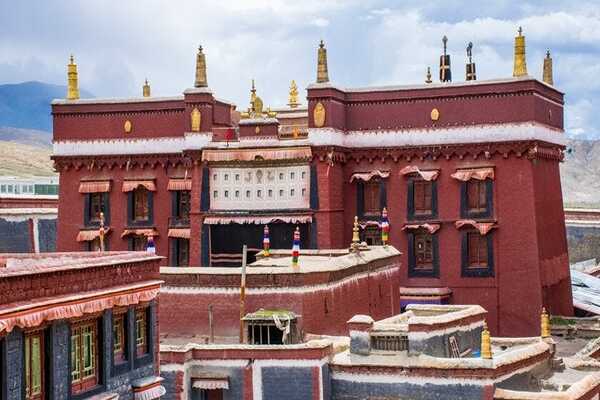
Tucked away in the high reaches of the Tibetan plateau, around 100 miles north of the Nepal border, is a monastery that sits more than 4,000 meters above sea level. This unique monastery, called Sakya Monastery, is home to one of the most incredible libraries in the world. Its collection includes 84,000 manuscripts, carefully stored on shelves that run an impressive 60 meters long and stand 10 meters high. But the real marvel isn’t just the size, it’s the history, the significance, and the way the manuscripts have managed to survive for centuries at such a high, harsh altitude.
Sakya Monastery was established in 1073 by a man named Khön Könchok Gyalpo, on a hillside of pale gray earth. The monastery got its name from this distinctive soil, as “Sakya” means “gray earth” in Tibetan. This spot, chosen for its solitude and peace, became the home for monks and scholars who dedicated their lives to studying Buddhist scriptures and various other subjects.
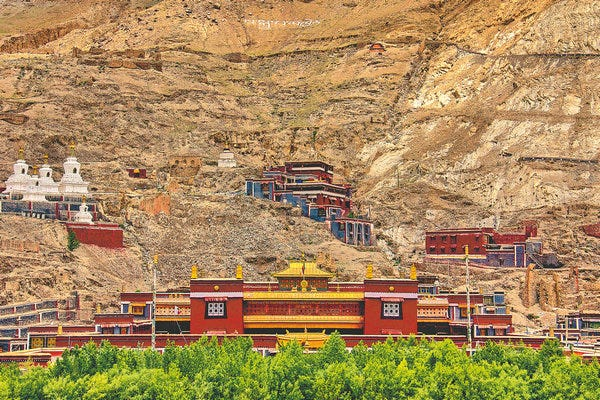
The library that Sakya houses is not just a collection of Buddhist texts. The southern complex, which was constructed in 1268 by Drogön Chögyal Phagpa, includes a fortress-like structure surrounded by a moat for protection. Inside this stronghold, the library holds rare and ancient manuscripts from many different fields, including philosophy, astronomy, mathematics, art, and, of course, the Buddhist scriptures. These books have survived centuries of harsh conditions due to the dry air, the altitude, and the monastery’s remote location.
At its peak, the abbots of Sakya governed Tibet under the protection of the Mongols. It was during this time that some of the library’s most remarkable volumes were created. Kublai Khan, the famous Mongol leader, ordered a set of scriptures that were nothing short of extraordinary. The pages of these books were six feet long, written in shimmering gold ink, and bound in iron. This special gift to Phagpa, the abbot of Sakya, was a symbol of the power and relationship between the Mongols and the Tibetan monastery.
While the majority of the collection is made up of Buddhist texts, the library’s range extends far beyond that. It holds rare manuscripts on subjects like astronomy, art, and mathematics. Some of the oldest manuscripts were written on palm leaves, which were the traditional writing material in Tibet at the time. These manuscripts have survived all these years thanks to the unique environment of the Tibetan plateau. The cold, dry air has acted like a natural preservative, allowing these books to remain in good condition for hundreds of years.
Among these ancient texts, one scripture stands out. This particular manuscript is so heavy that it weighs over 500 kilograms, making it the heaviest known manuscript in the world. The weight of the book is an indication of the incredible size and importance of the text. While it is not easy to imagine reading such a massive volume, the fact that it has survived at Sakya Monastery for centuries is a testament to the strength of the community’s commitment to preserving their cultural and religious heritage.
In 2003, the Tibet Academy of Social Sciences took a closer look at the library’s collection. Recognizing the importance of these texts, monks at Sakya Monastery began the work of digitizing the library in 2011. By 2022, every single volume in the collection had been cataloged, but only about 20% of the texts had been fully scanned and made available online. The hope is that, one day, more people will have access to these incredible works, which offer insight into not only Tibetan Buddhism but also a vast range of knowledge from centuries past.
Despite the challenges the monastery has faced throughout its history, it has endured. The southern complex, which houses the library, suffered a devastating fire in the 16th century. It wasn’t until 1948 that it was restored to its former glory. However, the northern part of the monastery wasn’t so lucky. During China’s Cultural Revolution in the 1960s, much of the northern monastery was destroyed, but the southern complex, along with the precious library, was spared. This survival is even more remarkable when you consider the extreme environment of the plateau.
The cold, thin air at this altitude makes life incredibly difficult for both people and animals. Yet, this harsh environment is what has helped preserve the manuscripts for so long. The lack of humidity and the dry air in the region have acted as natural barriers against decay, allowing the texts to remain in good condition for hundreds of years. The isolation of the monastery at such a high elevation has also kept it safe from the many dangers that have impacted other parts of Tibet throughout history.
Though there are other small collections of scripture in monasteries at higher elevations in Tibet, none of these compare to the scale of the library at Sakya Monastery. No known collection at such an altitude holds as many manuscripts or as significant a cultural legacy. The monastery’s library is not only a treasure trove of Tibetan knowledge and history but also a testament to the endurance of Tibetan culture in the face of countless challenges.
In conclusion, Sakya Monastery’s library is a rare gem in the world of historical archives. The manuscripts stored within its walls tell the story of Tibetan Buddhism, of ancient knowledge, and of a culture that has survived for centuries at one of the highest points on Earth. Though it has faced many challenges over the years, the library continues to stand as a symbol of resilience, dedication, and the enduring power of the written word. The preservation of these texts, along with the monks’ ongoing efforts to digitize them, will ensure that this treasure trove of knowledge remains accessible to future generations.













Leave a Reply