
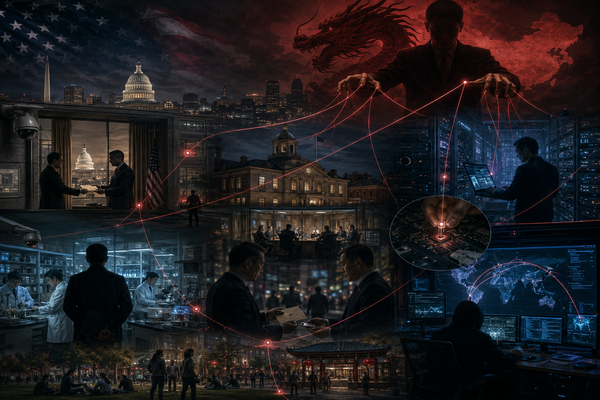
The recent U.S. Department of Justice case involving Eileen Wang, former mayor of Arcadia, California, has once again raised serious concerns about the reach of Chinese state-linked influence operations inside American society. On May 11, 2026, the Justice Department announced that Wang, 58, had been charged with acting in the United States as an illegal agent of the People’s Republic of China. In a related filing, she agreed to plead guilty to the felony charge, which carries a maximum penalty of 10 years in prison.
According to U.S. officials, Wang secretly served the interests of the Chinese government by helping promote pro-PRC propaganda in the United States. The Associated Press reported that Wang and Yaoning “Mike” Sun worked from late 2020 to 2022 on behalf of Chinese government officials to promote PRC interests and messaging. Reuters reported that Wang resigned from the Arcadia city council and mayoral post shortly after the case became public.
This case is important not because one local official was involved, but because it fits a broader pattern. The concern is not ordinary Chinese Americans, students, businesspeople, or cultural organizations. The issue is the Chinese Communist Party’s alleged use of covert networks, political influence, technology theft, diaspora pressure, and propaganda channels to advance state objectives abroad. In democratic societies, influence is legal when it is open and registered. It becomes a national security threat when it is hidden, directed by a foreign government, and designed to manipulate public opinion or policy.
For years, U.S. security agencies have warned that China represents one of America’s most serious counterintelligence challenges. FBI Director Christopher Wray said in 2020 that nearly half of the FBI’s roughly 5,000 active counterintelligence investigations were related to China, and that the bureau was opening a new China-related case roughly every 10 hours. The FBI’s public China threat page describes countering PRC activity as its “top counterintelligence priority,” citing concerns over intellectual property theft, cyber intrusions, and efforts to gain strategic advantage.
Historical cases show that the threat has taken many forms. In 2019, former CIA officer Jerry Chun Shing Lee was sentenced to 19 years in prison for conspiring to deliver national defense information to China. The Justice Department said Lee had served as a CIA case officer and later conspired to communicate sensitive information to the PRC. Such cases strike at the heart of national security because they involve intelligence sources, methods, and classified information.
Economic espionage has been another major area. In 2022, Chinese intelligence officer Yanjun Xu was sentenced to 20 years in prison after being convicted of attempting to steal trade secrets from GE Aviation. The Justice Department said Xu targeted American aviation companies, recruited employees to travel to China, and sought proprietary information related to advanced aircraft engine technology. He was also the first Chinese government intelligence officer extradited to the United States to stand trial.
A related case involved Xiaoqing Zheng, a former GE Power engineer, who was convicted of conspiracy to commit economic espionage. Prosecutors said Zheng conspired with individuals in China to steal GE trade secrets related to turbine technologies, knowing or intending that the theft would benefit the Chinese state and China-linked companies or universities.
American universities have also faced pressure. The Charles Lieber case at Harvard demonstrated how talent recruitment programs can become national security concerns when affiliations and payments are hidden. Lieber, a former chair of Harvard’s chemistry department, was convicted in 2021 of making false statements and tax offenses related to his affiliation with Wuhan University of Technology and China’s Thousand Talents Program. DOJ records said his contract included up to $50,000 per month in salary, living expenses, and more than $1.5 million for a research lab in China.
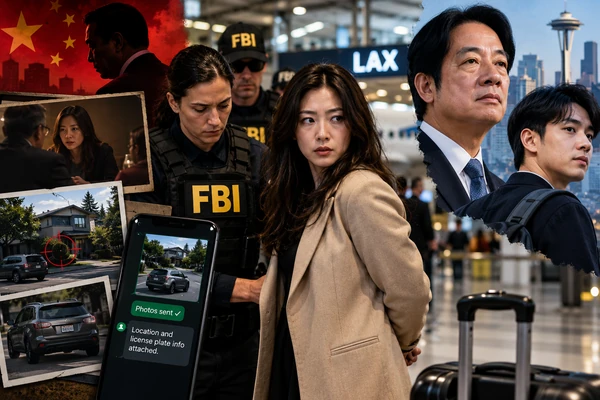
Another disturbing pattern is transnational repression. In 2020, the Justice Department charged eight individuals with acting as illegal PRC agents in connection with “Operation Fox Hunt,” a global campaign allegedly used to surveil, harass, stalk, and coerce people in the United States to return to China. These activities are especially troubling because they extend foreign policing onto American soil and intimidate people who may already have fled political pressure.
The New York “secret police station” case further illustrates this trend. In 2023, U.S. authorities arrested Lu Jianwang and Chen Jinping for allegedly operating an undeclared Chinese police station in Manhattan’s Chinatown. In 2024, Chen pleaded guilty to conspiring to act as an illegal PRC agent. In May 2026, Lu was convicted of acting as an illegal agent of the PRC and obstruction of justice related to the overseas police station.
This pattern is not limited to the United States. In Canada, the government expelled Chinese diplomat Zhao Wei in 2023 after allegations that he was involved in efforts to intimidate Conservative MP Michael Chong and his relatives in Hong Kong. In the United Kingdom, MI5 issued an interference alert in 2022 naming Christine Lee and alleging that she engaged in political interference activities on behalf of the Chinese Communist Party by cultivating links with members of Parliament and facilitating donations. In Australia, Di Sanh “Sunny” Duong became the first person convicted under the country’s foreign interference laws after prosecutors said he sought to influence a minister in ways favourable to CCP interests.
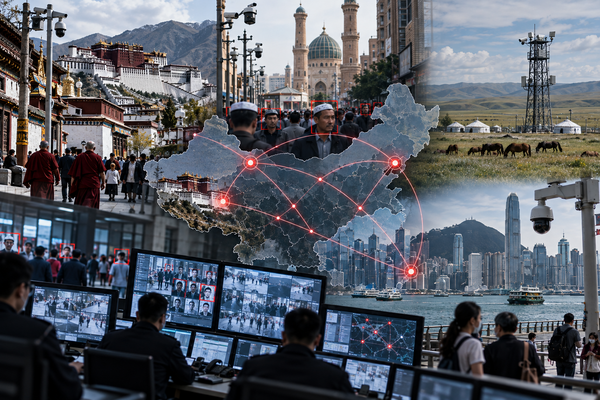
These examples show that Beijing’s influence operations are not only about spying in the traditional sense. They can include political access, media narratives, diaspora monitoring, research acquisition, cyber theft, community pressure, and elite cultivation. China, like other major powers, has legitimate diplomatic interests. But democratic countries draw a clear line between legal diplomacy and covert manipulation.
America’s response should be firm, lawful, and smart. First, foreign influence rules must be enforced consistently. Anyone acting on behalf of a foreign government should register and disclose that role. Second, local governments, universities, media platforms, and community organizations need better awareness of foreign influence tactics. Third, the U.S. must protect Chinese-American communities from suspicion or discrimination. Many victims of PRC pressure are themselves ethnic Chinese dissidents, activists, students, religious believers, journalists, or businesspeople.
The Eileen Wang case should therefore be seen as a warning. It is not a reason for prejudice; it is a reason for vigilance. China’s state-linked influence operations are real, documented, and global. The challenge for America is to defend openness without becoming paranoid, protect democracy without targeting communities, and expose covert foreign interference before it quietly reshapes public debate, policy, and national security.






Leave a Reply