

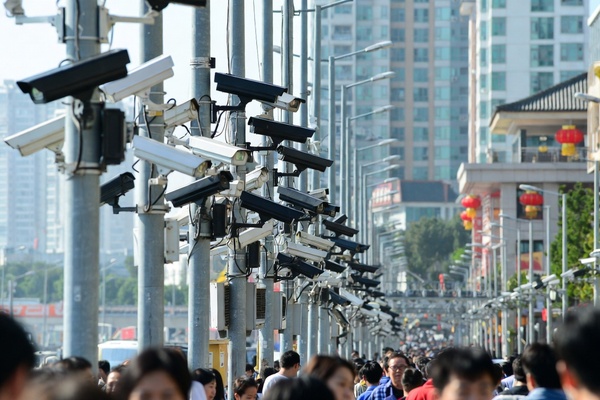
A recent photo from Qingdao, China, has triggered public debate after a netizen shared images of two roadside poles packed with surveillance cameras and lighting devices. The poles, located at the intersection of Heilongjiang Middle Road and Shanhe Road in Chengyang District, appeared to carry an unusually high number of cameras, raising questions about excessive monitoring, poor urban planning, and the growing visibility of surveillance infrastructure in Chinese cities.
The image quickly gained attention online, with many users questioning why so many devices were concentrated at a single intersection. Some viewed the scene as a symbol of China’s expanding surveillance environment, while others wondered whether the equipment was still functional or simply left behind after repeated upgrades.
Following the online reaction, the Chengyang Public Security Bureau issued a situation report on Saturday, 25 April. According to the bureau, it immediately carried out an investigation together with relevant local authorities. The inspection found that the two poles held a total of 18 video cameras and 24 lighting devices.
The police explained that not all the equipment was still in active use. Out of the total, 12 cameras and 16 lighting devices were outdated, no longer met operational needs, and had already been discontinued. These obsolete devices were later removed, according to the official statement.
The incident highlights a broader public concern: surveillance infrastructure is not only about security but also about trust, transparency, and accountability. While cameras at road junctions may serve traffic control, public safety, and law enforcement purposes, a cluster of visible devices on one pole can create an impression of over-monitoring. In public communication terms, the image itself became more powerful than the official explanation.
The quick response by local authorities shows that online public attention can still pressure officials to clarify and correct visible governance issues. However, the episode also raises an important question: why were unused cameras allowed to remain in place until citizens publicly questioned them?
For many observers, the Qingdao case is not merely about two crowded poles. It reflects the tension between modern urban management and citizens’ growing unease over surveillance. Even when authorities describe some equipment as outdated, the visual impact of “camera-heavy” public spaces can deepen concerns about privacy and state monitoring.
In the end, the removal of discontinued devices may solve the local problem, but the larger debate remains: how much surveillance is necessary, and who ensures that it does not quietly expand beyond public trust?









Leave a Reply