

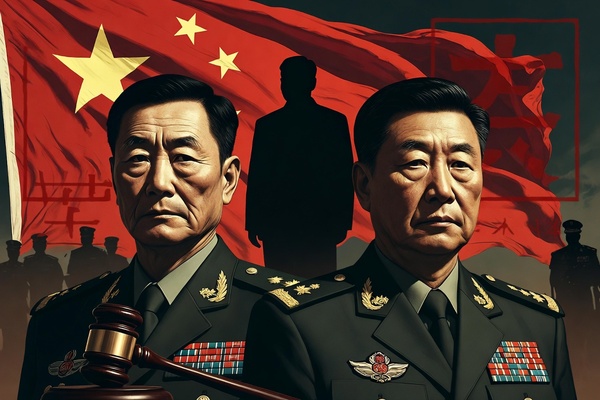
In a dramatic turn of events, two former Chinese defense ministers, Wei Fenghe and Li Shangfu, have been sentenced to death with a two-year reprieve over corruption charges. This latest development is part of an ongoing anti-corruption campaign launched by President Xi Jinping, which has extended its reach to the highest levels of the military. While the announcement of death sentences for two high-ranking officials may seem like a decisive step against corruption, there’s much more to this purge than meets the eye. This article delves into the details of the corruption charges, the broader anti-corruption crackdown, and what it means for China’s military and political landscape.
The Fall of Wei Fenghe and Li Shangfu
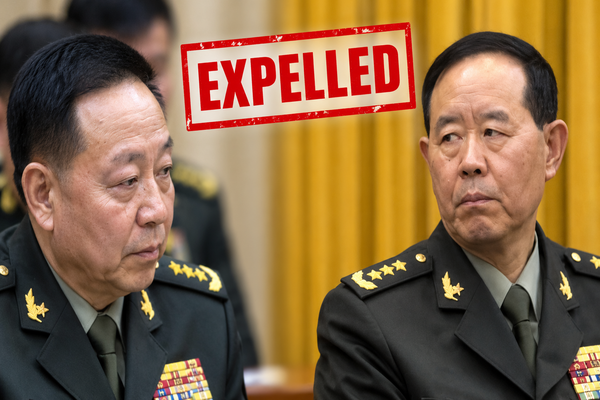
Wei Fenghe, who served as China’s defense minister from 2018 until 2023, and Li Shangfu, who succeeded him but only held the position for a few months, were both convicted of serious corruption offenses. Wei, aged 72, was found guilty of accepting bribes, while Li, 68, was convicted not only of accepting bribes but also of offering them. The two men were former members of China’s powerful Central Military Commission (CMC), the body that oversees the military and is headed by Xi Jinping.
According to state media, the court has imposed a death sentence on the two former ministers, with a two-year reprieve. In China, a death sentence with reprieve is usually commuted to life imprisonment if the convict shows no further criminal behavior during the reprieve period. However, once the sentence is commuted, there is no further possibility of parole or commutation.
In addition to their sentences, Wei and Li were stripped of their political rights for life, and their personal property was confiscated. This represents a significant loss of power for these men, who once held immense influence over China’s military and defense sectors.
The Long-Running Anti-Corruption Campaign
The purging of Wei Fenghe and Li Shangfu is the latest chapter in President Xi Jinping’s relentless anti-corruption campaign, which he launched upon coming to power in 2012. The crackdown, which Xi has described as a “grave and complex” task, has focused on rooting out corruption within China’s political, military, and business sectors. This effort has been framed as necessary to ensure the Communist Party’s survival and to eliminate one of its greatest threats—corruption.
Xi has often pointed to corruption as a key issue that undermines the Communist Party’s legitimacy. For years, the Chinese leadership has faced accusations of widespread corruption within its ranks, and Xi’s campaign has sought to address this by targeting both lower-level officials and high-ranking members of the elite. The fall of Wei and Li is just the latest in a series of high-profile cases that have demonstrated Xi’s commitment to rooting out corruption.
However, the purge has also been seen as a means of consolidating Xi’s own power. By removing potential rivals and ensuring loyalty within the military, Xi is positioning himself as the undisputed leader of both China’s government and its armed forces. The military purge has reached the highest levels, with the removal of top generals and officials, including the head of the elite Rocket Force, which oversees China’s nuclear and missile programs.
The Impact on China’s Military
China’s military, once known for its loyalty to the Communist Party, has increasingly become a target of Xi’s anti-corruption efforts. The armed forces, especially the powerful CMC, have been a critical part of Xi’s political and military strategy. The CMC, which once had 11 members, now has only Xi and one other member. This dramatic reduction in leadership suggests Xi’s desire to streamline military command and eliminate potential sources of opposition within the military hierarchy.
In addition to the purges, Xi has also focused on enforcing political loyalty within the military. The military is now expected to be completely aligned with Xi’s vision, with officers and soldiers expected to prioritize loyalty to the Communist Party and to Xi himself. This focus on loyalty has extended to the Rocket Force, which has been at the center of the recent purges. The Rocket Force is responsible for China’s nuclear arsenal, and its influence has made it a key target for Xi’s anti-corruption campaign.
The purges are not only about rooting out corruption—they are also about ensuring that the military remains firmly under Xi’s control. This is particularly important as China continues to expand its military capabilities, including its nuclear forces and missile programs. Ensuring that the military is loyal to Xi is crucial to his broader strategy of asserting China’s dominance on the global stage.
The Political Implications of the Purge
The fall of Wei Fenghe and Li Shangfu has significant political implications for China. Both men were powerful figures within the Communist Party and held key positions in the government and military. Their removal sends a strong signal to other officials within the Party and the military: loyalty to Xi is paramount, and any betrayal will be met with severe consequences.
The purges also highlight the growing concentration of power in Xi Jinping’s hands. With the reduction of the CMC to just Xi and one other member, Xi has effectively eliminated any potential rivals within the military leadership. This consolidation of power reflects Xi’s broader political strategy, which aims to centralize authority and eliminate any threats to his rule.
This centralization of power has raised concerns among some analysts and observers, who worry that it could lead to an erosion of internal checks and balances within the Communist Party. While Xi’s supporters argue that his strong leadership is necessary to ensure China’s continued rise as a global power, critics fear that the concentration of power in one individual could lead to authoritarianism and the suppression of political dissent.
Critical Facts on China’s Military Purge and Corruption Crackdown
- Wei Fenghe served as China’s defense minister from 2018 to 2023. He was convicted of accepting bribes.
- Li Shangfu, who succeeded Wei, was removed from office in October 2023 and expelled from the Communist Party in 2024. He was convicted of both accepting and offering bribes.
- The Central Military Commission (CMC), which oversees the military, has been a primary target of Xi Jinping’s anti-corruption campaign. The CMC once had 11 members but now has only Xi and one other member.
- The Rocket Force, which oversees China’s nuclear and missile programs, has also been purged, with top generals removed from their positions in 2023.
- A death sentence with reprieve in China is typically commuted to life imprisonment if the convict shows no further criminal behavior during the reprieve period. However, once commuted, there is no further possibility of parole or commutation.
The conviction and sentencing of former defense ministers Wei Fenghe and Li Shangfu mark a significant moment in China’s ongoing anti-corruption crackdown. While the campaign has undoubtedly purged corruption from China’s military and political ranks, it has also served to further consolidate Xi Jinping’s power within the Party and the military. As Xi continues to strengthen his grip on the Chinese government and military, the world will be watching closely to see how this centralization of power impacts both China’s domestic policies and its role on the global stage.
The purges of high-ranking military officials signal Xi’s commitment to ensuring loyalty within the military. They also raise important questions about the future of political checks and balances in China. As the country moves forward, it remains to be seen whether the consolidation of power will lead to a stronger China or whether it will foster a more authoritarian regime. Only time will tell what impact these developments will have on the Chinese political landscape and the world at large.










Leave a Reply