

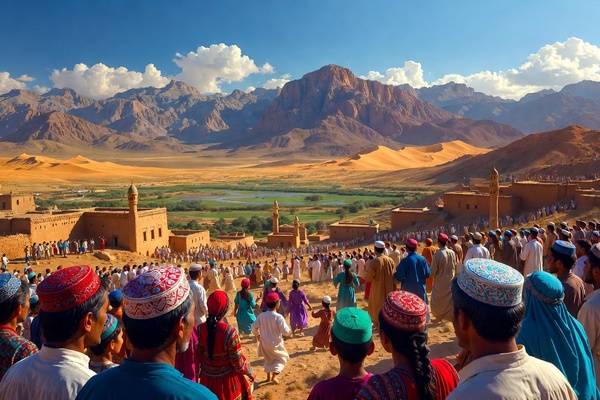
Every May 5th, Uyghurs around the world celebrate Uyghur Doppa Day, a day that has grown in significance as a symbol of both cultural pride and defiance against oppression. The doppa, a traditional cap worn by Uyghur men, has become one of the many cultural elements suppressed by the Chinese authorities in East Turkestan (also known as the Xinjiang Uyghur Autonomous Region). Despite the ongoing efforts to eradicate Uyghur culture, the doppa has emerged as a powerful symbol of resistance, worn with pride by Uyghurs in the face of growing repression.
The doppa, an intricately designed cap, represents much more than just a piece of clothing. For the Uyghur people, it embodies their ethnic identity, cultural traditions, and resistance against the Chinese government’s policies aimed at erasing their heritage. However, within East Turkestan, the situation is dire. Authorities have been systematically targeting Uyghur culture, religion, and language, seeking to assimilate the population into the dominant Han Chinese culture. The banning of the doppa is part of this broader campaign of cultural repression.
The Cultural Significance of the Doppa
The doppa is a symbol of Uyghur identity that has been worn for centuries, passed down through generations as part of their unique cultural heritage. Traditionally, the doppa is made from cloth, adorned with embroidered designs that vary by region and personal preference. Its shape and design are distinct, marking it as a symbol of the Uyghur people’s pride in their cultural roots. The doppa is often worn during significant religious and cultural ceremonies, such as weddings, religious gatherings, and festive events.
For Uyghurs, the act of wearing the doppa goes beyond tradition. It represents their resilience and determination to hold on to their cultural identity in the face of overwhelming forces trying to erase it. As Chinese authorities intensify their efforts to assimilate Uyghurs through oppressive measures—such as forced labor, mass detentions, surveillance, and cultural censorship—the doppa has become a quiet yet powerful form of resistance. Wearing the doppa is a statement that Uyghur culture will not be erased, no matter how hard the Chinese government tries to suppress it.
The Ban on the Doppa in East Turkestan
In East Turkestan, the repression of Uyghur culture is pervasive and systematic. The Chinese government has implemented policies aimed at eradicating Uyghur religious practices, including restrictions on religious attire, customs, and public displays of faith. This includes the ban on the doppa, which is now forbidden in many public spaces, such as schools, government buildings, and public transportation. Uyghur men who continue to wear the doppa in these areas risk facing harassment, fines, or even imprisonment.
The Chinese government’s rationale behind the ban on the doppa and other forms of Uyghur cultural expression is part of its broader agenda of “Sinicization”—a process aimed at forcing minority ethnic groups to adopt Chinese language, culture, and values. This process is not limited to Uyghurs but extends to Tibetans, Mongols, and other ethnic minorities within China. For Uyghurs, however, the cultural suppression has been particularly brutal, as it is coupled with the ongoing genocide against the Uyghur people.
According to various reports, including those from human rights organizations such as Human Rights Watch and Amnesty International, more than one million Uyghurs have been detained in so-called “reeducation” camps in East Turkestan since 2017. These camps are part of a larger system of oppression designed to indoctrinate Uyghurs into Chinese state ideology and suppress any dissent or cultural pride. While the Chinese government claims that these camps are voluntary vocational training centers, evidence of forced labor, torture, indoctrination, and other human rights abuses paints a much darker picture.
Resistance Through Identity: Wearing the Doppa with Pride
Despite the official ban, many Uyghurs continue to wear the doppa as an act of resistance. Uyghur Doppa Day is now observed not only in exile communities around the world but also within East Turkestan, where Uyghurs secretly wear the cap in defiance of Chinese authorities. The doppa has become a symbol of cultural survival, a way for Uyghurs to remind themselves and the world that their identity cannot be erased, no matter how much pressure is applied by the state.
One of the most significant aspects of Uyghur Doppa Day is how it has garnered international recognition. Uyghurs in diaspora communities, especially in countries like Turkey, the United States, and Canada, use this day to raise awareness about the ongoing repression in East Turkestan. Tourists and visitors who recognize the doppa as a symbol of Uyghur identity often stop to learn more about the ongoing Uyghur genocide. These moments of interaction offer hope to Uyghurs, as they provide an opportunity for the world to witness the reality of their struggle and to show solidarity.
In many ways, the doppa’s symbolism extends beyond Uyghurs alone. It represents the larger fight against cultural erasure and human rights violations that affect many ethnic and religious minorities in China. By continuing to wear the doppa, Uyghurs are asserting their right to self-determination, dignity, and the preservation of their cultural heritage in the face of state-sponsored efforts to destroy it.
The International Call for Action
The international community must continue to take a stand against China’s oppression of Uyghurs and other minority groups. Advocacy groups, policymakers, and ordinary citizens must unite in calling for an end to the genocide and cultural repression in East Turkestan. The international community must continue to demand that China be held accountable for its actions and that the voices of the Uyghur people be heard.
Uyghur Doppa Day, while small in scale, is a reminder that cultural survival is an act of defiance. As Uyghurs continue to wear the doppa with pride, they send a powerful message to the world: their culture, their identity, and their future will not be erased. They will continue to resist, to fight for their rights, and to hope for a future where they can live freely, without fear of oppression.
In the face of unspeakable atrocities, the Uyghur people’s commitment to cultural survival and the fight for justice should be a call to action for us all. Their struggle is not just theirs; it is a fight for the preservation of human dignity in the face of state-sponsored oppression. The doppa represents not just a piece of clothing, but a legacy of resilience and hope for the future.











Leave a Reply