

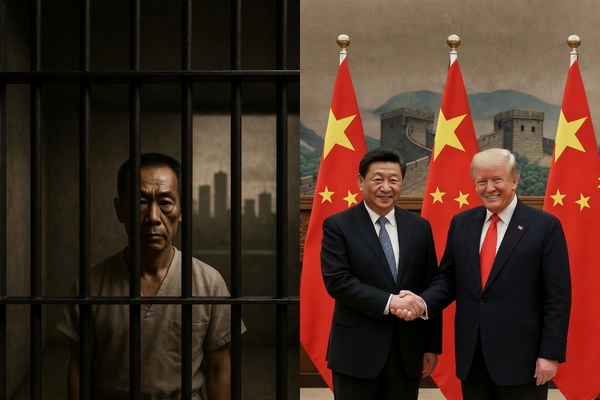
As President Donald Trump prepares for a high‑stakes diplomatic visit to Beijing in mid‑May 2026, one of the most-watched and controversial issues on the agenda is the future of Hong Kong pro‑democracy activist and media tycoon Jimmy Lai . It is a case that has become a powerful symbol of freedom versus repression in China.
Lai, now 78 years old and in frail health, was sentenced in early 2026 to 20 years in prison under a sweeping national security law imposed on Hong Kong by Beijing. Critics around the world have condemned the sentence as politically motivated, arguing that it was designed to silence dissent and decimate independent journalism in the city once known for its vibrant press freedoms.
The former owner of Apple Daily, a newspaper that played a central role in Hong Kong’s pro‑democracy movement, Lai has long been a thorn in the side of China’s Communist Party leadership. Over decades he championed democratic reforms, built powerful media platforms that investigated corruption and pushed back hard against Beijing’s tightening grip on the city’s civic life.
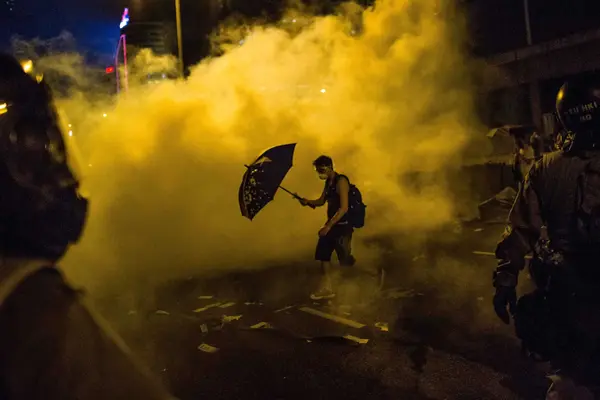
Lai’s imprisonment stems from Hong Kong’s national security law, introduced in 2020. Mandated by Beijing as a means to restore “stability” after the massive protests that rocked the city in 2019, the legislation has been used to arrest and convict dozens of activists, lawmakers, and journalists. It criminalizes broad categories of speech and activity under charges like “collusion with foreign forces” and “sedition.”
In Lai’s case, authorities accused him of conspiracy to collude with foreign powers and publishing seditious material — charges that many international legal experts and advocacy groups regard as contrived and politically driven. The resulting 20‑year sentence — equivalent to a life term given his age — has drawn global scrutiny and condemnation.
Over the past year, the fear for Lai’s wellbeing has grown. Reports suggest that he has lost significant weight and suffers ongoing health problems, including diabetes and heart issues. His son, Sebastien Lai, has publicly warned that his father’s days may be numbered if he remains in prison.
In the United States, Lai has emerged as a rallying point for bipartisan concern over China’s human rights record. Ahead of Trump’s trip to China, more than 100 U.S. lawmakers — including two‑thirds of the Senate from both parties — signed a letter urging the president to make Lai’s release a priority. Some leaders have invoked humanitarian arguments, stressing that Lai’s age and health warrant urgent attention.
Trump himself has stated publicly that he intends to raise the matter with Chinese President Xi Jinping at the summit. During the 2024 U.S. presidential campaign, he vowed “100%” to secure Lai’s freedom if elected; while Trump has tempered expectations, he has reaffirmed that the topic will stay on the table in upcoming talks.
The diplomatic calculus is complicated. For Trump, who in his second term has placed heavy emphasis on trade, AI competition, Taiwan security, and conflict in the Middle East, human rights could be a relatively minor wrinkle compared to broader geopolitical and economic priorities. Critics worry that without sustained pressure, Beijing could treat calls for Lai’s release as a symbolic concession — one it is unwilling to make.
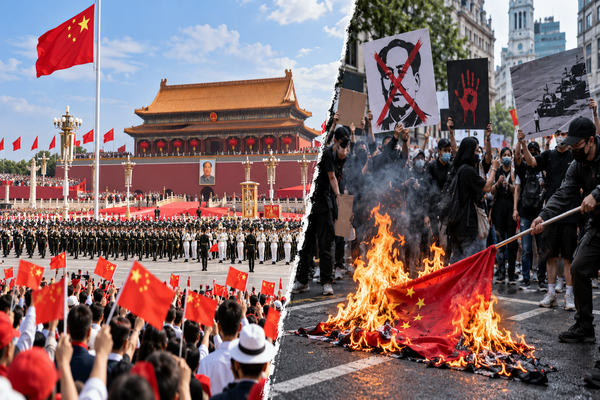
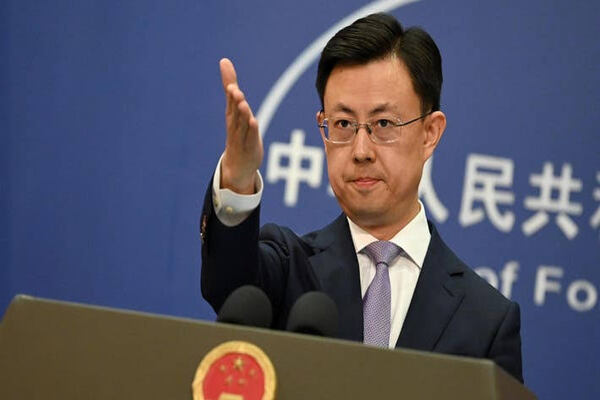
From Beijing’s perspective, acquiescing to foreign demands on what it frames as an internal, legal matter would be seen as a blow to sovereignty — particularly under Xi’s leadership, which has emphasized strict control over dissent and resistance to foreign interference. Chinese officials have repeatedly characterized Hong Kong affairs as internal affairs and have resisted what they call external meddling.
Xi’s hardline approach stands in stark contrast to the era before the national security law, when Hong Kong retained comparatively more autonomy under the “one country, two systems” framework agreed upon at the 1997 handover. Over the last several years, Beijing’s tightening grip has not only dismantled democratic opposition but also extinguished much of the city’s independent media landscape.
Yet Lai’s case remains one of the most potent symbols of this erosion. To supporters of democracy and press freedom, his imprisonment represents the price paid by those who dared stand against authoritarian overreach. To global human rights groups, his plight underscores the broader trend of shrinking civic space in China and Hong Kong alike.
Even as human rights issues sometimes take a back seat to economic negotiations and security alliances in U.S.‑China relations, advocates argue that cases like Lai’s must not fade from view. They contend that failure to make meaningful progress on human rights at the highest levels of diplomacy could signal to authoritarian governments that repression carries few consequences on the world stage.
For now, all eyes are on Trump’s forthcoming meetings with Xi — meetings that could signal whether human rights will meaningfully factor into the evolving U.S.–China relationship or whether issues like trade and strategic competition will eclipse them. The stakes are personal for the Lai family, political for democrats worldwide, and emblematic of a broader struggle over civil liberties in an increasingly assertive China.
Regardless of the outcome, Jimmy Lai’s case has already transcended Hong Kong’s borders to become a global litmus test for how the world engages with China on human rights and rule of law — even as Beijing continues to assert its authority with an iron fist.





Leave a Reply