

Xi Jinping health rumors have surged after his absence from a BRICS gala dinner in New Delhi. An overseas Chinese opposition figure claimed that Xi suffered a stroke and received emergency treatment in Beijing. No Chinese authority or major independent newsroom has confirmed that claim. Beijing has since published instructions and a letter under Xi’s name. Those documents show official activity, but they do not prove a live appearance. This analysis explains the evidence, China’s succession rules, possible contenders, and the likely future of the Chinese government.
Xi Jinping Health Rumors Grow: Who Would Take Over China After Xi?
A viral stroke claim remains unverified. Yet the episode exposes China’s deepest political risk: Xi has no publicly designated successor.
There is no verified evidence that Xi Jinping suffered a stroke. This article analyses the rumor and constitutional scenarios.
Rumors about Xi Jinping’s health spread after he missed a BRICS gala dinner in New Delhi.
Wanjun Xie, an overseas China Democracy Party figure, then made a dramatic claim on X. He alleged that Xi fainted, suffered a stroke, and entered Beijing’s 301 Hospital.
Moneycontrol reported the allegation on 16 September. It also said the newsroom could not independently verify it. Chinese authorities have announced no diagnosis.
What is confirmed, claimed, and unknown?
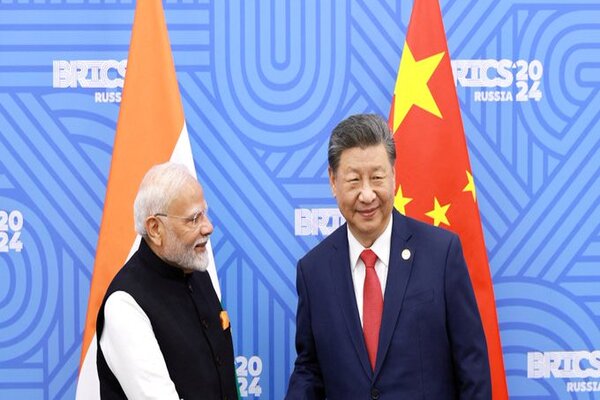
Xi attended the BRICS summit, met Narendra Modi, and left New Delhi on 13 September.
An opposition figure alleged a stroke, emergency transport, and treatment at a military hospital.
No public medical record, named doctor, hospital statement, or independent confirmation supports that account.
Xi’s dinner absence created the opening for speculation. Indian reports initially said he had returned to his hotel for rest. Missing one ceremonial event cannot establish a medical emergency.
Beijing later released a university letter and an industrial-policy instruction under Xi’s name. The instruction was conveyed at a conference. Neither item documented a live appearance.
A Washington meeting with Donald Trump was scheduled for 24 September. A clear public appearance would seriously weaken the illness narrative. A postponement alone would still prove nothing.

Why succession is unusually difficult
Xi is not powerful because he holds one presidency. He controls three separate pillars of the party-state.
This is the central political office. The Party’s Central Committee formally elects its holder.
This is the constitutional headship. Article 84 gives this office a written succession rule.
This office commands the armed forces. Military loyalty makes it essential during any transfer.
These posts can move separately. Han Zheng would inherit only the state presidency after a formal vacancy. He would not automatically lead the Party or military.
The Central Committee must elect a new general secretary. Separate party and state bodies would settle the military chairmanship. Informal bargaining would precede those formal votes.
Xi weakened older succession conventions. He removed presidential term limits in 2018. He also avoided promoting an obvious heir into the top leadership.
Article 84 covers a vacant presidency. It does not provide a detailed public process for temporary incapacity.
Who could take over after Xi?
No official successor exists. The names below represent institutional scenarios, not predictions or endorsements.
Han Zheng: the constitutional successor
Han is China’s vice president. Article 84 would make him president after a formal vacancy.
However, Han left the Politburo Standing Committee in 2022. He therefore lacks an automatic claim to Xi’s party and military authority.
Li Qiang: the government continuity candidate
Li is premier and the second-ranked Standing Committee member. He manages the State Council and national administration.
That position gives him visibility during a crisis. Yet the Party would still need to elevate him through an internal agreement.
Cai Qi: the party-machine candidate
Cai sits on the Standing Committee and leads the Party Secretariat. He also oversees the Central Committee’s General Office.
Those roles connect leadership meetings, documents, security, and messaging. They could make Cai a powerful organizer or broker.
Ding Xuexiang: the younger insider
Ding is the first-ranked vice premier and the youngest current Standing Committee member. He served Xi closely for years.
His age supports a longer transition. His limited independent power base could either help consensus or weaken his claim.
Zhang Shengmin: a military gatekeeper
Zhang became a Central Military Commission vice chairman in 2025. Later military investigations increased his institutional importance.
He is better viewed as a command stabilizer or kingmaker. A direct move into civilian leadership looks less likely.
What would happen inside the government?
The Chinese government would not automatically collapse. The State Council, ministries, provinces, banks, and security agencies have established command structures.
Daily administration would probably continue under Li Qiang. The sharper danger concerns strategic coordination at the very top.
Xi concentrated decisions around himself and trusted commissions. That model reduced visible preparation for an emergency transfer. Officials may therefore wait for signals instead of acting quickly.
| Area | Likely immediate effect | Main uncertainty |
|---|---|---|
| Party | A closed bargain within the top leadership. | Who can assemble elite support? |
| Government | Strong emphasis on administrative continuity. | Can officials make major decisions? |
| Military | Rapid loyalty statements and tighter command. | Who controls appointments and operations? |
| Economy | Market volatility and delayed investment decisions. | Will policy become more pragmatic? |
| Foreign policy | Cautious diplomacy mixed with nationalist signaling. | Could rivals misread defensive moves? |
Would China change direction?
A successor would probably preserve Xi-era priorities at first. Every current contender rose inside his political system.
Expect continued Party control, industrial policy, technological self-reliance, and pressure on dissent. A sudden democratic opening is highly improbable.
Style could still change. A collective leadership might consult more widely and reduce personal symbolism. Economic officials could gain room for practical adjustments.
Foreign governments would watch Taiwan, the South China Sea, and the India border. Beijing might act cautiously to avoid two crises.
However, leaders could also display military resolve to prove unity. Outside powers should avoid treating uncertainty as weakness.
Recent purges make the military dimension especially sensitive. Investigations removed several senior commanders and narrowed the visible leadership bench.
The most defensible conclusion
The illness claim is newsworthy because it reveals a real succession problem. It is not reliable evidence of Xi’s condition.
Han Zheng has the clearest constitutional role. Li Qiang, Cai Qi, and Ding Xuexiang have stronger party claims.
No individual can simply inherit Xi’s complete authority. China’s next leader would emerge through an opaque elite bargain.
What to watch next
Look for unedited video, multiple camera angles, and interaction with foreign leaders. Written instructions and old footage provide weaker evidence.
Watch the planned Washington visit and later Politburo meetings. Also monitor unusual security notices, military editorials, or changes in official titles.
Most importantly, avoid diagnosing a leader from posture or absence. Verification requires independent reporting, identifiable evidence, and time.
Quick questions
Has Xi Jinping’s illness been confirmed?
No. The stroke story remains an unverified social-media allegation. No public medical evidence supports it.
Who becomes president if Xi leaves office?
Vice President Han Zheng succeeds under Article 84. That rule covers the state presidency only.
Who becomes China’s paramount leader?
No automatic successor exists. Party leaders must settle the general secretaryship and military command through separate processes.









Leave a Reply