

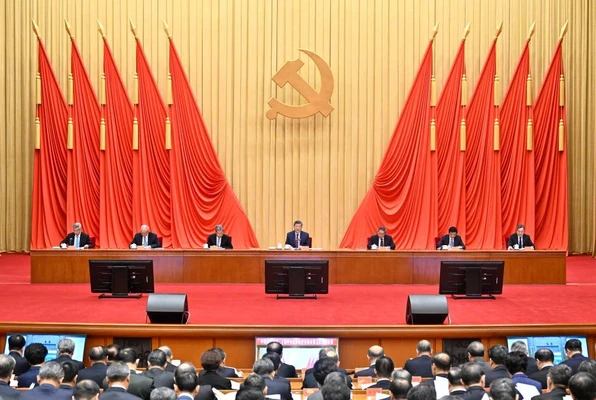
China’s top legislature approved a law on combating cross-border corruption on Friday, 6 November, adding a dedicated statute to Beijing’s efforts to pursue graft involving overseas elements. The measure was adopted at the 25th session of the 14th National People’s Congress Standing Committee, according to state news agency Xinhua.
The law has six chapters and 47 articles and takes effect from promulgation, Xinhua reported. Its stated aims include preventing and punishing cross-border corruption, strengthening international anti-corruption cooperation and protecting China’s sovereignty, security and development interests.

Photograph unavailable. The caption and article remain available.
01 / THE LEGISLATIVE PATH
From first reading to adoption
Select a date to read the legislative record.
First reading
The draft was submitted to the 24th session of the NPC Standing Committee for its first review. The initial proposal addressed enforcement responsibilities, international cooperation and corporate integrity.
THE RECORD
Second reading
Lawmakers began a further review. Official coverage described draft provisions on legal procedures, human rights, confidentiality and compliance arrangements for Chinese companies operating across borders.
THE RECORD
Law adopted
The Standing Committee passed the law. Xinhua said it would take effect from promulgation.
THE RECORD
02 / SCOPE AND SAFEGUARDS
What the law covers—and what the draft proposed
Xinhua’s adoption bulletin identifies mechanisms and responsibilities, case handling and international cooperation, integrity and compliance, and legal liability among the law’s subject areas. Source report
CONFIRMED SUBJECT AREACase handling and cooperationRead the context
The adoption summary places case handling and international cooperation within the law. At the first reading, officials said legislation was needed to address difficulties in detecting cross-border corruption, obtaining evidence, recovering assets and securing convictions.
DRAFTING RECORDCorporate integrityRead the context
Before the vote, the second-reading draft proposed integrity and compliance departments or designated personnel for Chinese companies operating across borders, proportionate to their size, business scope and risk exposure.
DRAFTING RECORDProcedural safeguardsRead the context
The second-reading account also described requirements to follow legal procedures and protect human rights, alongside confidentiality for information obtained during investigations.
These details come from the adoption bulletin and pre-vote reporting. The bulletin summarises the law rather than reproducing it; precise duties, jurisdictional rules and penalties require the enacted text.

Photograph unavailable. The caption and article remain available.
03 / THE ENFORCEMENT CONTEXT
The numbers before the new law
The legislation follows years of cross-border enforcement. Authorities reported 505 cross-border corruption cases and 963 fugitives returned in 2025. The chart places the reported return count alongside the 2024 total. Source report
Reported fugitives returned
People · full-year official totals · scale 0–2,000
Showing both years: 2024, 1,597 people; 2025, 963 people.
Data, sources and limitations
Officially reported annual counts of fugitives returned; these are not counts of convictions. Both periods predate the November 2026 law. The figures do not establish corruption prevalence or the new statute’s effectiveness.
| Year | People returned | Source |
|---|---|---|
| 2024 | 1,597 | Official report |
| 2025 | 963 | Official report |
04 / THE INTERNATIONAL DIMENSION
Why cooperation still matters
International cooperation remains a separate practical hurdle. The United Nations Convention against Corruption provides a framework for extradition, mutual legal assistance and asset recovery, with safeguards for due process and third-party rights. National legislation is one part of that wider legal architecture; it does not by itself establish whether another country will grant a particular request. United Nations background
What comes next
For Chinese companies operating internationally, the drafting record makes corporate integrity an issue to watch closely. The proposed compliance arrangements were linked to company size, operations and risk. The enacted provisions and subsequent authoritative guidance will determine how those responsibilities apply in practice. Second-reading report
The wider test is implementation: how authorities obtain evidence, recover assets and work with overseas counterparts while protecting procedural rights. Passing a law sets a framework. Its effects will have to be assessed through the cases and cooperation that follow. Cooperation framework

















Leave a Reply