


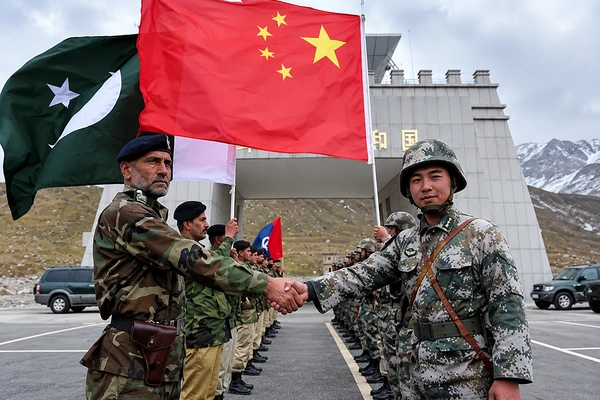
Following Chinese Premier Li Qiang’s congratulations to Prime Minister Tarique Rahman after Bangladesh’s February 2026 election, China–Bangladesh ties have entered a new phase of defence and strategic cooperation. Both sides now emphasize growing strategic and industrial links, while also pledging deeper political, economic and people-to-people engagement, expanded Belt and Road cooperation and closer coordination on global development agendas. They have reaffirmed commitments to enhance technology transfer, defence production and maritime security coordination. This renewed engagement builds on the 2002 defence cooperation agreement that laid the foundation for their partnership and comes at a time when Bangladesh is striving to modernize its armed forces despite political uncertainty and economic pressures.
Bangladesh’s armed forces now source over 70% of their major defence equipment from China, including submarines, tanks, jet fighters and naval frigates. In January 2026, Dhaka signed a Tk608 crore (about $55 million) government-to-government agreement with China Electronics Technology Group Corporation (CETC) to establish a drone manufacturing facility near the Bogra Air Base. The project aims to produce medium-altitude and vertical take-off (VTOL) drones locally, supported by full technology transfer for assembly, software development and training.
This partnership is part of Bangladesh’s broader effort to modernize its military at lower cost, particularly after a 10% cut to the national defence budget in 2025. Chinese systems such as the SY-400 surface-to-surface missile, VT-5 light tanks and Ming-class submarines have become central to this upgrading process. The newly built BNS Sheikh Hasina submarine base on the Cox’s Bazar coast constructed with Chinese assistance extends Dhaka’s operational presence in the Bay of Bengal, a region vital for international trade and energy routes.
These developments are not immediate signs of conflict but represent a gradual shift in the maritime balance across South Asia. With longer-range missiles, advanced surveillance drones and submarine capabilities now in play, neighbouring countries are watching closely. India, in particular, remains sensitive to new strategic sites like the Bogra facility, located near the narrow corridor connecting its mainland to the northeast. Analysts say the location increases the need for transparency and data safeguards to ensure defence cooperation does not create unintended tensions.
Bangladesh’s growing reliance on Chinese military hardware also presents practical challenges. Dependence on a single supplier for spare parts and maintenance could strain operations during crises, particularly as Bangladesh faces political uncertainty and tightened budgets. However, Dhaka continues to view its defence ties with Beijing as a cost-effective path toward self-reliance in production and technology.
Both countries describe their cooperation as “mutually beneficial” and focused on maritime security, disaster response and counter-terrorism. Still, regional observers urge greater confidence-building measures among South Asian nations. Proposals include trilateral dialogues between Bangladesh, China and India or expanded consultation within BIMSTEC (Bangladesh, Bhutan, India, Myanmar, Nepal, Sri Lanka, Thailand) to discuss technology use, drone regulations and maritime communication. South Asia modernizes its defences, maintaining open dialogue and transparency will be key to preventing mistrust from turning into rivalry.












Leave a Reply