

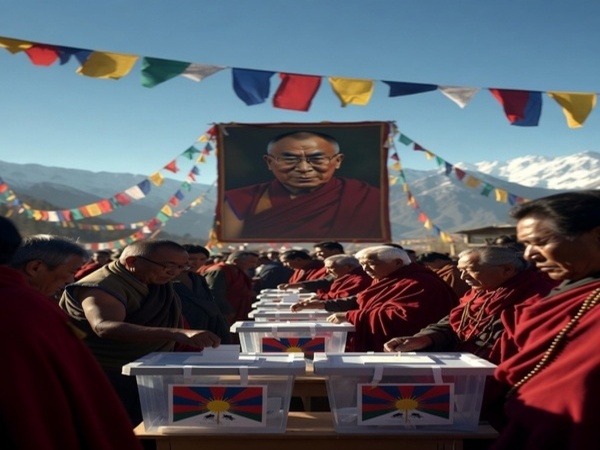
For Tibetans living in exile, voting is more than a political exercise. It is an act of identity, memory, and hope. On Sunday, Tibetans outside Chinese control voted for a new government-in-exile, choosing representatives who will speak for a scattered community spread across Asia, Europe, Australia, and North America. The election carries special importance because Tibetans are preparing for a future in which their most respected spiritual leader, the Dalai Lama, may no longer be present to guide them.
The India-based Central Tibetan Administration, also known as the CTA, is the main political body representing Tibetans in exile. It is headquartered in Dharamshala, in northern India, where the Dalai Lama has lived since fleeing Tibet in 1959 after China crushed an uprising in Lhasa. For decades, the Dalai Lama was both the spiritual and political face of the Tibetan struggle. But in 2011, he handed over political authority to the elected exile leadership. Since then, the CTA has carried the responsibility of keeping Tibetan political identity alive.
This election is important because it shows that Tibetans in exile continue to believe in democratic participation. Around 91,000 registered voters were expected to take part in polling across 27 countries. These voters include monks in Himalayan regions, refugees in South Asia, young Tibetans in Western countries, and families who have lived outside Tibet for generations. The election could not take place inside China, where Tibetan political activity outside state control is not allowed.
For many young Tibetans, this vote is about the future rather than only the past. A 19-year-old first-time voter, Tenzin Tsering, said that Tibetan voices must reflect where the community is going, not just where it has been. His statement captures a major challenge before the exile community. Older generations carry memories of Tibet, exile, and loss. Younger generations are growing up in India, Europe, Australia, and North America. They may speak different languages and live in different cultures, but they still want to remain connected to Tibet.
The Tibetan parliament-in-exile is designed to represent this wide community. It has 45 members elected for five years. Thirty members represent Tibet’s three traditional provinces. Ten members represent five major religious traditions. Five members represent the Tibetan diaspora outside South Asia. This structure reflects the attempt to balance geography, faith, and global exile identity. The parliament meets twice a year and provides a democratic platform for a people without control over their homeland.
At the center of this political system is the “sikyong,” or leader of the CTA. Penpa Tsering has already been elected for a second term after winning strong support in the preliminary round. Like the Dalai Lama, he follows the “Middle Way” policy. This policy does not demand complete independence from China. Instead, it seeks meaningful autonomy for Tibetans within China, allowing them to protect their culture, religion, language, and way of life.
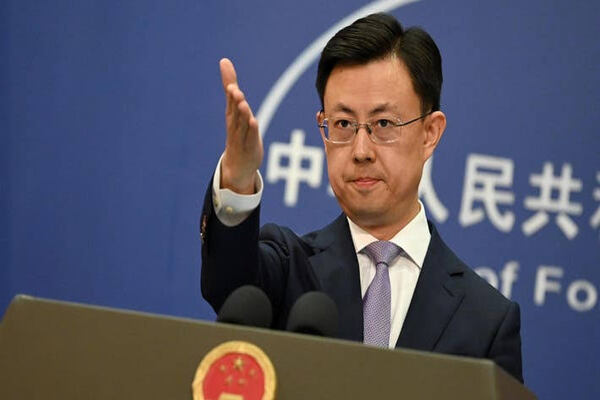
China rejects the CTA and calls it a separatist political group. Beijing also insists that it has the authority to approve the next Dalai Lama. This is one of the most sensitive issues facing Tibetans today. The Dalai Lama, who is now 90, has said that only his India-based office has the right to decide matters related to his reincarnation. For Tibetan Buddhists, the Dalai Lama is not just a political figure. He is believed to be the 14th reincarnation in a spiritual line that began in 1391.
This dispute over succession is not only religious. It is deeply political. If China tries to appoint its own Dalai Lama, and the Tibetan community follows another chosen by the Dalai Lama’s office, Tibetans may face a painful division. That is why the exile institutions are becoming more important. They may be the main organized voice of Tibetans when the current Dalai Lama is no longer there to unite the community personally.
The election also reminds the world that Tibetans in exile have preserved a democratic culture under difficult conditions. They do not control territory. They do not have a recognized state. Their people are scattered across continents. Yet they still hold elections, debate policies, and choose leaders. In that sense, the vote is a peaceful answer to displacement. It says that exile has not erased political identity.
The CTA represents an estimated 150,000 Tibetans living in exile worldwide. Its power is limited, but its symbolic value is large. It keeps Tibetan issues alive internationally, supports cultural preservation, and provides a political structure for a community that might otherwise become fragmented. As the Dalai Lama grows older, this structure will matter even more.
This election is therefore not just about seats in a parliament. It is about continuity. It is about whether Tibetans can carry their struggle forward through institutions, not only through one beloved leader. It is about young Tibetans finding their place in a long national story. Above all, it is a reminder that democracy, culture, and faith remain central to the Tibetan exile community’s fight for survival.
For Tibetans in exile, the ballot is a small piece of paper. But behind it stands a much larger message: even without a homeland under their control, they still claim a voice, a future, and an identity.







Leave a Reply