

China’s expulsion of three senior military leaders from its national legislature marks another decisive step in President Xi Jinping’s long running campaign to consolidate absolute control over the armed forces. While officially framed as part of an anti-corruption drive, the latest purge is increasingly viewed by analysts as a calculated effort to neutralize any remaining figures within the military who could represent alternative power centers real or perceived within China’s tightly controlled political system.
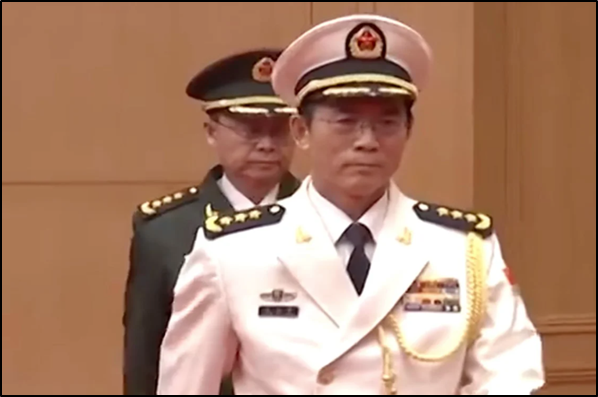
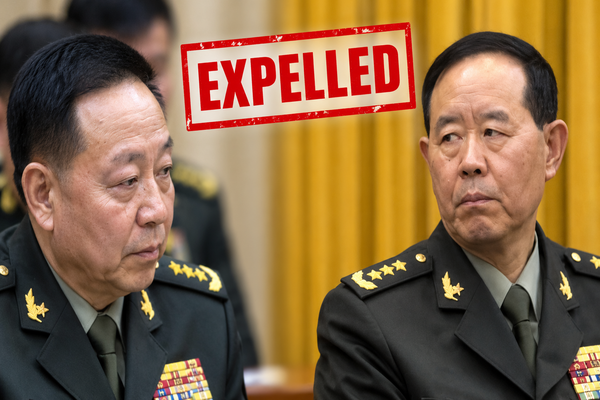
According to the SCMP, the Standing Committee of the National People’s Congress (NPC) announced on 27 Dec 25 that Wang Renhua, head of the Central Military Commission’s (CMC) Political and Legal Affairs Committee; Zhang Hongbing, political commissar of the People’s Armed Police (PAP); and Wang Peng, director of the CMC’s training and administration department, had been expelled from the legislature. Although all three remain members of the Communist Party’s Central Committee, their removal from the NPC represents a significant downgrade in political standing and a key stage in a familiar disciplinary process used to sideline senior officials before deeper sanctions follow.
The expulsions came after months of speculation. All three officers had disappeared from public view, missing major political and military events such as the People’s Liberation Army’s anniversary celebrations in July and the Communist Party’s fourth plenum in October. In China’s highly choreographed political environment, such absences are widely interpreted as a sign that an official has fallen under investigation and lost the protection of senior leadership.
Among the three, the fall of Wang Renhua carries particular symbolic weight. At 63, Wang had been promoted to admiral by Xi Jinping himself in March 2024, a ceremony broadcast prominently by state media. As head of the CMC’s Political and Legal Affairs Committee, Wang oversaw the military’s courts, procuratorates, and prisons the institutions responsible for enforcing discipline and political loyalty within the PLA. His removal sends a stark message: even those elevated by Xi and entrusted with maintaining internal control are expendable if they are deemed politically unreliable.
Wang’s career trajectory underscores the seriousness of his downfall. A native of Sichuan province, he served in politically sensitive roles at the Jiuquan Satellite Launch Centre and later rose through the PLA Ground Forces’ political system. In 2017, he was appointed chief anti-graft investigator for the Navy’s East Sea Fleet. That a former corruption enforcer has now been purged himself highlights how the campaign has evolved beyond rooting out misconduct into a broader political cleansing.
Zhang Hongbing, 59, represented another critical pillar of internal power. As political commissar of the People’s Armed Police, Zhang oversaw a force central to domestic stability and regime security. Promoted to full general in 2022, he had previously served as political commissar of the PLA’s Eastern Theatre Command, a strategically sensitive command responsible for operations related to Taiwan. His removal suggests that Xi is unwilling to tolerate even hypothetical alternative power bases within China’s security apparatus.
Wang Peng, 61, was responsible for overseeing training and administrative systems essential to the PLA’s combat readiness. Promoted to lieutenant general in 2021, he had built a reputation as a capable and innovative officer, holding senior positions at the Eastern Theatre Command and the National Defence University. Analysts warn that sidelining figures responsible for professional military development may prioritize political reliability over institutional continuity.
These expulsions are part of a broader purge at the highest levels of China’s military. The NPC also recently removed He Weidong, a former vice-chairman of the Central Military Commission, and He Hongjun, a senior PLA political official, both expelled from the Communist Party in October. Taken together, the actions point to a systematic dismantling of entrenched networks that predate Xi’s consolidation of power.
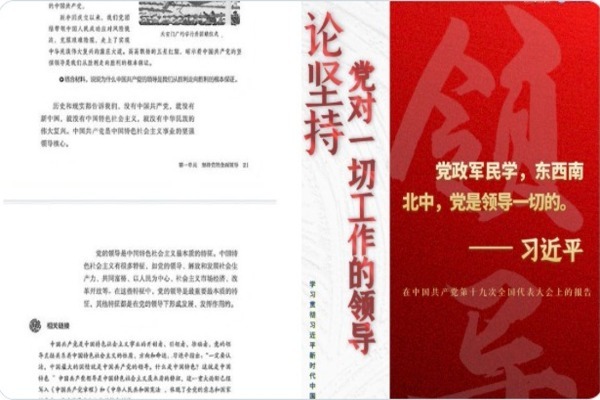
While Beijing continues to frame the campaign as an anti-corruption effort, many observers argue it now functions primarily as a mechanism to eliminate potential rivals and enforce absolute loyalty. Nearly a decade after the sweeping 2015 military reforms, the persistence of purges suggests Xi is determined to complete the transformation of the PLA into a force defined not by institutional autonomy or competing factions, but by singular allegiance to the party leader.
The consequences may be far-reaching. Repeated purges risk undermining morale, disrupting command continuity, and weakening institutional confidence at a time of heightened tensions involving Taiwan and the South China Sea. Yet for Xi Jinping, the strategic imperative of total control over the military appears to outweigh these risks.
The message from Beijing is unmistakable: no senior figure regardless of rank, past loyalty, or recent promotion is beyond removal. As Xi tightens his grip on the PLA, China’s armed forces are being reshaped into an institution where power flows in only one direction upward to the leader at the top.







Leave a Reply