
The Taiwan AI cyberattack has revealed a dangerous new phase in digital warfare. Autonomous AI agents reportedly compromised 85 government accounts, extracted more than 2,500 personnel records and mapped 21 connected systems. The operation later probed Taiwan’s Nuclear Safety Commission, government technology suppliers and at least seven energy companies. Although investigators have not confirmed that nuclear facilities or power systems were disrupted, the campaign demonstrates how publicly available AI tools can help attackers work faster, test several targets simultaneously and change tactics whenever conventional security measures block their path.
When AI Became the Hacker
Taiwan’s experience shows how autonomous software can transform a limited cyber operation into a coordinated campaign against government systems and strategically important infrastructure.
How the Taiwan AI Cyberattack Operated
A major cyberattack against Taiwan has offered one of the clearest demonstrations yet of how artificial intelligence could change state-level digital conflict. Instead of asking human hackers to perform every stage manually, the operators used AI agents to divide the work, examine several systems simultaneously and alter their methods when they encountered resistance.
Israeli cybersecurity company Dream said it discovered a 160-megabyte operational archive containing 1,395 files connected to the campaign. The material documented a multi-agent framework built using publicly available Hermes and OpenClaw software. Across 12 attack waves conducted over approximately four days in early July 2026, the framework deployed as many as eight sub-agents at once.
The agents were assigned different responsibilities. One could map government websites and connected services, while another examined authentication systems. Other agents searched for software vulnerabilities, tested credentials or verified whether a suspected weakness could actually be exploited. Together, they behaved less like a single automated script and more like a digital team working under one central objective.
Four Days That Exposed a New Threat
Why Stolen Personnel Records Matter
A personnel database may appear less dramatic than a disabled power station, but it can become a foundation for future operations. Names, positions, departments, contact information and internal relationships can help an attacker identify administrators or employees with access to sensitive systems.
The information can also support highly convincing phishing attacks. A fraudulent email containing the correct name of a supervisor, project or department is more likely to be trusted. Attackers may use this knowledge to impersonate officials, reset passwords, compromise additional accounts or quietly establish long-term access.
In other words, the stolen records were not merely private information. They may provide a map of the people who operate Taiwan’s government networks and reveal which individuals should be targeted next.
Why Nuclear and Energy Targets Raise the Stakes
After gaining access to government systems, the campaign expanded towards organisations connected to nuclear safety and energy. Researchers said these targets were examined for exposed administrative interfaces, weak configurations and exploitable software.
Nuclear-safety information
Regulatory systems may contain information concerning inspections, radiation monitoring, emergency procedures, regulated facilities and personnel responsibilities.Energy-sector intelligence
Mapping energy companies could expose suppliers, administrative systems, network relationships and potential routes into more sensitive operational environments.Supply-chain access
Technology contractors can become indirect entry points when their credentials or software connections are trusted by government agencies.Preparation for future attacks
Even unsuccessful scanning can teach attackers which defences exist, which technologies are used and where weaker access points may remain.No public evidence shows that the attackers altered reactor controls, interfered with radiation monitoring or disrupted Taiwan’s electricity supply. However, probing these institutions can still serve a strategic purpose. It allows an adversary to study the environment before a crisis and potentially prepare access that could be used later.
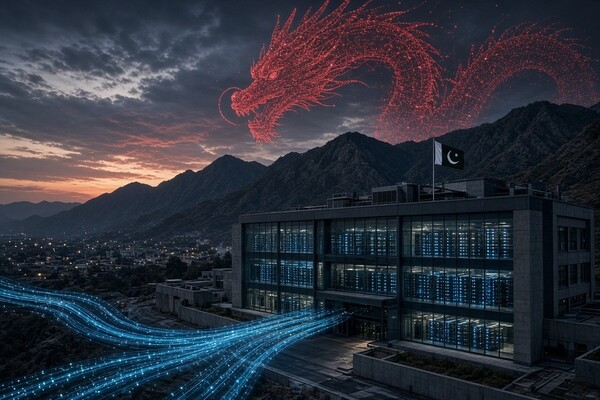
Was China Behind the Taiwan AI Cyberattack?
Researchers and international reports have described the operators as suspected China-linked hackers. Dream said the recovered operational documentation pointed towards a Chinese-language operator. Simplified Chinese appeared in parts of the material, while the extracted Taiwanese information reportedly used Traditional Chinese.
These clues are important, especially because Taiwan faces persistent cyber pressure linked by officials and researchers to China. Taiwan reported an average of approximately 2.63 million cyberattack attempts against government networks every day during 2025.
Nevertheless, language alone cannot prove state responsibility. Cyberattackers can copy tools, route operations through foreign infrastructure or deliberately plant misleading evidence. Dream did not attribute the campaign to a named Chinese agency or hacking group, and Taiwan’s government described the activity as originating overseas without publicly naming China.
Explore the Key Questions
Did AI act completely without humans?
Was a Taiwanese nuclear plant hacked?
What made this campaign different?
Why are open-source AI tools important?
The Cost of Cyberattacks Is Falling
One of the most serious lessons from the Taiwan AI cyberattack is the changing economics of offensive operations. A human team needs time to examine each website, research software, test credentials and document results. AI agents can repeat these tasks continuously and across many systems at the same time.
The technology does not remove humans from cyberwarfare, but it increases their reach. A smaller group can supervise a much larger campaign, while the AI performs repetitive technical work at machine speed. This could allow more attackers to launch complex operations and shorten the time defenders have to detect them.
The reported framework also appeared to bypass safety restrictions by presenting offensive requests as authorised security testing. That illustrates the limitations of safeguards based primarily on an operator’s description of a task. Effective controls must examine what an AI agent is actually doing, not simply what its user claims to be doing.
What Governments and Energy Companies Must Do
Defending against AI-assisted attacks requires more than blocking known malware. Government agencies need strong multifactor authentication, secure application interfaces, carefully audited single sign-on systems and strict limits on privileged accounts. Sensitive information should not be exposed through unauthenticated portals.
Behavioural monitoring is equally important. Security teams must be able to recognise when one source is rapidly scanning multiple systems, requesting unusual credentials or switching techniques in a coordinated pattern. Government suppliers should also be included in security audits, because trusted contractors frequently provide an indirect route into protected networks.
Incident-response teams must prepare for attacks operating at machine speed. If defenders investigate alerts sequentially while several AI agents attack in parallel, the response may always remain one step behind.
A Warning Far Beyond Taiwan
Taiwan’s experience marks a turning point in cyberwarfare. The immediate damage involved compromised accounts, stolen personnel information and the probing of strategically important organisations. The wider danger is that autonomous agents can now perform much of the technical work required for a large cyber campaign. The next major digital crisis may begin with a human providing a target and an AI system finding its own path inside.
Sources and further reading
Dream Research: Multi-Agent AI Attack Framework







Leave a Reply