

China’s pressure on its neighbours does not always involve warships, fighter jets or military exercises. Taiwan now says another contest is taking place through information, history, elections and economic pressure. Speaking in Manila, Taiwan’s representative to the Philippines, Wallace Minn-Gan Chow, accused Beijing of using online disinformation, historical revisionism, election interference and economic coercion as part of wider gray-zone operations. He said these tactics can influence democratic societies without triggering direct military confrontation. Taiwan has faced years of alleged information operations and economic pressure from Beijing, while the Philippines has also become increasingly concerned about foreign influence amid tensions in the South China Sea. China rejects accusations that it interferes in other countries’ elections and says its policies defend sovereignty and legitimate national interests. The dispute reveals a wider struggle across the Indo-Pacific: not simply over territory, but over narratives, public opinion, political decisions and how democratic societies understand China’s growing power.
False or misleading narratives designed to shape public opinion, deepen divisions or undermine confidence in institutions.
Competing interpretations of wars, sovereignty and international agreements can be used to strengthen modern territorial claims.
Taiwan alleges that Beijing attempts to shape political debate and voter perceptions without directly entering the ballot box.
Trade restrictions, market access and commercial pressure can create political costs for governments or industries.
Taiwan’s warning from Manila
Taiwan’s latest warning did not come from Taipei.
It came from Manila.
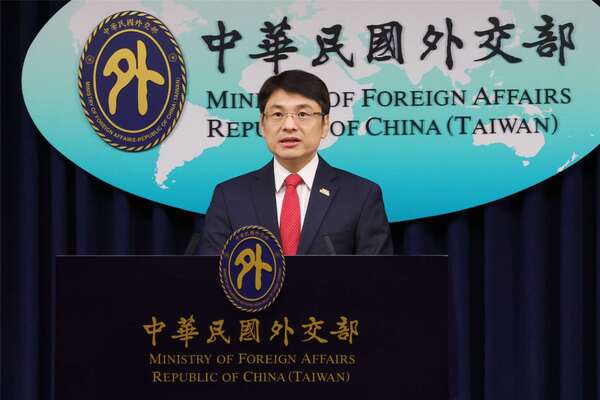
During an event marking the Republic of China (Taiwan)’s 115th National Day, Wallace Minn-Gan Chow, head of the Taipei Economic and Cultural Office in the Philippines, described what Taiwan sees as a growing contest for political influence across the Indo-Pacific.
Chow pointed to China’s military activities in the Taiwan Strait, South China Sea and West Philippine Sea.
But his warning went beyond ships and aircraft.
He accused Beijing of using what security officials commonly call gray-zone tactics.
These are actions designed to place pressure on another society while staying below the threshold of direct armed conflict.
According to Chow, the methods include online disinformation, distortion of historical facts, interference in elections and economic coercion.
For Taiwan, this is not a new accusation.
What makes the latest statement more significant is that Chow placed Taiwan and the Philippines inside the same political and information environment.
What is a gray-zone operation?
A gray-zone operation sits somewhere between normal diplomacy and open warfare.
It can involve military pressure, cyber operations, economic restrictions, propaganda, political influence and information campaigns.
The important feature is ambiguity.
An aircraft crossing a military line can be counted.
A ship entering disputed waters can be photographed.
Information influence is harder to measure.
A misleading social-media post may come from an ordinary user, a political supporter, an automated account or a coordinated network.
A business decision may appear commercial while producing political pressure.
A historical argument can look academic while also supporting modern territorial claims.
That uncertainty is what makes gray-zone activity difficult for democratic governments to confront.
1. The battle over history
Taiwan’s accusation of historical revisionism has become especially relevant in 2026.
Beijing and Taipei have recently clashed over how the history of World War Two should be remembered.
The People’s Republic of China emphasizes the Communist Party’s role in resisting Japan.
Taiwan argues that the Republic of China government, then based on the Chinese mainland and led by the Kuomintang, was the internationally recognized Chinese government that fought Japan and worked with the United States and other Allied powers.
That dispute may sound historical.
It is politically relevant today.
Taiwan argues that Beijing sometimes uses interpretations of history to strengthen its claim that Taiwan has always formed part of the People’s Republic of China’s sovereign territory.
Beijing strongly rejects that view of the dispute. Chinese officials maintain that Taiwan has historically belonged to China and that the People’s Republic is the sole legal government representing China.
The disagreement also extends to United Nations General Assembly Resolution 2758.
Beijing argues that the resolution supports its one-China position internationally.
Taiwan says Beijing stretches the resolution beyond what it actually decided by using it to argue that Taiwan itself has no right to international participation.
The dispute demonstrates why history has become part of modern strategic competition.
The argument is not only about what happened decades ago.
It influences how governments interpret sovereignty today.
2. Disinformation and the struggle for public opinion
Taiwan has spent years warning that information warfare forms part of Beijing’s pressure campaign.
Taiwanese authorities and independent researchers have documented online narratives that they believe originate from or benefit Chinese influence operations.
The themes frequently target trust.
Instead of simply persuading people to support Beijing, influence campaigns can work by creating confusion.
They can tell citizens that their government is incompetent.
They can suggest elections are manipulated.
They can argue that military resistance is pointless.
They can deepen existing political divisions.
They can portray democratic allies as unreliable.
The objective does not always need to be convincing everyone of one story.
Sometimes it is enough to make people doubt every story.
That is one reason democratic societies find disinformation difficult to counter.
Governments risk appearing censorious if they remove political speech.
But allowing coordinated false information to spread freely can also weaken public debate.
Taiwan has become one of the most closely studied examples of this problem because of the volume of information pressure it faces.
The Philippines is watching the same problem
The Philippines increasingly appears in regional discussions about foreign information manipulation.
Its strategic geography makes it important.
The country sits beside the South China Sea, maintains a treaty alliance with the United States and has increasingly challenged Chinese maritime activities in areas Manila calls the West Philippine Sea.
That environment creates fertile ground for competing narratives.
Arguments online can focus on whether the Philippines should cooperate more closely with Washington.
Others question whether Manila should confront Beijing over maritime disputes.
Another theme presents Philippine resistance as unnecessarily provoking a much stronger neighbour.
Philippine institutions and researchers have previously examined networks of accounts spreading narratives supportive of Chinese geopolitical interests.
The National Defense College of the Philippines has also published analysis describing Taiwan as a testing ground for foreign information manipulation and warning that similar techniques matter for the Philippines.
3. Election interference: the most sensitive allegation
Election interference is the most politically sensitive part of Taiwan’s accusation.
Taiwan has repeatedly accused Beijing of attempting to influence its elections.
Taiwanese officials have previously cited disinformation, economic pressure, military intimidation and contacts with local political actors as methods intended to affect voter perceptions.
Independent organizations have also documented concerns about Chinese influence surrounding Taiwanese elections.
But allegations involving elections require particular caution.
Influence is not the same thing as changing votes.
And financial transactions or political contacts do not automatically prove that a foreign government controlled an election campaign.
The Philippines has also faced allegations involving Chinese influence.
Recent political accusations have focused on alleged financial connections involving Philippine political groups and funds originating from China or Hong Kong.
However, the existence of financial transactions alone does not establish illegal Chinese government interference.
That distinction matters.
Claims of foreign election interference can themselves become political weapons inside a democracy.
Evidence must therefore be evaluated separately from political accusation.
China denies interfering in Philippine elections
Beijing rejects the allegation that it interferes in Philippine elections.
In April 2025, the Chinese Embassy in Manila said China follows a principle of non-interference in other countries’ internal affairs and has “no interest in interfering in elections in the Philippines.”
The embassy accused some Philippine politicians of using China as a domestic political issue.
That denial remains important context whenever claims of election interference appear.
The current dispute therefore involves two competing narratives.
Taiwan says democratic societies face coordinated gray-zone influence.
China says accusations of interference often serve political agendas directed against Beijing.
4. Economic coercion: pressure without firing a shot
Economic pressure can be easier to see than information warfare.
Taiwan has repeatedly accused Beijing of using trade measures for political purposes.
One example involves the Economic Cooperation Framework Agreement, or ECFA.
China has suspended preferential tariff treatment for a number of Taiwanese products.
Taiwan’s Mainland Affairs Council argues that these measures turn trade into a political bargaining tool.
Beijing has framed many of its trade actions as responses to Taiwanese restrictions, economic policy or political developments.
The broader strategic concern is straightforward.
China is one of the world’s largest markets.
Access to Chinese consumers can be enormously valuable.
Losing that access can hurt exporters, companies and workers.
That creates political leverage.
Economic coercion works when the fear of commercial loss begins to influence political decisions.
Why Taiwan and the Philippines increasingly see themselves in the same strategic space
Taiwan and the Philippines face very different disputes with China.
Beijing claims Taiwan as part of China and has not ruled out the use of force to achieve what it calls reunification.
The Philippines does not face such a sovereignty claim over the country itself.
Its dispute with China centres largely on maritime rights and territory in the South China Sea.
Yet geography connects them.
The Bashi Channel between northern Luzon and southern Taiwan forms an important route linking the South China Sea and western Pacific.
A major conflict around Taiwan would therefore have immediate security and economic consequences for the Philippines.
At the same time, both societies are democracies with highly active social-media environments.
That makes public opinion strategically important.
Chow’s Manila speech reflects Taiwan’s growing argument that information warfare, maritime pressure, economic coercion and military activity should not be viewed as separate issues.
They can form different parts of the same competition.
The West Philippine Sea adds another layer
Relations between Beijing and Manila have become increasingly tense because of encounters involving Chinese and Philippine vessels.
Both countries regularly accuse the other of provocation.
The Philippines says Chinese Coast Guard activity interferes with its lawful maritime operations.
China says Philippine vessels enter Chinese territory and create confrontations.
Information warfare follows almost every maritime incident.
Both sides release videos.
Both publish statements.
Both accuse the other of misrepresenting what happened.
The result is that the struggle over the South China Sea takes place simultaneously on the water and online.
Control of the narrative becomes almost as important as control of the footage.
Why historical narratives matter to the Philippines too
Historical revisionism is not only a Taiwan issue.
Competing historical claims also shape the South China Sea dispute.
China argues that historical evidence supports its sovereignty over island groups and adjacent waters.
The Philippines bases much of its position on modern international maritime law, particularly the United Nations Convention on the Law of the Sea.
A 2016 arbitral tribunal rejected the legal basis for China’s claim to historic rights over resources within much of the area enclosed by its nine-dash line.
China rejected the ruling and says the tribunal lacked jurisdiction and produced an invalid award.
That dispute shows how legal interpretation, historical narratives and territorial claims overlap.
History therefore does not remain inside textbooks.
It can influence the language states use to justify modern claims.
The fight is increasingly over perception
Military power is easy to visualize.
Warships can be counted.
Missiles can be photographed.
Air patrols can be tracked.
Influence operations are different.
Their battlefield is perception.
Who does the public believe?
Which historical interpretation becomes accepted?
Which political leader appears responsible for rising tensions?
Does a population believe resistance is worth its economic cost?
Does it trust its allies?
Does it still trust its own institutions?
Those questions explain why democracies increasingly treat information security as a national-security issue.
But democratic governments face a difficult problem
The solution cannot simply be to label every pro-China argument as foreign propaganda.
People in Taiwan and the Philippines can legitimately support closer relations with Beijing.
Citizens can oppose confrontation with China.
Political parties can disagree about relations with Washington.
These are ordinary democratic positions.
The difficult task is identifying when political debate moves from genuine domestic opinion into covert foreign manipulation.
That requires evidence.
Who funded the campaign?
Who created the accounts?
Who directed the messaging?
Were government officials involved?
Without those answers, governments risk turning counter-disinformation policy into political censorship.
Beijing’s counterargument
China presents a very different picture.
Chinese officials say Western governments, Taiwan and some Philippine political figures routinely misrepresent China’s intentions.
Beijing maintains that its Taiwan policy concerns Chinese sovereignty and that other governments should follow the one-China principle.
It also argues that its South China Sea activities defend legitimate territorial rights.
On Philippine election interference, the Chinese Embassy has explicitly denied involvement.
Chinese officials have also accused Philippine figures of spreading disinformation about maritime incidents.
This competing narrative is essential to understanding the dispute.
Both sides increasingly accuse the other of manipulating information.
The real contest may be below the threshold of war
A military confrontation between China, Taiwan or the Philippines would carry enormous risks.
Gray-zone tactics offer governments another way to apply pressure.
A trade restriction costs money but does not launch a missile.
A disinformation campaign can weaken trust without crossing a border.
A historical narrative can change public understanding without deploying a soldier.
An election influence operation can potentially affect government policy without openly challenging the state.
That is why Taiwan’s warning in Manila matters.
It frames the competition with China not simply as a question of military strength.
It presents it as a long-term contest over how democratic societies think, vote, trade and understand their own history.
The question facing democracies
The challenge for Taiwan and the Philippines is not merely identifying hostile narratives.
It is building societies that can resist manipulation without weakening the freedoms that make them democratic.
That means stronger media literacy.
Greater transparency around political funding.
Better cybersecurity.
Independent journalism.
Clear disclosure of foreign lobbying.
And careful verification before governments label political speech as foreign interference.
The struggle over influence is unlikely to disappear.
But democratic resilience ultimately depends on something that disinformation campaigns cannot easily manufacture:
public trust built through credible institutions and verifiable facts.
Historical Revisionism
Disinformation
Election Influence
Economic Coercion
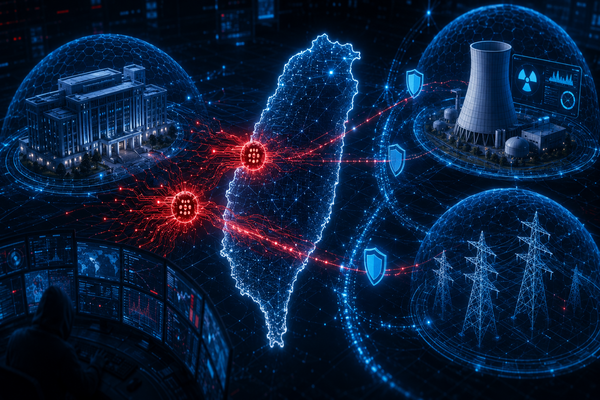
Taipei accuses Beijing of combining disinformation, military pressure and economic coercion around Taiwan’s elections.
Beijing criticizes Philippine President Ferdinand Marcos Jr. after he congratulates Lai Ching-te on Taiwan’s election victory.
The Chinese Embassy says Beijing follows non-interference and has no interest in influencing Philippine elections.
Beijing and Taipei clash over World War Two narratives and the historical role of the Republic of China.
Wallace Chow says disinformation, historical distortion, election interference and economic coercion threaten democratic societies.




Leave a Reply