

Beneath the surface of China’s rapid economic development and technological progress lies a deep and ongoing struggle for gender equality. While the Chinese government frequently projects an image of modern inclusion, the daily realities for millions of Chinese women tell a different story.
Caught between deeply ingrained cultural traditions and the shifting, often coercive policies of the Chinese Communist Party (CCP), women are fighting to secure their personal, professional and reproductive autonomy.
Between May and July 2026, a wave of international reporting highlighted this systemic friction. The evidence points to a society where the state and traditional patriarchal values work in tandem to restrict women’s independence. Yet, in response, Chinese women are staging a decentralised but powerful resistance.
State Demographics vs. Reproductive Autonomy
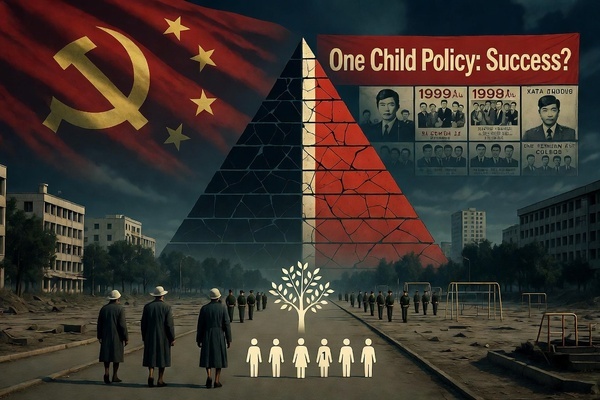
The most glaring intersection of CCP policy and traditional patriarchy is the state’s approach to women’s bodies. For decades, the government strictly controlled reproductive rights through the one-child policy, utilizing coercive measures to limit population growth.
Today, faced with a rapidly aging workforce and a declining birth rate, the state has sharply reversed course. The CCP now aggressively pushes women to marry early and have multiple children.
This policy shift relies heavily on traditional, regressive societal thoughts that view women primarily as caregivers and mothers. State media and local governments frequently promote “family values” that pressure women to prioritize domestic duties over personal ambition. However, women are increasingly rejecting these state-mandated roles.
A June 2026 report by Le Monde highlighted a growing demographic of women who are actively refusing conventional expectations surrounding marriage and motherhood.
Similarly, a Guardian investigation detailed how women are navigating the historical weight of state-controlled family planning by making their own informed reproductive choices.
By refusing to let their bodies serve as tools for macroeconomic policy, these women are directly challenging both traditional familial expectations and the CCP’s demographic agenda.
The Workplace Reality: Policy Facades and Persistent Sexism
The disparity between official government narratives and lived reality is starkly visible in the professional sphere. In June 2026, the Chinese government released its Assessment of the National Human Rights Action Plan (2021–2025).
The official report proudly stated that women constituted 43.4% of the employed population in 2024, emphasizing state provisions against employment discrimination and legal protections relating to maternity.
However, critics and international observers point out that these official policies frequently function as window dressing for a system that actively disadvantages women.
Employers routinely discriminate against female candidates due to the assumption that they will require maternity leave. Furthermore, workplace sexual harassment remains systemic and the CCP has actively suppressed the nation’s #MeToo movement through censorship and the detention of activists.
Despite this hostile environment, rare breakthroughs occur. In July 2026, a former employee of a Beijing environmental organisation secured a rare civil court victory in a sexual-harassment case, winning compensation and a mandated apology from her former manager.
Because the state often fails to enforce its own anti-discrimination laws, change is being driven from the outside and the grassroots level. In May 2026, women-led coding hackathons were organised to design technological solutions for workplace sexism and women’s health areas historically neglected by the male-dominated tech industry.
On a larger scale, the European Union and UN Women launched the “Women in Motion 2.0” programme in July 2026 to promote inclusive workplaces and labor-rights awareness, effectively stepping in where state mechanisms have fallen short.
Cultural Constraints and the Need for Safe Spaces
The pressure exerted by the state and traditional society permeates everyday culture, leaving little room for open feminist dialogue. The CCP views organised feminist movements as a threat to “social stability” and actively censors online discussions regarding gender inequality.
In response, resistance has adapted. Women are carving out physical and cultural spaces where they can exist free from patriarchal oversight. In cities like Chengdu, female-only bookstores, gyms, bars and professional networks are flourishing.
These venues act as cautious sanctuaries for solidarity and feminist discussion, purposefully designed to avoid direct political confrontation with the authorities while fostering community.
This cultural pushback has also found a voice in entertainment. Stand-up comedy has become a vital release valve for women frustrated by everyday sexism.
Female comedians are using the stage to expose the unequal division of domestic labor, the pressures of marriage and workplace discrimination. By masking their critiques in humour, they manage to mock traditional societal norms while carefully navigating the strict boundaries of CCP censorship.
Systemic Failures: Exploitation and Abuse
The most severe consequences of China’s patriarchal traditions and state policies fall upon the most vulnerable.
The historical preference for male heirs exacerbated by the one-child policy has resulted in a severe gender imbalance. This demographic reality has fuelled dark underground economies.
As reported in June 2026, grassroots volunteers are actively investigating suspected trafficking, forced marriages, and domestic abuse, particularly involving women with disabilities in rural areas.
These women are often treated as commodities to fulfil traditional marriage requirements for men who cannot find wives.
The fact that these volunteers must operate discreetly, fearing official scrutiny and censorship, speaks volumes.
It highlights a critical flaw in the CCP’s governance: the state is often more concerned with suppressing negative news and maintaining the illusion of social harmony than it is with dismantling the systemic abuse of vulnerable women.
The struggles documented throughout the summer of 2026 paint a clear picture of the hurdles facing women in China. The combination of deeply rooted patriarchal traditions and the CCP’s instrumentalist approach to women viewing them as economic tools or demographic solutions rather than autonomous individuals creates a highly restrictive environment.
The government’s suppression of feminist advocacy and its failure to enforce protective workplace laws reveal a system that prioritizes control over equality.
Yet, the narrative is not one of submission. Through legal battles, cultural expression, technological innovation and the simple act of choosing to remain single, Chinese women are actively condemning the societal thoughts and policies that seek to bind them.
Their decentralised resistance demonstrates that while the state may control the laws and the media, the drive for personal autonomy and fundamental human dignity cannot be legislated away.











Leave a Reply