

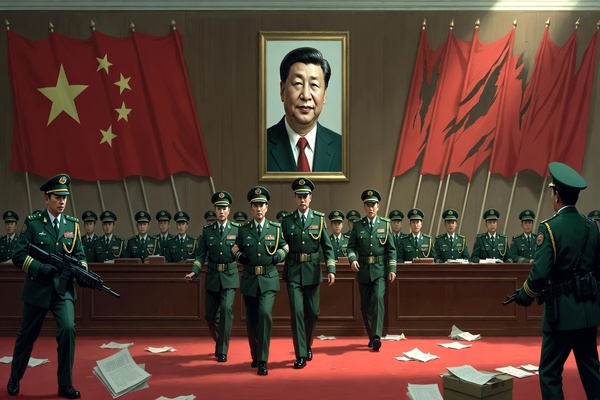
In a stunning development that has rippled through global security circles, China’s Ministry of National Defense announced on 24 January 2026, a disciplinary probe into Zhang Youxia, the powerful Vice Chairman of the Central Military Commission (CMC). Once considered Xi Jinping’s most trusted military ally, Zhang’s fall marks a deepening rift over Beijing’s aggressive Taiwan policy. This purge underscores tensions between Xi’s ambitious invasion timeline and stark military realities. Zhang openly challenged Xi’s hawkish plan for a Taiwan takeover by 2027, highlighting profound readiness gaps in the People’s Liberation Army (PLA). His resistance has not only eroded his own authority but also fueled broader defiance within the ranks.
Xi’s 2027 Deadline vs. Zhang’s Realism
Xi Jinping has long pushed for PLA modernization to achieve “reunification” with Taiwan by 2027, aligning with the army’s centennial. This aggressive timeline demands breakthroughs in amphibious assaults landing thousands of troops across the 100-mile Taiwan Strait amid anti-ship missiles and U.S. submarines. It requires seamless joint operations between navy, air, and rocket forces, plus massive logistics for sustained combat against Taiwan’s fortified defenses and potential allied intervention. Reports frame this as Xi’s legacy pinnacle, intertwining personal power with “national rejuvenation,” where failure risks his aura of infallibility.
According to jamestown.org, Zhang Youxia, however, deemed the 2027 target unrealistic. He advocated for a more prudent 2035 timeline, citing chronic issues like equipment corrosion, insufficient training cycles, and unproven amphibious forces. As a career soldier with decades in the PLA Rocket Force and ground forces, Zhang emphasized practical hurdles over political deadlines. His assessments reportedly clashed with Xi’s directives during high-level CMC meetings, exposing a core divide: ideological ambition versus operational feasibility.
PLA Resistance and Authority Challenges
The disagreements extended beyond timelines into execution. Zhang resisted Xi’s emphasis on politically driven training, prioritizing combat effectiveness in joint exercises. This fuelled resistance within the PLA, where officers echoed concerns about rushed preparations risking failure against Taiwan’s defenses and U.S. intervention.
Such defiance challenged Xi’s absolute control over the military. Leaked accounts describe Zhang’s network quietly undermining orders, from delaying force-building initiatives to questioning invasion feasibility in internal reports. This wasn’t isolated recent purges of other Rocket Force leaders suggest a pattern of pushback against Xi’s centralization.
Purge Outcomes and Power Erosion
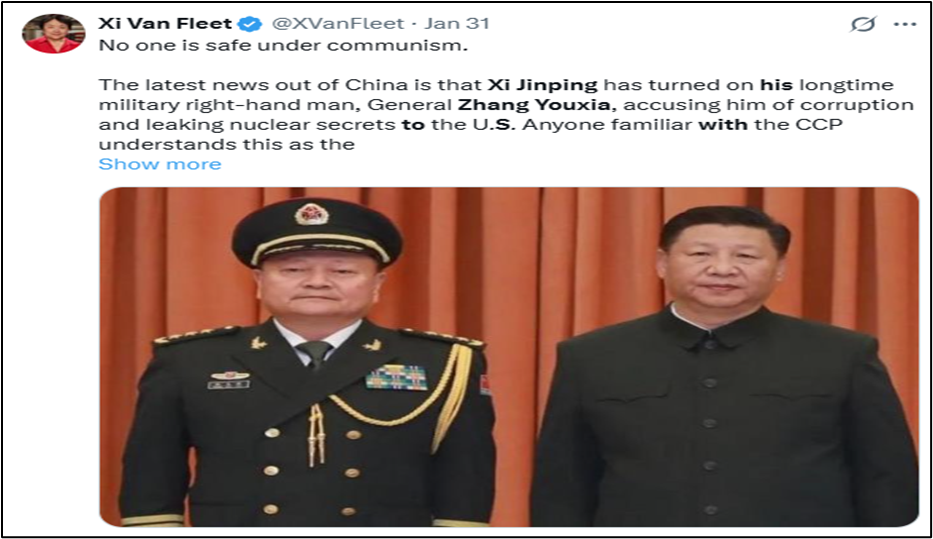
The January 2026 probe accuses Zhang of “serious disciplinary violations,” a euphemism often masking political disloyalty. As CMC Vice Chairman a role he held since 2017 Zhang’s influence over promotions, budgets, and strategy has sharply diminished. Alongside General Liu Zhenli, his ouster disrupts the CMC’s balance, tilting power toward Xi loyalists.
This fits into a broader military purge wave, with over a dozen senior officers investigated since late 2025 for corruption or incompetence. The moves aim to enforce loyalty but risk demoralizing the PLA at a critical juncture.
Contextual Background
Zhang’s ties to Xi run deep; both hail from Shaanxi Province’s Weinan region, and their fathers Zhang Zongxun and Xi Zhongxun fought alongside Mao Zedong. As “second-generation reds,” their childhood friendship propelled Zhang’s rise; Xi called him a “sworn brother” and entrusted him with personal security early on. Elevated to CMC Vice Chairman in 2017, Zhang oversaw promotions, equipment reforms, and Xi’s anti-corruption drives, making his purge shocking. Recent scandals like Rocket Force graft (missile silo leaks) provided cover, but Taiwan policy rifts were central.
Geopolitical Analysis and Impacts
Zhang Youxia’s purge rips open PLA fractures right before the 2027 Taiwan deadline, stalling joint training and eroding combat cohesion. This buys precious time for Taipei’s defenses and Washington’s alliances, as rushed successors scramble amid low morale. Beijing’s focus turns inward to loyalty hunts, not external threats. Xi’s inner circle shudders no one is safe. Expect hybrid escalations: cyber strikes, strait blockades over doomed invasions. For the Indo-Pacific, it’s a chaotic reprieve a cornered Xi hesitates on full war but amps gray-zone risks. Purging your best general before battle is a gamble even emperors avoid.









Leave a Reply